Korean Dishes Everyone Should Know and Cook
From rice bowls and stews to street snacks, these are the Korean dishes that define the cuisine and reward a home cook.
Korean cooking is built on balance: heat, salt, sweetness, fermentation, and plenty of texture. The best-known dishes show that range clearly, from quick noodles and rice cakes to slow stews and braises.
What follows is a plain guide to the dishes most people meet first. Some are pantry meals, some are festive, and some are street food, but each one explains something useful about how Korean food is eaten at home and outdoors.
A mixed bowl with structure
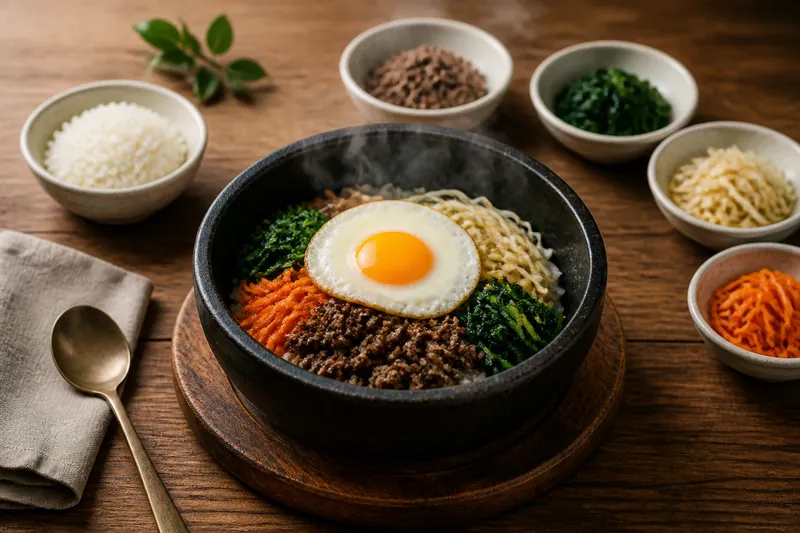
BibimbapKoreanOpen the recipe →Bibimbap is a bowl of rice topped with vegetables, meat, egg, and a spoon of gochujang. It tastes layered rather than complicated: nutty rice, crisp vegetables, rich yolk, and a sweet-hot sauce that pulls everything together. It is worth cooking because it is flexible and gives leftovers a proper purpose. The main thing to know is that each topping should be cooked and seasoned separately, then arranged just before serving so the bowl stays distinct until mixed.
Sweet, savory, and thinly sliced
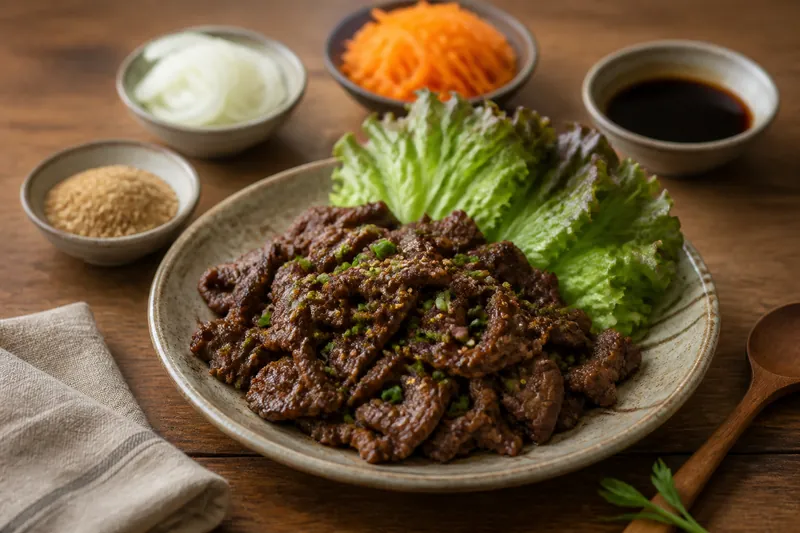 Beef BulgogiKoreanOpen the recipe →
Beef bulgogi is marinated beef, usually sliced very thin, then cooked quickly over high heat. The flavor is gentle but deep: soy, garlic, pear or sugar for sweetness, sesame, and a little smoke from the pan. It is worth making because the marinade does most of the work and the finished meat is good with rice, lettuce, or noodles. Slice the beef as thinly as you can, and marinate long enough for the seasoning to reach the center.
Rice cakes in a hot, sticky sauce
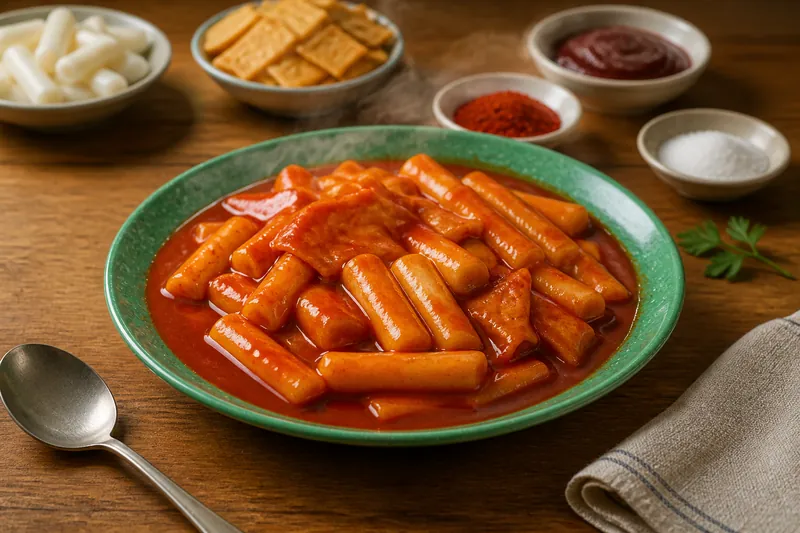 TteokbokkiKoreanOpen the recipe →
Tteokbokki is built from chewy rice cakes simmered in a red sauce made with gochujang. It is dense, spicy, slightly sweet, and comforting in a way that is easy to understand after one bite. It is worth cooking because the texture is the point: springy rice cakes against a thick sauce that clings to every piece. Before starting, soak or rinse the rice cakes if they are firm from the package, so they soften evenly and do not stay chalky in the middle.
Glass noodles with sheen and bite
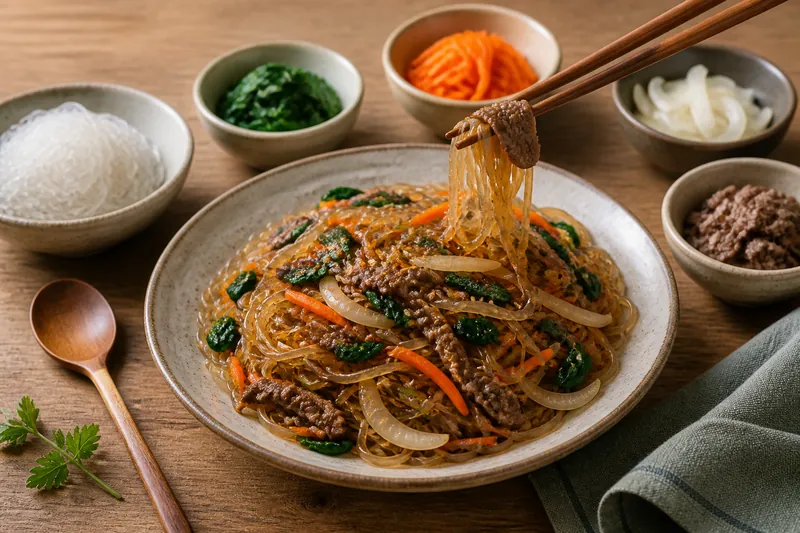 JapchaeKoreanOpen the recipe →
Japchae is a stir-fry of sweet potato noodles with vegetables, often beef, and sesame oil. The flavor is mild, savory, and slightly nutty, with noodles that turn glossy and pleasantly chewy. It is worth cooking because it can be served hot or at room temperature and still feels complete. The main point is timing: each vegetable should be cooked just until tender, then combined with the noodles so they do not break or go soft before serving.
The essential kimchi stew
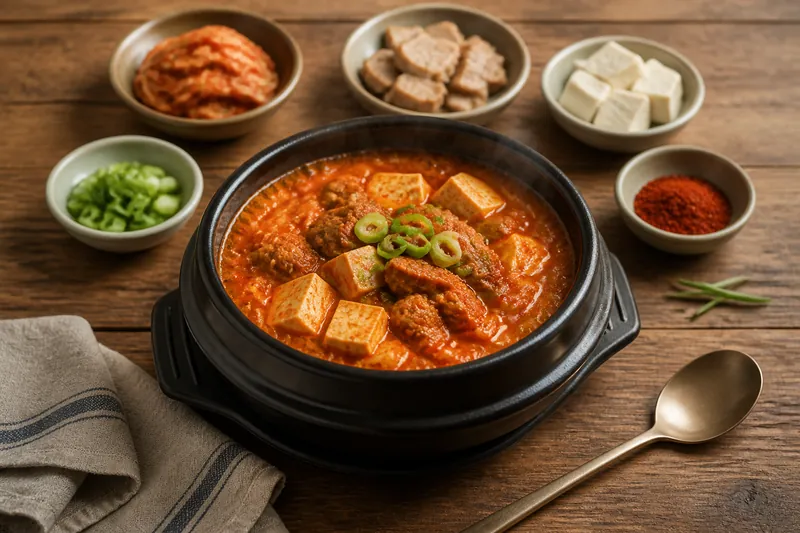 Kimchi JjigaeKoreanOpen the recipe →
Kimchi jjigae is a brisk, sour, spicy stew made with well-fermented kimchi, often with pork, tofu, and onion. It tastes sharp at first, then rounder as the kimchi cooks down into the broth. It is worth cooking because it turns older kimchi into a meal with real depth. Start with properly fermented kimchi, not mild fresh kimchi, since the stew depends on that sour edge. Let it simmer long enough for the broth to turn red and full.
Tender pork for wrapping
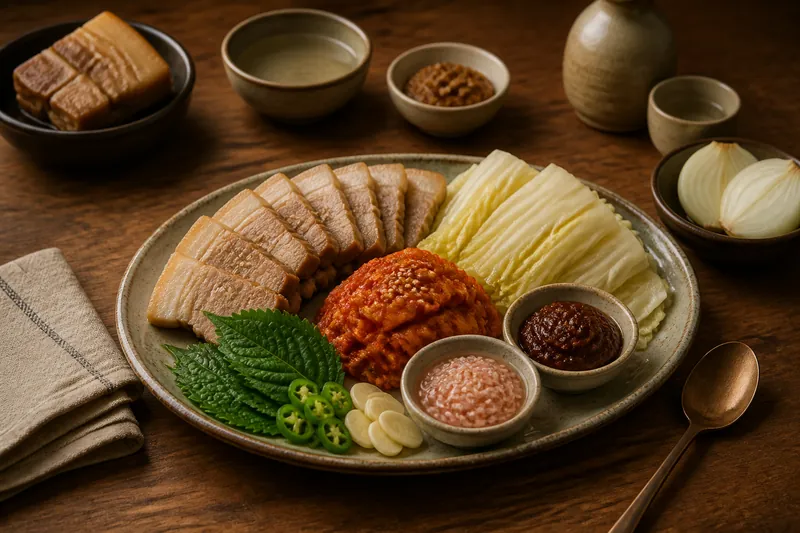 BossamKoreanOpen the recipe →
Bossam is boiled or braised pork belly served in slices, usually with kimchi and leaves for wrapping. The meat is rich and soft, with enough salt to stay interesting against fermented cabbage and a dab of sauce. It is worth cooking because it makes a simple spread feel generous and communal. The cook should know that the pork needs a long, gentle simmer so it stays tender rather than greasy or tough, and it should rest before slicing so the meat holds together.
A stew built from pantry and memory
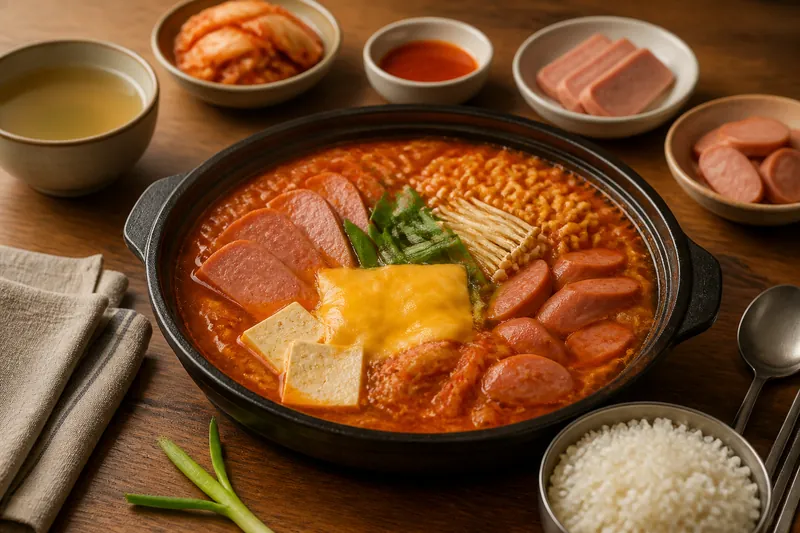 Budae JjigaeKoreanOpen the recipe →
Budae jjigae is a hearty hot pot with kimchi, sausage, Spam, noodles, tofu, and beans, all simmered in a spicy broth. It tastes smoky, salty, and slightly tangy, with a mix of textures that keeps every spoonful different. It is worth cooking because it is practical and direct, turning simple packaged ingredients into something greater than their parts. Be careful not to overdo the broth at the start; the ramen and processed meats season it as they cook.
A crisp fish-shaped sweet
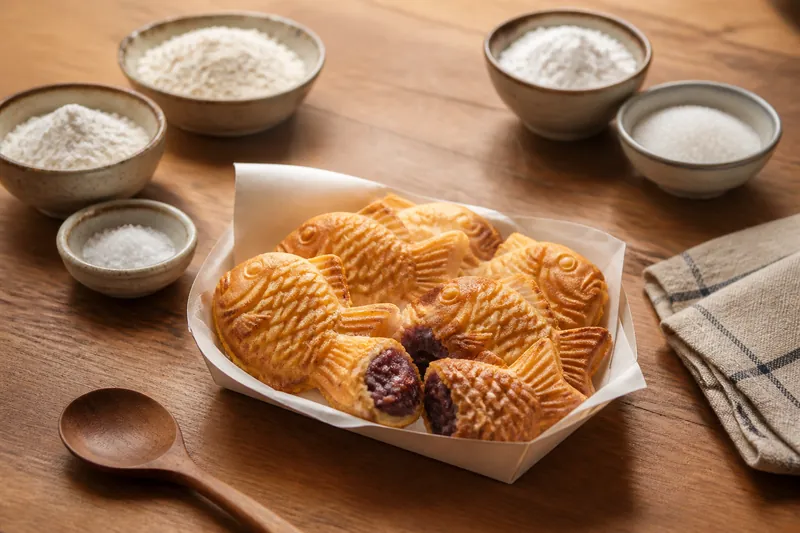 BungeoppangKoreanOpen the recipe →
Bungeoppang is a fish-shaped pastry usually filled with sweet red bean paste. The outside is thin and crisp, the inside soft and warm, with a gentle sweetness rather than a heavy one. It is worth making because it is simple, familiar street food with a distinctive shape and a satisfying contrast in texture. The cook should know that the batter must be poured carefully into a hot mold, and the filling should be used sparingly so the pastry cooks through instead of leaking.
Chicken cooked at the table
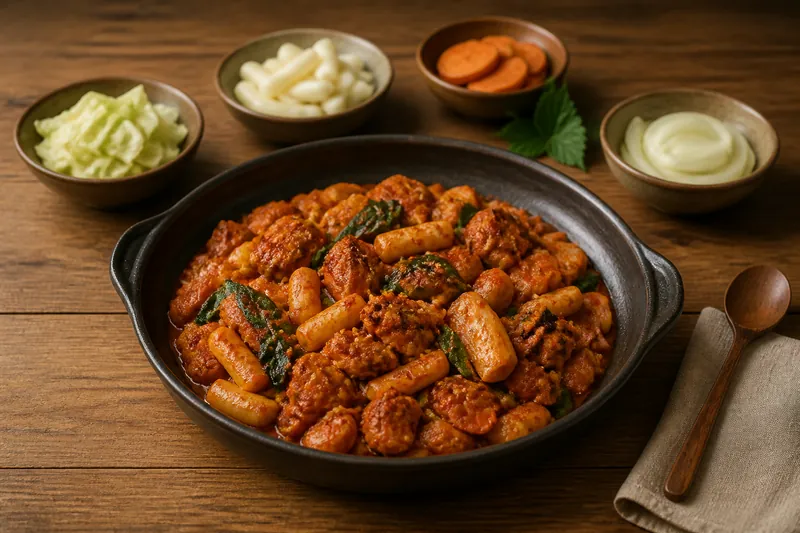 DakgalbiKoreanOpen the recipe →
Dakgalbi is a spicy stir-fry of chicken with cabbage, sweet potato, rice cakes, and gochujang sauce. It tastes savory, fiery, and a little sweet, with vegetables that soften into the sauce as the chicken cooks. It is worth cooking because it is one of the most complete one-pan meals in Korean cooking. Cut the chicken into even pieces before marinating, since the dish cooks quickly and uneven pieces will finish at different times. Keep the heat high so the sauce reduces, not stews.
A deeply savory soybean stew
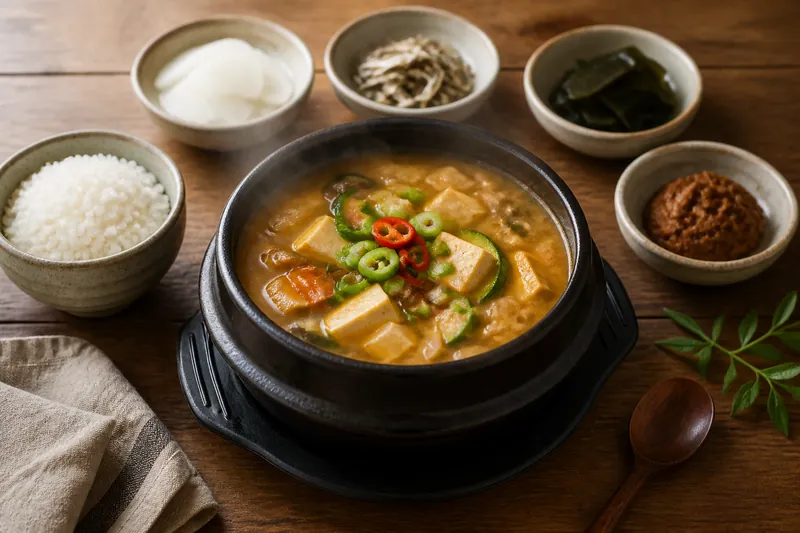 Doenjang JjigaeKoreanOpen the recipe →
Doenjang jjigae is a soybean paste stew with tofu, vegetables, and often seafood or meat. The flavor is earthy, salty, and rounded, with a depth that comes from the paste rather than from long simmering alone. It is worth cooking because it shows how Korean cooking uses fermentation as a base, not just a garnish. The important thing is to dissolve the doenjang well into the broth before adding the rest, so the stew tastes even and never gritty or blunt.
Taken together, these dishes give a clear picture of Korean cooking: quick heat, long simmering, fermented seasoning, and careful contrasts of texture. A few are weeknight meals, others are for sharing, but all of them show how much can be built from rice, broth, vegetables, and time.