Korean
Doenjang Jjigae
A cozy Korean soybean paste stew simmered in anchovy-kelp broth with tofu, zucchini, potato, and chilies. It is savory, earthy, and meant to be served bubbling hot with rice.

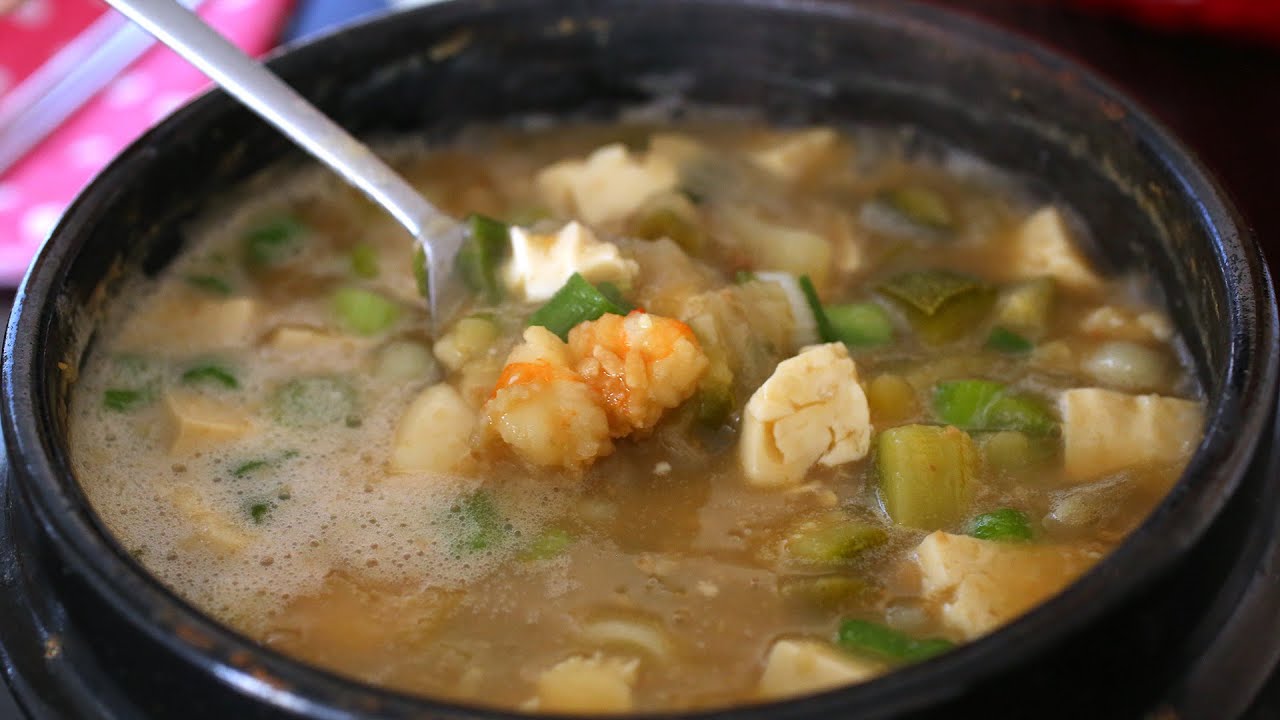 Watch it madeMaangchi · 11:41
Ingredients
- Water3 cups
- Dried anchovies, heads and guts removed6 large
- Dashima dried kelp1 piece, about 3 x 3 inches
- Korean radish, thinly sliced1/2 cup
- Doenjang Korean fermented soybean paste2 1/2 tbsp
- Gochujang Korean red pepper paste1 tsp
- Gochugaru Korean red pepper flakes1 tsp
- Garlic, minced2 cloves
- Small potato, cut into 1/4-inch slices1
- Onion, sliced1/2 small
- Aehobak Korean zucchini, cut into half-moons1/2 cup
- Fresh shiitake mushrooms, sliced2
- Firm tofu, cut into bite-size cubes200g
- Cheongyang chili or green chili, sliced1
- Red chili, sliced1/2
- Scallion, sliced1
Method
- Add the water, dried anchovies, dashima, and Korean radish to a small ttukbaegi or heavy saucepan and bring to a gentle boil.
- Simmer for 10 minutes, then remove the dashima and anchovies, leaving the radish and broth in the pot.
- Lower the heat to medium and dissolve the doenjang into the broth, pressing it through a small sieve or spoon to avoid large lumps.
- Stir in the gochujang, gochugaru, and minced garlic until the broth is evenly seasoned.
- Add the potato and onion and simmer for 6 to 8 minutes, until the potato begins to soften.
- Add the zucchini and shiitake mushrooms and simmer for 4 minutes.
- Gently add the tofu and simmer for another 3 to 4 minutes so it absorbs the broth without breaking apart.
- Add the green chili, red chili, and scallion, then simmer for 1 more minute.
- Taste the stew; if it needs more saltiness, add a little more doenjang rather than salt.
- Serve immediately while bubbling hot, with steamed rice and banchan.
Common questions
Can I substitute the dried anchovies or dashima if I don’t have them?
Yes. For anchovies, use a light fish sauce or skip them and add a little more doenjang for depth. For dashima, use a small piece of kombu or omit it; the stew will be less savory but still good.
How long should I simmer each ingredient so the vegetables don’t overcook?
Simmer the broth with radish for 10 minutes first. Add potato and onion for 6 to 8 minutes, then zucchini and mushrooms for 4 minutes, and tofu for the last 3 to 4 minutes so it stays intact.
What are the most common mistakes when making doenjang jjigae?
The biggest mistakes are boiling too hard, which clouds the broth and breaks the tofu, and adding too much salt. Also avoid overcooking the zucchini and mushrooms; they should stay tender, not mushy.
How should I store leftovers and reheat them?
Cool quickly, refrigerate in a covered container, and eat within 3 days. Reheat gently on the stove over medium-low heat until just simmering. If the broth tastes flat after storage, add a little more doenjang.
What should I serve with doenjang jjigae?
Serve it piping hot with steamed rice and a few simple side dishes like kimchi, seasoned spinach, or quick-pickled vegetables. A raw egg, added at the table, is also common in some homes.