Korean
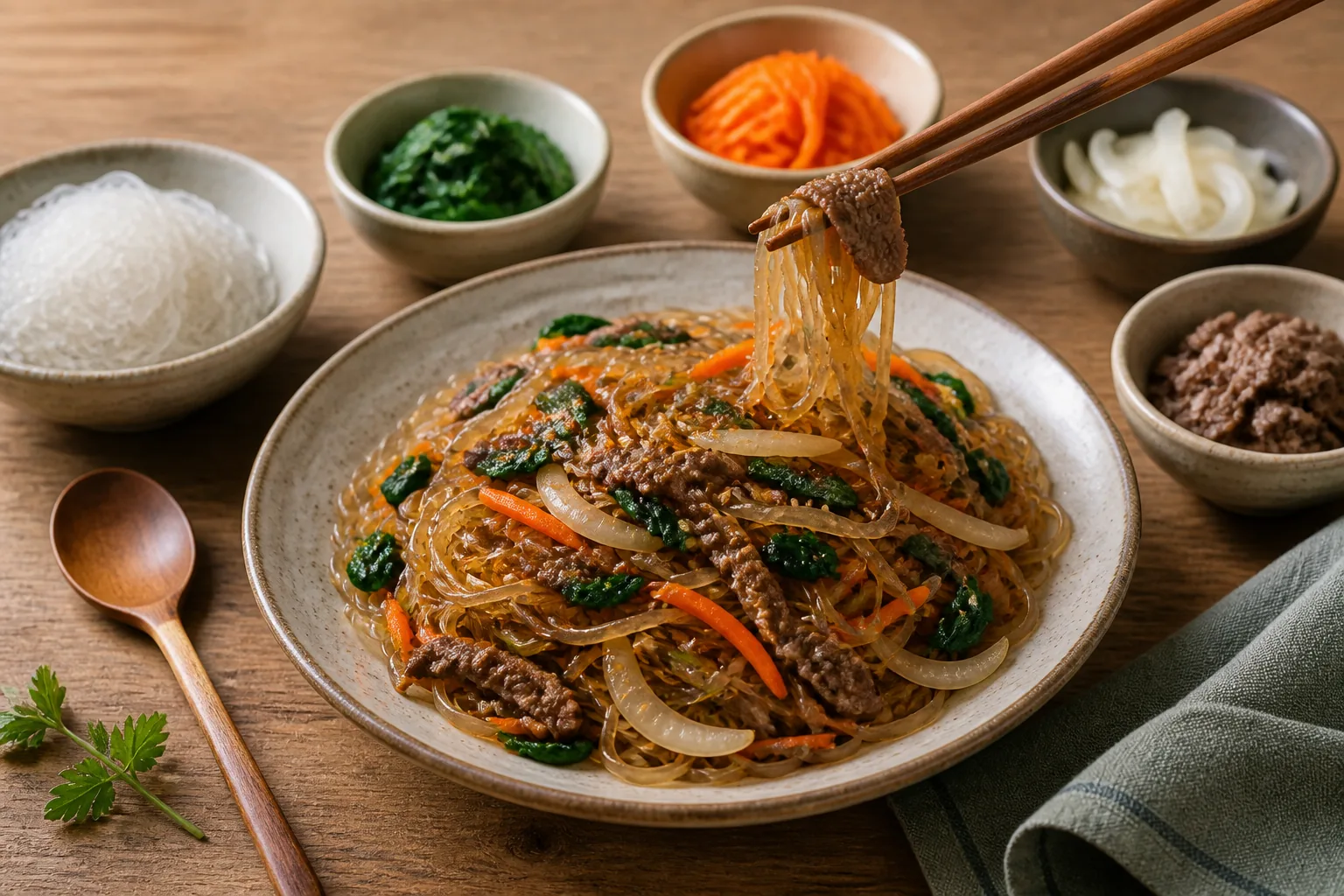
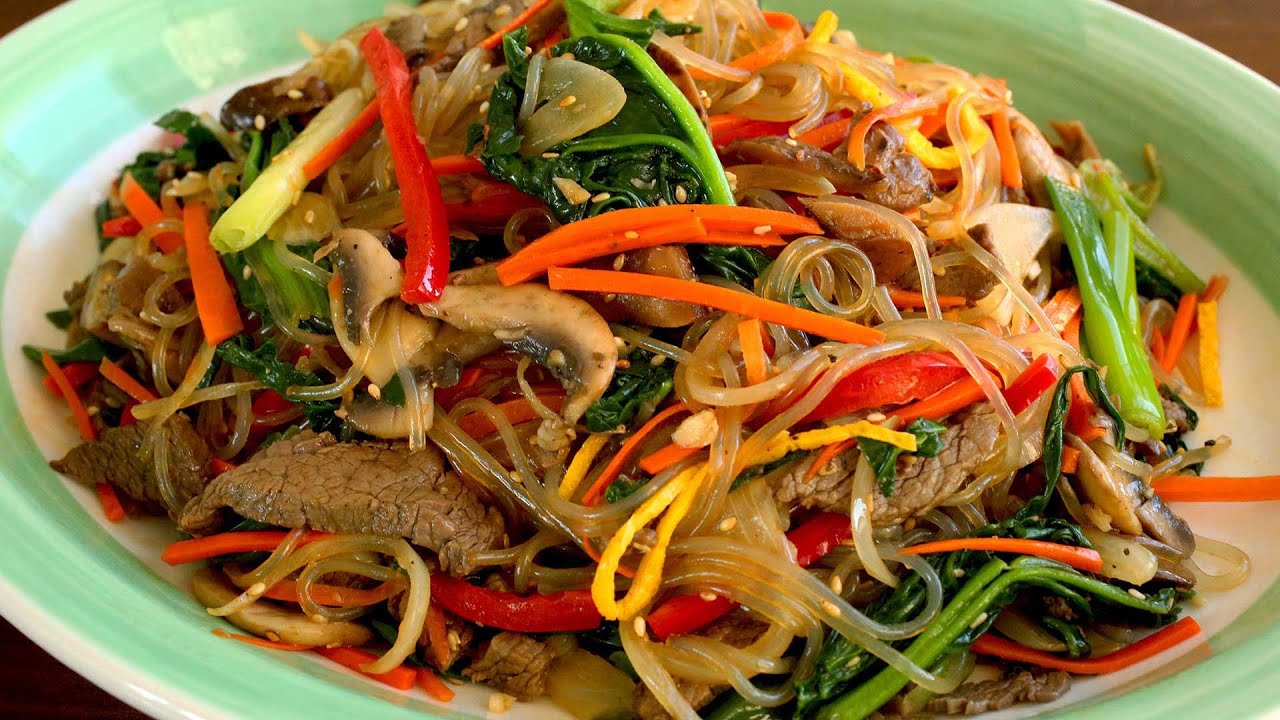
Japchae
A savory and slightly sweet dish of stir-fried glass noodles, vegetables, and beef, often served on special occasions.
 Watch it madeMaangchi · 13:46
Ingredients
- Sweet potato starch noodles (Dangmyeon)200g
- Beef sirloin100g
- Spinach100g
- Carrot1/2
- Onion1/2
- Mushrooms3 pieces
- Soy sauce4 tbsp
- Sugar2 tbsp
- Sesame oil2 tbsp
Method
- Boil the sweet potato starch noodles (dangmyeon) until soft, then rinse in cold water and drain.
- Slice the beef, carrots, onions, spinach, and mushrooms into thin strips.
- Stir-fry the vegetables and beef separately to maintain their distinct colors and textures.
- In a large bowl, mix the noodles, cooked ingredients, soy sauce, sugar, and sesame oil.
- Toss with toasted sesame seeds and serve warm or at room temperature.
Common questions
Can I substitute the beef sirloin in japchae with another protein or make it vegetarian?
Yes. Thinly sliced ribeye, flank steak, chicken thigh, shrimp, or tofu all work. For vegetarian japchae, use extra mushrooms, tofu, or tempeh. Keep the protein lightly seasoned and cook separately so it doesn’t overcook or dull the noodles.
How do I keep dangmyeon from sticking together or turning gummy?
Boil just until tender, not mushy, then rinse thoroughly in cold water and drain well. Toss the noodles with a little sesame oil right away if needed. Overcooking or letting them sit wet is the main cause of sticking.
What is the biggest mistake people make when cooking japchae?
The most common mistake is overcooking the noodles or vegetables. Japchae should have distinct textures, so stir-fry each ingredient separately and keep the vegetables crisp-tender. Also avoid adding too much soy sauce, which can make the dish salty and dark.
How far ahead can I make japchae, and how should I store leftovers?
Japchae keeps well for 3 to 4 days in the refrigerator in an airtight container. It’s often even better the next day. Reheat gently in a skillet with a splash of water or serve cold/room temperature if preferred.
What should I serve with japchae, and is it served hot or cold?
Japchae is typically served warm or at room temperature as a side dish or light main. It pairs well with rice, grilled meats, kimchi, and other banchan. Sprinkle toasted sesame seeds on top just before serving for extra flavor.