Korean
Budae Jjigae
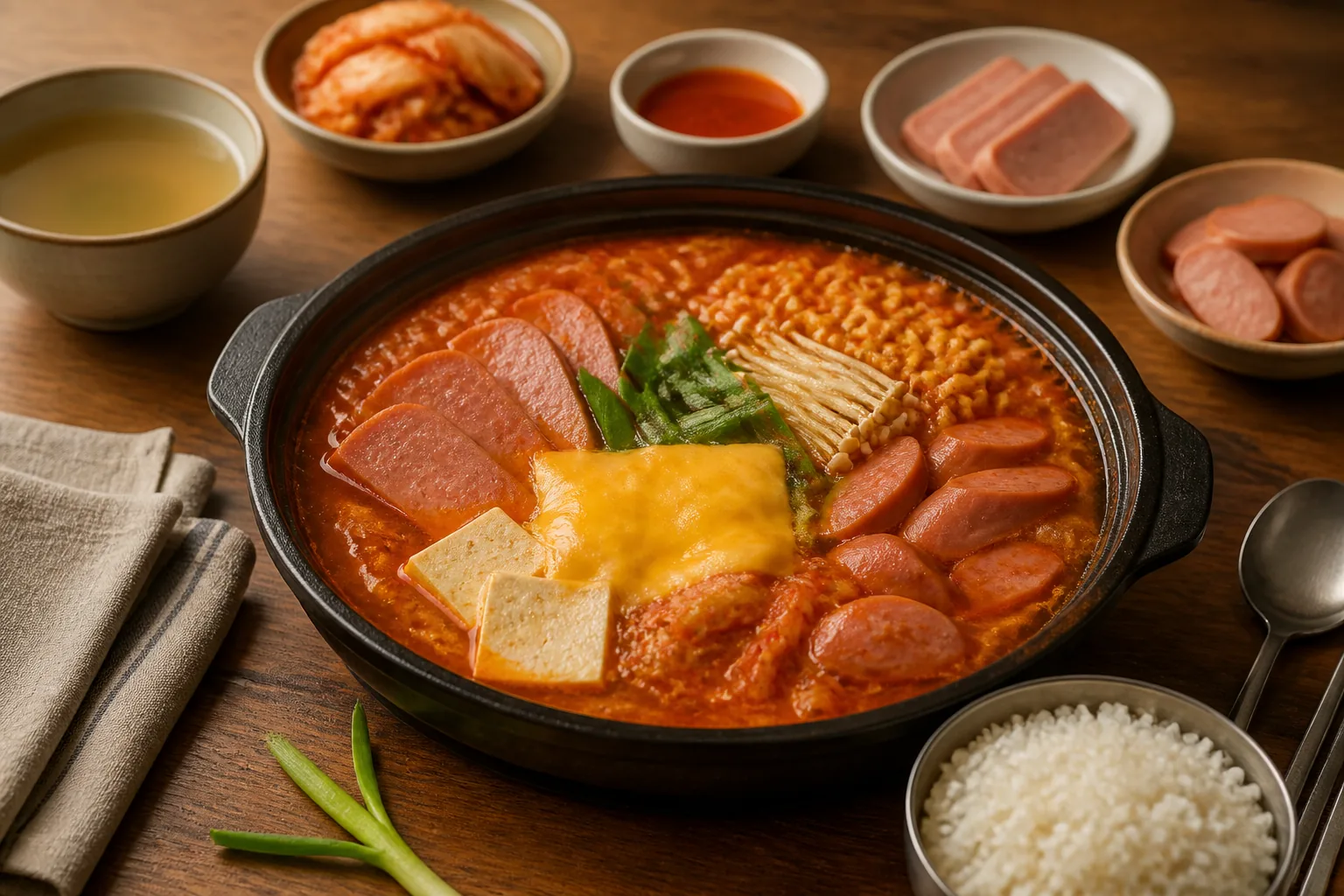
A bubbling Korean army stew with ripe kimchi, Spam, sausage, tofu, and ramyeon simmered in a spicy gochujang broth. It is served hot at the table, with the noodles just tender and the broth rich from the meats and kimchi.
 Watch it madeMaangchi · 13:52
Ingredients
- Dried anchovy-kelp stock3 cups
- Well-fermented napa kimchi, chopped3/4 cup
- Kimchi juice2 tbsp
- Spam or Korean luncheon meat, sliced120g
- Korean-style smoked sausage or hot dog, sliced diagonally120g
- Firm tofu, sliced150g
- Onion, thinly sliced1/2 small
- Green onion, cut into 5 cm pieces1
- Enoki mushrooms, trimmed80g
- Korean rice cakes, soaked if firm1/2 cup
- Canned baked beans2 tbsp
- Ramyeon noodles1 packet
- American cheese slice1 slice
- Gochugaru1 tbsp
- Gochujang1 tbsp
- Soy sauce1 tbsp
- Minced garlic2 tsp
- Doenjang1/2 tsp
- Sugar1/2 tsp
- Black pepper1/4 tsp
Method
- In a small bowl, mix the gochugaru, gochujang, soy sauce, minced garlic, doenjang, sugar, black pepper, and kimchi juice into a thick seasoning paste.
- Place the chopped kimchi in the center of a wide shallow pot, then arrange the Spam, sausage, tofu, onion, green onion, enoki mushrooms, rice cakes, and baked beans around it in sections.
- Spoon the seasoning paste over the ingredients and pour in the anchovy-kelp stock around the sides of the pot.
- Set the pot over medium-high heat and bring it to a lively boil without stirring too much at first, so the arranged ingredients hold their shape.
- Once boiling, gently loosen the seasoning paste into the broth and simmer for 8 to 10 minutes, until the kimchi softens and the rice cakes are tender.
- Taste the broth and adjust with a splash of stock if too salty, or a little more soy sauce if it needs seasoning.
- Add the ramyeon noodles to the center of the pot and press them lightly into the broth.
- Simmer for 3 to 4 minutes, turning the noodles once, until just tender but still springy.
- Lay the cheese slice on top, let it soften for 30 seconds, and serve immediately from the pot while bubbling.
Common questions
What can I substitute for Spam or Korean luncheon meat in budae jjigae?
Use any salty, processed meat that browns well: sliced ham, hot dog, kielbasa, or frankfurter. If you want less salt, choose mild smoked sausage and add a little extra kimchi for depth.
When should I add the ramyeon noodles so they don’t turn mushy?
Add the noodles after the stew has simmered and the rice cakes are nearly tender, usually in the last 3 to 4 minutes. Stir them in gently and cook just until springy, then serve right away.
What are the most common mistakes when making budae jjigae?
Overstirring too early, which ruins the arranged look and clouds the broth, and over-salting from Spam, kimchi, and sausage. Also avoid boiling the noodles too long; they should finish in the stew, not soak indefinitely.
How do I store and reheat leftover budae jjigae?
Cool quickly, then refrigerate in a sealed container for up to 3 days. Store noodles separately if possible. Reheat gently on the stove with a splash of stock or water; add fresh noodles if the old ones are soft.
What should I serve with budae jjigae?
Serve it bubbling hot with steamed rice, extra kimchi, and more green onion if you like. A fried egg on the side is good too. The broth is rich and salty, so plain rice balances it well.