Korean
Kimchi Jjigae
A comforting, spicy, and savory Korean stew made with fermented kimchi, pork belly, and tofu.
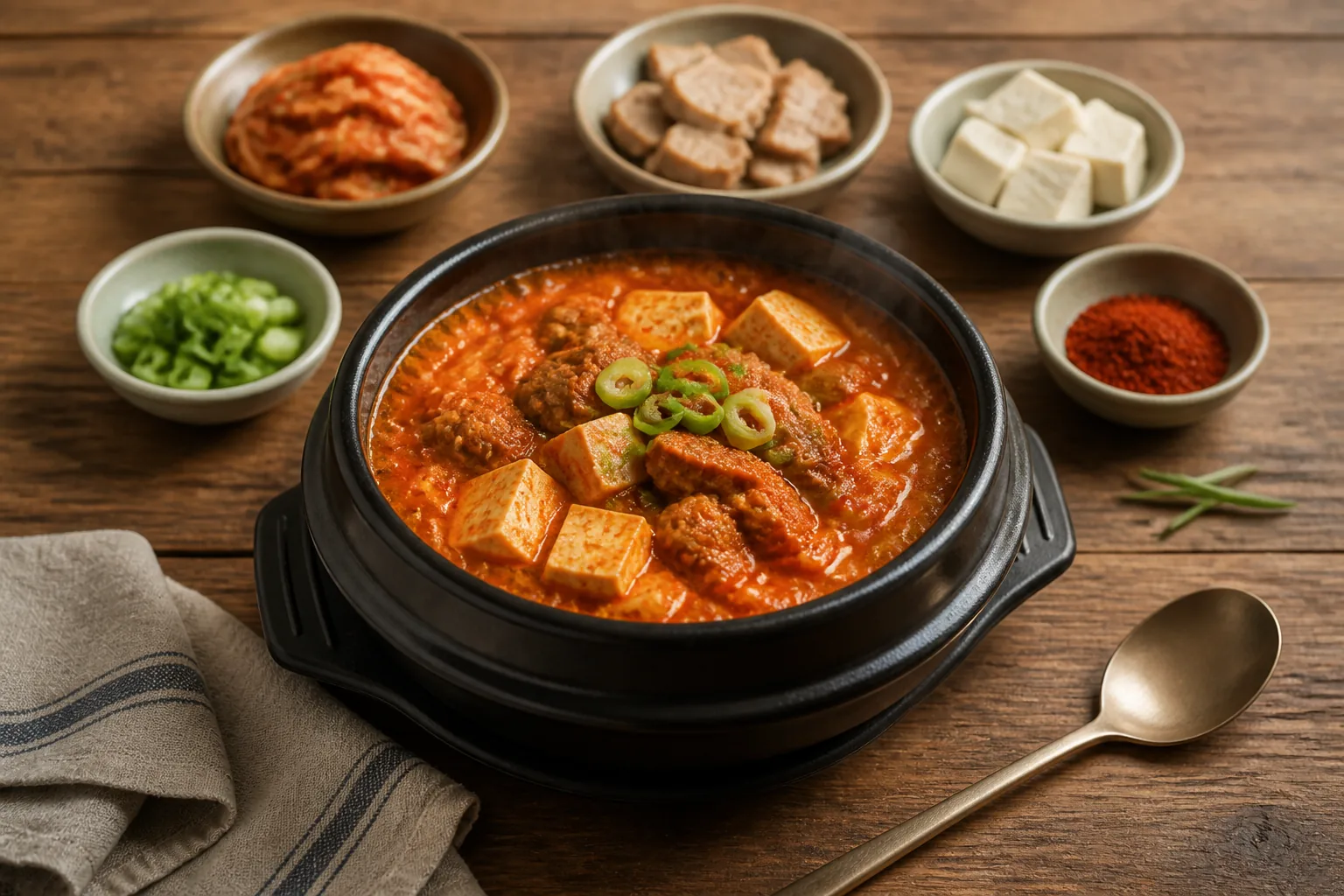
 Watch it madeMaangchi · 12:02
Ingredients
- Aged Kimchi2 cups
- Pork belly150g
- Tofu200g
- Green onion2 stalks
- Gochugaru (Korean chili flakes)1 tbsp
- Garlic1 tsp minced
- Water or Anchovy broth2 cups
Method
- Slice the pork belly and kimchi into bite-sized pieces.
- Sauté the pork belly in a pot until the fat renders, then add the kimchi and cook for 5 minutes.
- Pour in the water or anchovy broth and bring to a boil.
- Add minced garlic, gochugaru, soy sauce, and diced tofu. Simmer for 15 minutes.
- Garnish with sliced green onions and serve hot with rice.
Common questions
Can I substitute the pork belly in kimchi jjigae if I don’t have it?
Yes. Pork shoulder, bacon, or thinly sliced beef work well. For a lighter version, use mushrooms or skip meat entirely and add a little sesame oil for richness. Keep the same sauté step so the kimchi still deepens in flavor.
How long should I cook the kimchi before adding the broth?
Cook the kimchi with the pork for about 5 minutes, until it softens and looks slightly glossy. This step builds flavor. If you cook it too briefly, the stew can taste flat; too long, and it may become overly soft.
What are the most common mistakes when making kimchi jjigae?
Using fresh instead of well-fermented kimchi is the biggest one, because aged kimchi gives the stew its depth. Also avoid under-seasoning the broth, boiling tofu too hard, or adding too much water and diluting the flavor.
How should I store leftover kimchi jjigae and reheat it?
Cool it quickly, then refrigerate in a sealed container for up to 3 days. Reheat gently on the stove over medium-low heat until steaming. The flavor often improves the next day. Add a splash of water if it thickens.
What is the best way to serve kimchi jjigae?
Serve it piping hot with short-grain rice and extra banchan if you have them. A raw egg can be cracked into the hot stew or served alongside. Use a deep bowl so the broth stays hot while you eat.