8 Nepali Dishes That Feed Six or More
From steamed sweets to sour greens and festive breads, these Nepali dishes are built for a table full of people.
Nepali cooking has a useful habit of making plenty. Some dishes are meant for festivals, some for sharing after a long day, and some are best when set out in a generous spread with rice, tea, or both.
The dishes below all serve six or more and range from quick broths to preparations that ask for patience. Each one brings a clear flavor, and each one rewards cooking for a crowd rather than for one or two plates.
A rice sweet that needs a long soak
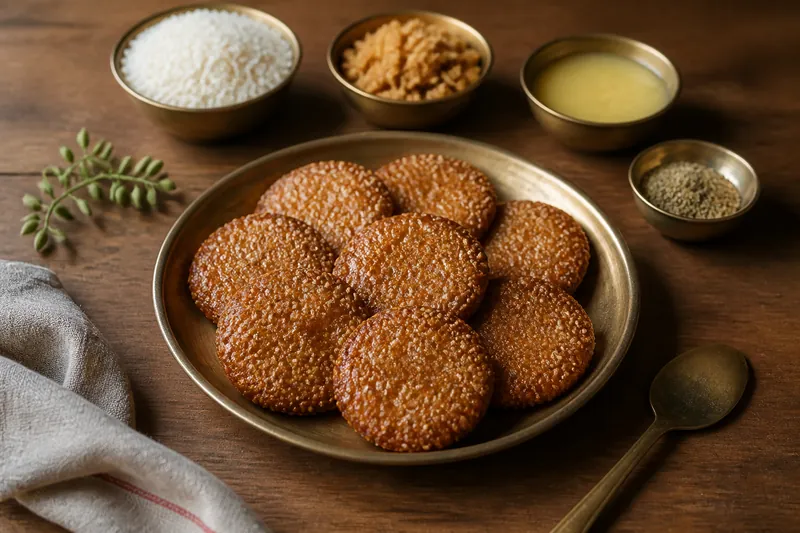
AnarsaNepaliOpen the recipe →Anarsa is a dense, crisp-edged sweet made from soaked rice and sugar, often finished with sesame seeds. It tastes gently caramelized, with a grainy richness that sits somewhere between a cookie and a fritter. Because the rice is soaked and rested for many hours, it is a make-ahead dish suited to festivals or large gatherings. The dough should be handled carefully; if it is too wet, the rounds lose their shape, and if it is too dry, they crack. Fry them slowly so the center cooks through without darkening too fast.
Sour greens in a broth for many bowls
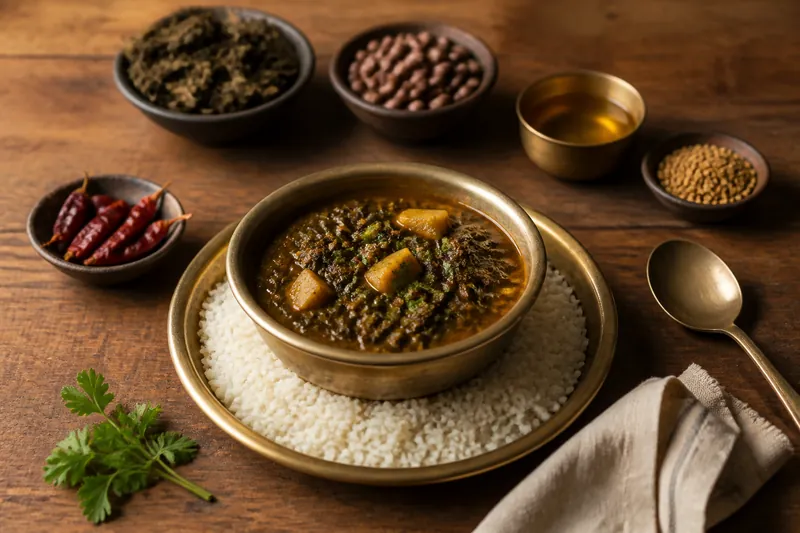 Gundruk ko JholNepaliOpen the recipe →
Gundruk ko Jhol is a light, sour soup built around fermented leafy greens. The flavor is sharp and earthy, with a clean broth that usually carries spices, tomato, and sometimes a little heat. It is one of the easier ways to feed a crowd because the pot stretches well and the flavor deepens as it sits. The main thing to know is that gundruk already brings strong acidity, so the seasoning should be added gradually. Taste as you go, especially if the broth also includes tomatoes or other sour ingredients.
A set yogurt for a large serving bowl
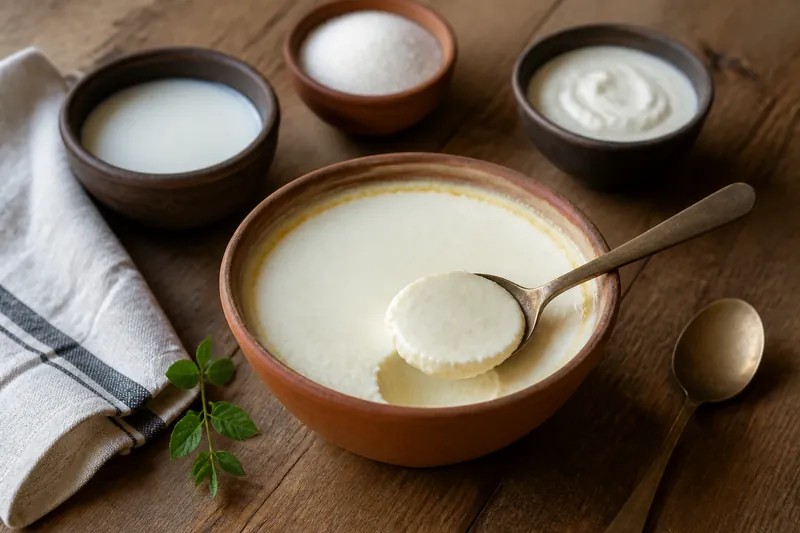 Juju DhauNepaliOpen the recipe →
Juju Dhau is the thick, custardy yogurt often associated with Bhaktapur. It is mild, creamy, and only lightly sweet, with a surface that can hold its shape when chilled properly. For a table of six or more, it works as a shared dessert after a heavy meal, especially when served cold in a large bowl or set of cups. The key is patience with the setting and draining process. Use good milk and keep the yogurt undisturbed while it firms, or the texture can turn loose instead of rich and spoonable.
Festive rings and twists for sharing
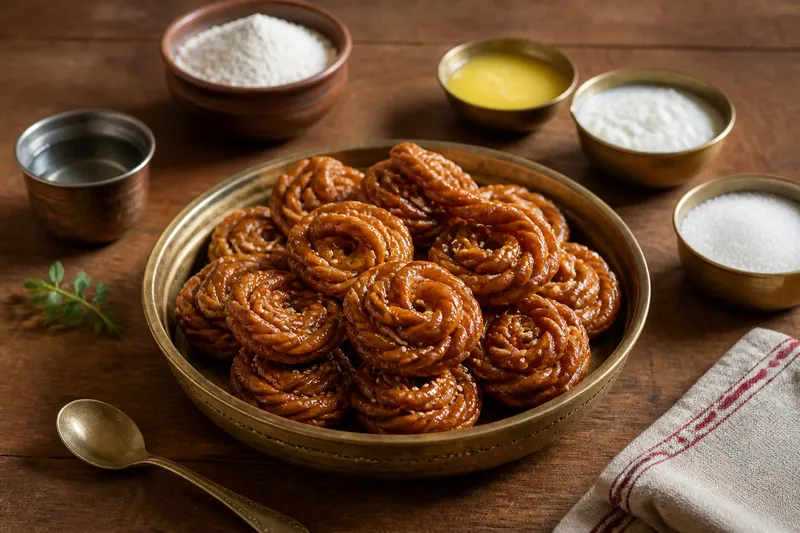 LakhamariNepaliOpen the recipe →
Lakhamari is a decorative sweet bread or biscuit made for celebrations, often shaped into rings, twists, or other large forms. It is crisp, lightly sweet, and usually flavored with sesame, fennel, or cardamom depending on the maker. Because the pieces are substantial and keep well, they are useful for serving a group over tea or as part of a festival tray. One thing to know before starting is that the shapes matter as much as the flavor. The dough should be firm enough to hold detailed forms, and the frying or baking should be watched closely so the edges do not darken too fast.
Ring-shaped rice bread for breakfast and festivity
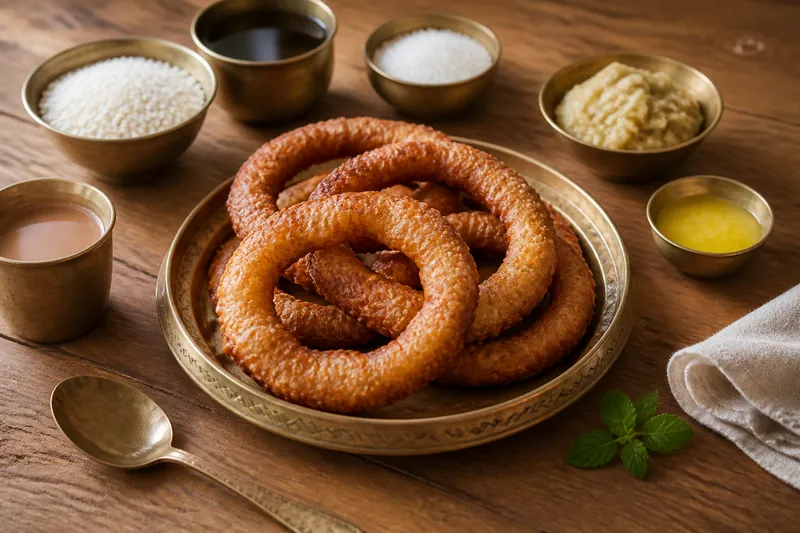 Sel RotiNepaliOpen the recipe →
Sel Roti is a traditional rice batter bread, fried into neat rings with a crisp shell and a soft, slightly chewy center. It tastes mildly sweet and rich, with a fragrance that comes from rice, sugar, and sometimes spices like cardamom. It is made in quantity because the batter and the frying setup reward a steady hand and a full batch. The long prep time comes from soaking and grinding the rice, so plan ahead. The batter should be smooth but not thin; if it runs too freely, the rings spread and lose the proper texture.
A nettle soup that serves like a meal
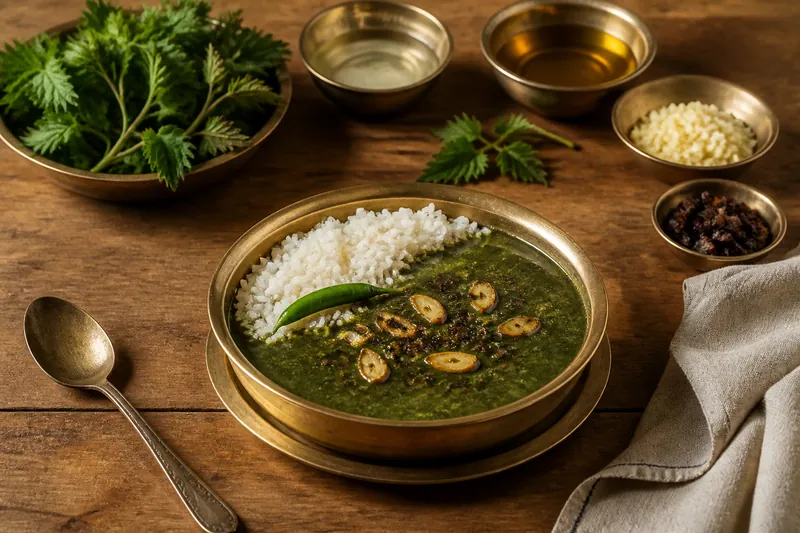 Sisnu ko JholNepaliOpen the recipe →
Sisnu ko Jhol is a broth made with nettles, usually turned into a comforting soup with spice, aromatics, and often a few vegetables. The taste is green, savory, and slightly mineral, with a clean finish that makes it especially good alongside rice. It is worth cooking for a larger group because nettles cook down quickly and give the pot a deep, fresh flavor. The cook should know that fresh nettles must be handled carefully before they go into the pot. Use gloves when cleaning and chopping them, and cook them thoroughly so the sting disappears.
Spiced cookies that keep well for a crowd
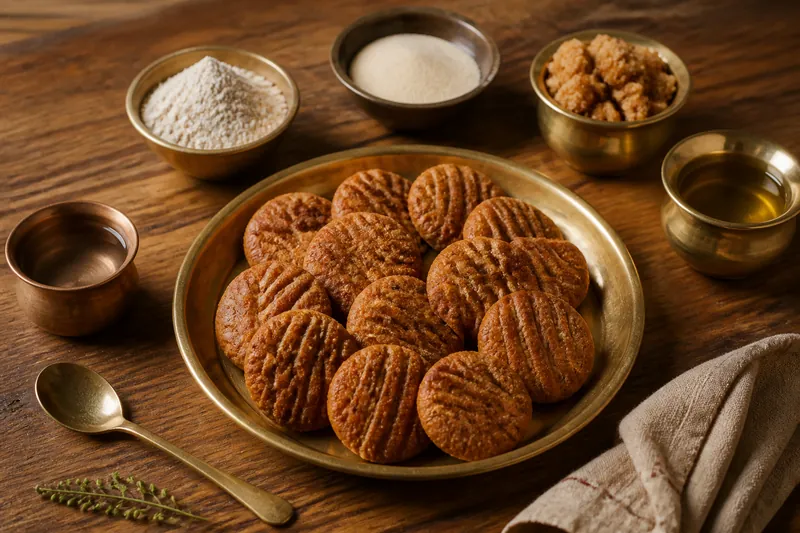 ThekuwaNepaliOpen the recipe →
Thekuwa is a sturdy, sweet biscuit made from flour, jaggery or sugar, and warming spices. It has a toasted flavor and a firm bite, with enough sweetness to work as a snack, a tea companion, or part of a festival spread. Since it holds well after cooking, it is practical when you need something that can be made ahead for many people. The main thing to watch is the dough texture. It should be kneadable but not soft, or the cookies will spread too much and lose their characteristic thickness when fried or baked.
Steamed dumplings with a sweet center
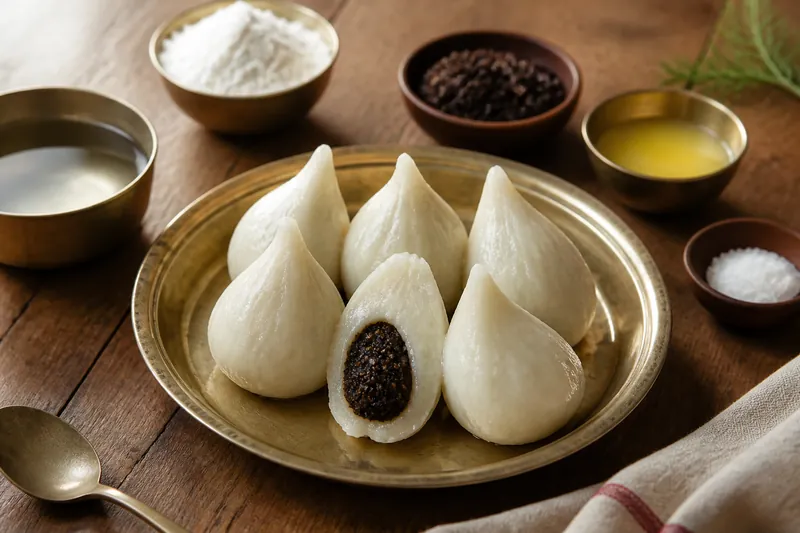 YomariNepaliOpen the recipe →
Yomari are delicate steamed dumplings made from rice flour dough and filled with sweet molasses, sesame, coconut, or similar fillings. The outside is mild and tender, while the filling is rich and fragrant, so each bite gives a contrast of plain dough and sweet center. They are special enough for celebration, yet practical in quantity because they can be shaped one after another and steamed in batches. The important thing to know is that the dough must stay pliable while you work. If it dries out, it cracks when shaped, and the filling can leak during steaming.
These dishes show how often Nepali cooking is built for sharing. Some are festive, some are everyday food, and some take hours of soaking or resting, but all of them make sense when the table is full. For six or more, that is often the point.