Nepali
Thekuwa
Thekuwa is a traditional Nepali fried sweet from the Terai, often made for Chhath with whole wheat flour, jaggery, ghee, and fennel. It is crisp at the edges, gently crumbly inside, and fragrant with caramel-like gur.
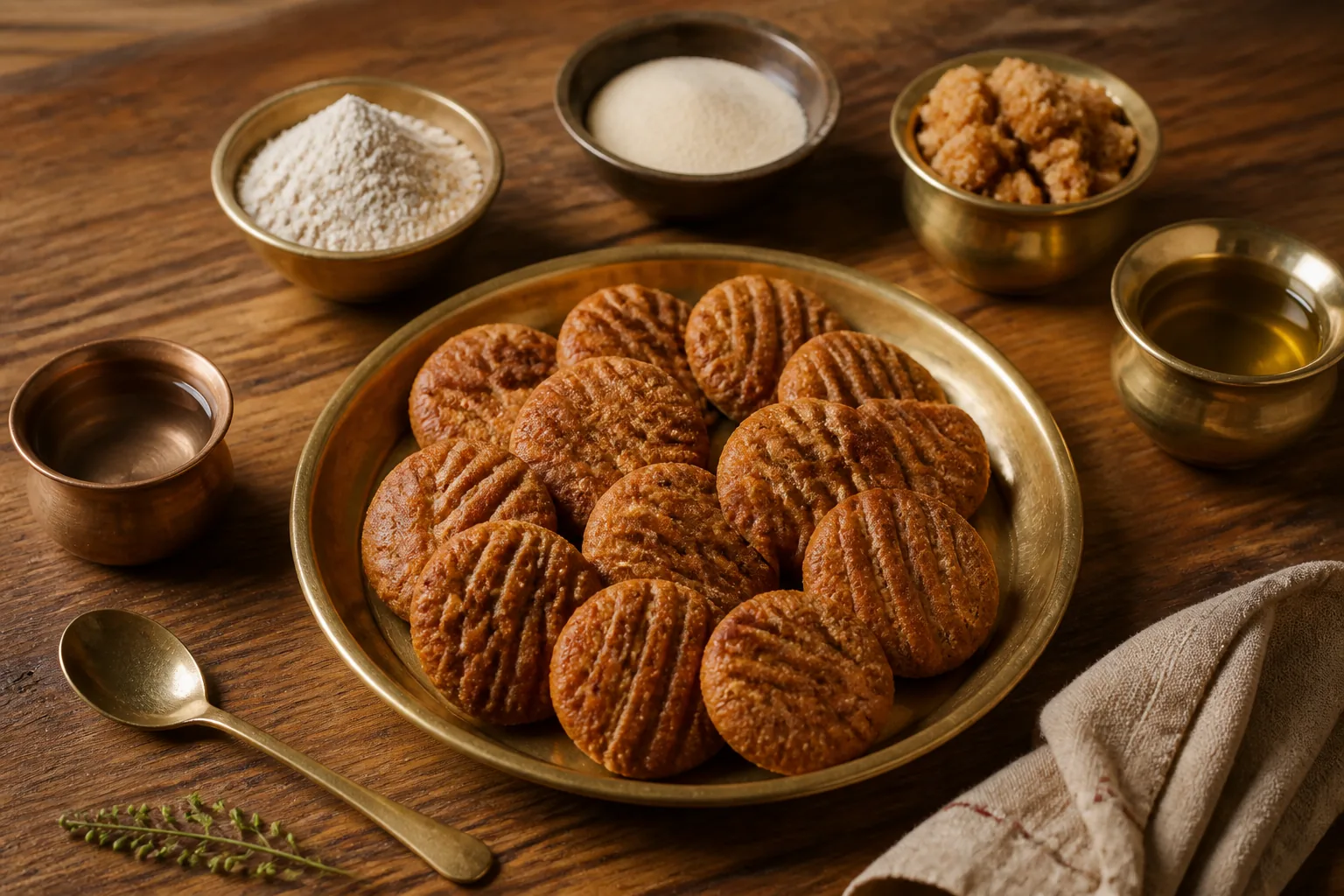
Ingredients
- Whole wheat flour (atta)1 cup
- Fine semolina (suji)2 tbsp
- Jaggery (gur), grated1/3 cup
- Water1/4 cup
- Ghee2 tbsp
- Fennel seeds1 tsp
- Green cardamom powder1/4 tsp
- Fresh or dry grated coconut2 tbsp
- Neutral oil or ghee, for deep-frying2 cups
Method
- Combine the grated jaggery and water in a small pan and warm gently until the jaggery dissolves.
- Strain the jaggery syrup through a fine sieve to remove any grit and let it cool until just warm.
- Mix the whole wheat flour, semolina, fennel seeds, cardamom powder, and grated coconut in a bowl.
- Rub the ghee into the flour mixture with your fingertips until it looks sandy and holds together slightly when pressed.
- Add the jaggery syrup a little at a time and knead into a firm, tight dough; use only as much syrup as needed.
- Cover the dough and rest it for 10 minutes.
- Divide the dough into 6 equal portions and roll each into a ball.
- Flatten each ball into a thick disc about 1 cm thick and press it onto a thekuwa mould, fork, or clean leaf to make a pattern.
- Heat the oil or ghee in a deep pan over medium-low heat until a small bit of dough rises slowly with gentle bubbles.
- Fry the thekuwa in batches over medium-low heat, turning occasionally, until deep golden brown and cooked through, about 6 to 8 minutes per batch.
- Drain on paper or a metal rack and let the thekuwa cool completely so they become crisp.
Common questions
Can I substitute whole wheat flour or semolina in thekuwa?
Yes. You can use all whole wheat flour if needed, though semolina gives a crisper bite. If you skip semolina, add a little extra flour only if the dough feels too soft. Avoid too much extra liquid.
How long does the dough need to rest before shaping and frying?
Rest the dough for about 10 minutes after kneading. This lets the flour hydrate and makes shaping easier. If it sits much longer, cover it well so it doesn’t dry out and crack when pressed.
What are the most common mistakes when frying thekuwa?
The biggest mistake is frying on high heat. Thekuwa should cook in medium-low oil so it browns evenly without burning outside and staying raw inside. Also avoid a soft dough; it should be firm and tight, not sticky.
How should I store thekuwa and how long does it keep?
Cool completely before storing. Keep in an airtight container at room temperature for about 1 to 2 weeks. If they soften from humidity, re-crisp briefly in a low oven or dry pan before serving.
What is the best way to serve thekuwa?
Serve thekuwa at room temperature as a snack or with tea. It’s also good with yogurt or milk for a more filling treat. If desired, pair with sesame seeds, nuts, or a little extra grated coconut.