Nepali
Sisnu ko Jhol
Sisnu ko jhol is a homely Nepali nettle soup, silky and earthy with a warm garlic-jimbu tempering. It is traditionally eaten with steamed rice, dhindo, or roti in the hills.
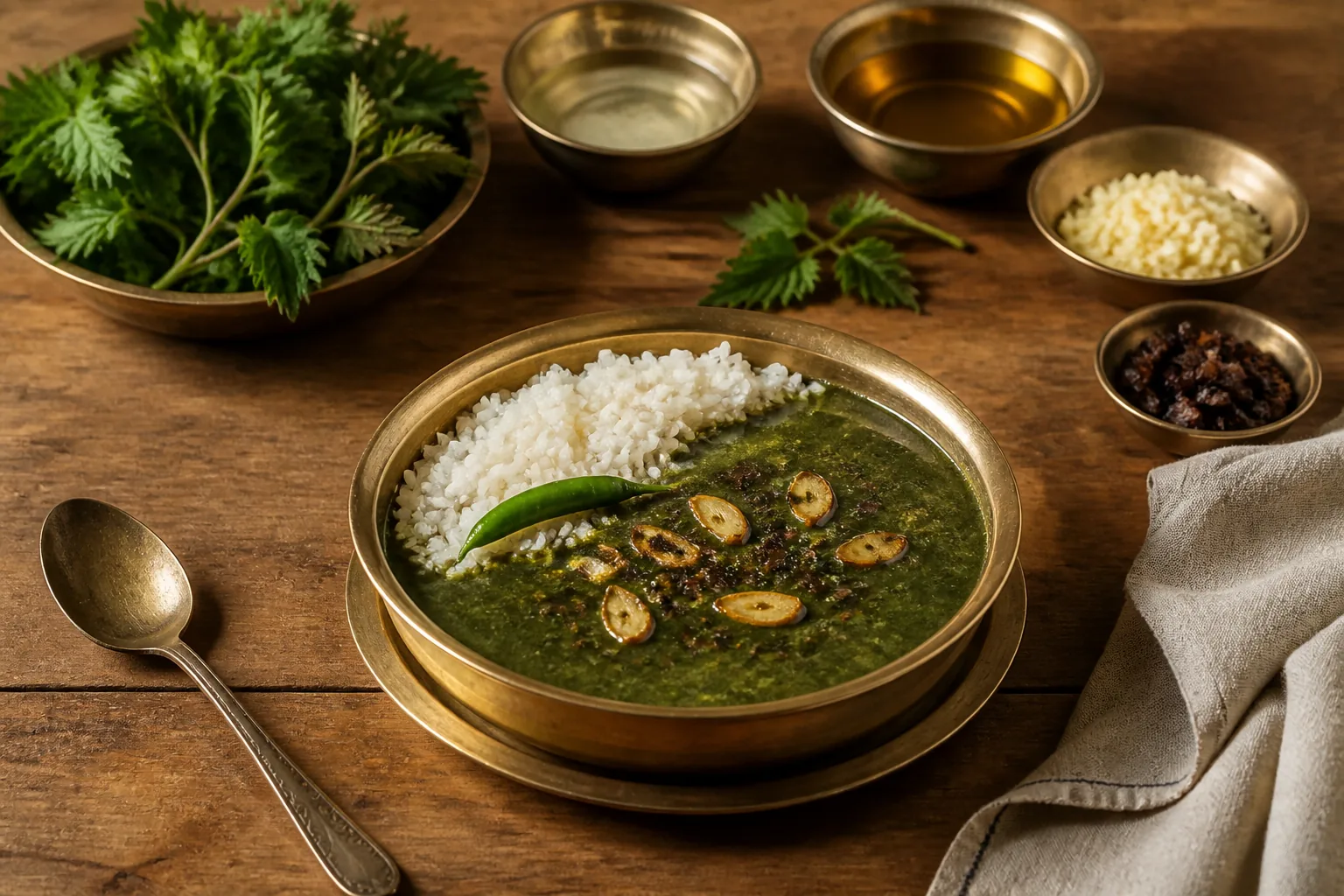
Ingredients
- Fresh sisnu leaves and tender tips, handled with gloves4 packed cups
- Water3 cups
- Mustard oil or ghee1 1/2 tbsp
- Garlic, finely crushed4 cloves
- Dried jimbu1/2 tsp
- Cumin seeds1/2 tsp
- Turmeric powder1/4 tsp
- Fresh green chilli, slit1
- Makai ko pitho, corn flour or millet flour1 tbsp
- Cold water for slurry3 tbsp
- Salt3/4 tsp or to taste
- Timur powder, optional1 pinch
Method
- Wearing gloves, pick only the tender sisnu leaves and tips, discarding tough stems, then rinse them well in several changes of water.
- Bring 3 cups water to a boil in a pot, add the sisnu, and boil for 3 to 4 minutes until the sting is gone and the leaves soften.
- Mash the cooked sisnu directly in the pot with a wooden churner or ladle until it becomes coarse and soupy, or briefly crush it with a silauto-style mortar if preferred.
- Stir in the turmeric, slit green chilli, and salt, then simmer for 5 minutes.
- Mix the makai ko pitho with 3 tablespoons cold water to make a smooth slurry, then pour it into the simmering sisnu while stirring continuously.
- Simmer for 6 to 8 minutes, stirring often, until the jhol turns slightly thick, smooth, and glossy.
- Heat mustard oil or ghee in a small tempering pan; if using mustard oil, heat it until it just smokes, then lower the heat.
- Add cumin seeds, crushed garlic, and jimbu, and fry for a few seconds until fragrant and lightly golden, taking care not to burn the jimbu.
- Pour the hot tempering into the sisnu jhol, stir well, and simmer for 1 minute.
- Finish with a pinch of timur if using, adjust salt, and serve hot with bhat or dhindo.
Common questions
Can I substitute the makai ko pitho in Sisnu ko Jhol with something else if I don't have corn flour or millet flour?
Yes. Corn flour gives the smoothest, lightest body; millet flour works too and tastes more rustic. In a pinch, rice flour can thicken it, but use less and simmer longer so it doesn't taste chalky.
How long should I boil the sisnu so it loses the sting but doesn't turn mushy?
Usually 3 to 4 minutes in boiling water is enough for tender sisnu leaves and tips. If the leaves are very young, start checking at 2 minutes. Overboiling can dull the color and make the jhol less fresh.
What are the most common mistakes when making sisnu ko jhol?
Not wearing gloves during cleaning, using tough stems, and adding flour slurry too fast are the biggest mistakes. Also avoid skipping the mustard-oil tempering, which gives the dish its aroma and rounds out the earthiness.
How should I store leftover Sisnu ko Jhol, and does it thicken after cooling?
Store it covered in the fridge for up to 2 days. It usually thickens as it cools because of the flour. Reheat gently with a splash of water, stirring well to bring back the soup-like texture.
What is the best way to serve Sisnu ko Jhol?
Serve it hot with steamed rice, dhido, or flatbread, and pour the tempering over just before serving for the best aroma. A little timur on top is optional but gives a bright, peppery finish.