6 Korean Dishes That Feed Six or More
From brothy beef soups to holiday sweets, these Korean dishes are built for a crowd and worth the time they take.
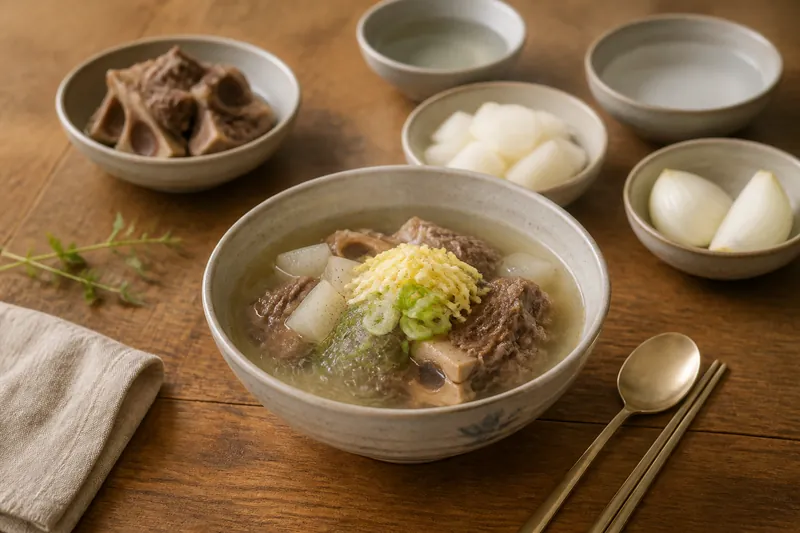
Some Korean dishes are meant to be shared around a large table, with bowls, rice, condiments, and plenty of room for second helpings. They reward patient cooking and serve comfortably when you need to feed six or more.
This selection stays with dishes that scale well and make sense for a group, from long-simmered soups to celebratory sweets. Each one has a different rhythm, but all of them are generous in the same practical way.
Clear beef short rib soup
GalbitangKoreanOpen the recipe →Galbitang is a clear, delicate soup made from beef short ribs simmered until the broth turns rich but still light. It tastes clean and savory, with garlic, onion, and the sweetness of well-cooked beef. For a group, it is useful because it feels complete without being heavy, especially with rice and kimchi on the side. It also reheats well. The main thing to know is that the broth depends on careful skimming and enough time for the ribs to soften, so do not rush the simmer or crowd the pot.
Milk-white beef bone soup
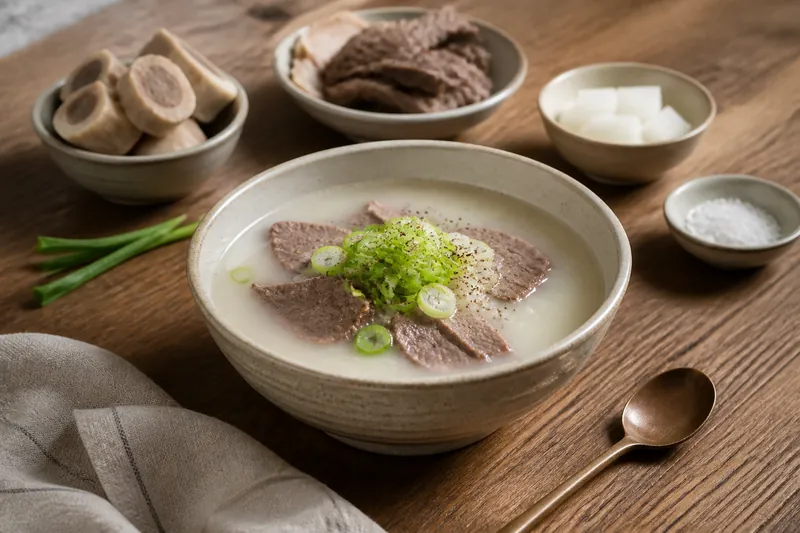 SeolleongtangKoreanOpen the recipe →
Seolleongtang is a long-cooked beef bone soup with a pale, milky broth and a quiet, deep flavor. It is mild rather than bold, meant to be seasoned at the table with salt, pepper, scallions, and sliced noodles or rice. That makes it especially useful for feeding a crowd, because each bowl can be adjusted to taste. The work is mostly waiting: the broth needs a long, steady simmer and careful attention to keep it clean. Plan ahead, because this is not a same-day soup in any practical sense.
Spicy shredded beef soup
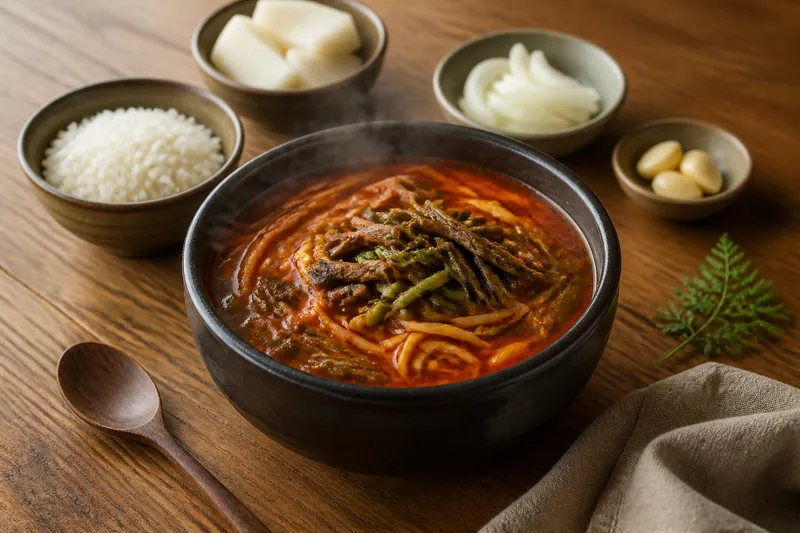 YukgaejangKoreanOpen the recipe →
Yukgaejang is a fiery, full-bodied soup made with shredded beef, bracken, scallions, and chili. It has heat, depth, and a little bitterness from the vegetables, which gives each spoonful some edge. It feeds a group well because it is strong enough to anchor rice and because the broth stretches without losing character. It is also a good make-ahead dish. The key point is to get the beef tender enough to shred cleanly, then season carefully; once the chili goes in, the broth can become blunt if it is overdone.
Braised pork hock for slicing
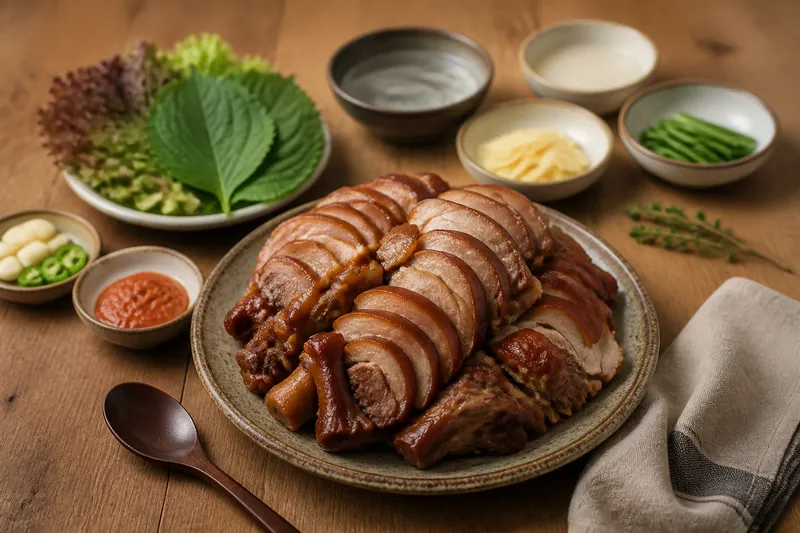 JokbalKoreanOpen the recipe →
Jokbal is braised pork hock, cooked until the meat is tender, glossy, and sliceable. The flavor is savory, gently sweet, and scented with soy, garlic, ginger, and aromatics. It works well for six or more because it is served in slices, often with lettuce, ssamjang, garlic, and chilies, so people can build their own bites. It is also rich enough that a little goes a long way. The cook should pay attention to soaking and braising time, since the hock needs to be cleaned properly and cooked until the skin and connective tissue turn soft.
Half-moon rice cakes
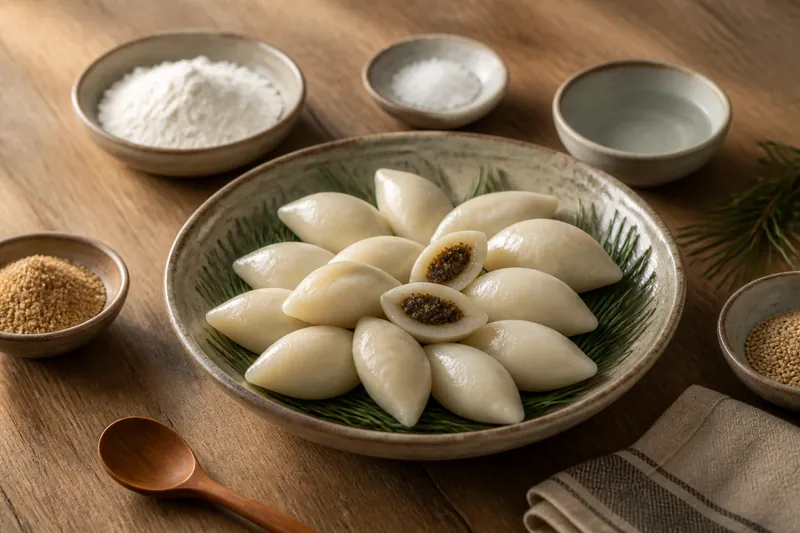 SongpyeonKoreanOpen the recipe →
Songpyeon are small rice cakes shaped like half-moons and filled with sweetened sesame, bean paste, or other simple fillings. They taste soft and mildly sweet, with a pleasant chew and a faint nutty note from the filling or the steaming aroma. They are worth making for a crowd because they bring a festive finish to a meal and can be prepared in batches. The main thing to know is that the dough must be handled gently and kept from drying out, or the cakes will crack when shaped or steamed.
Honey-soaked sesame cookies
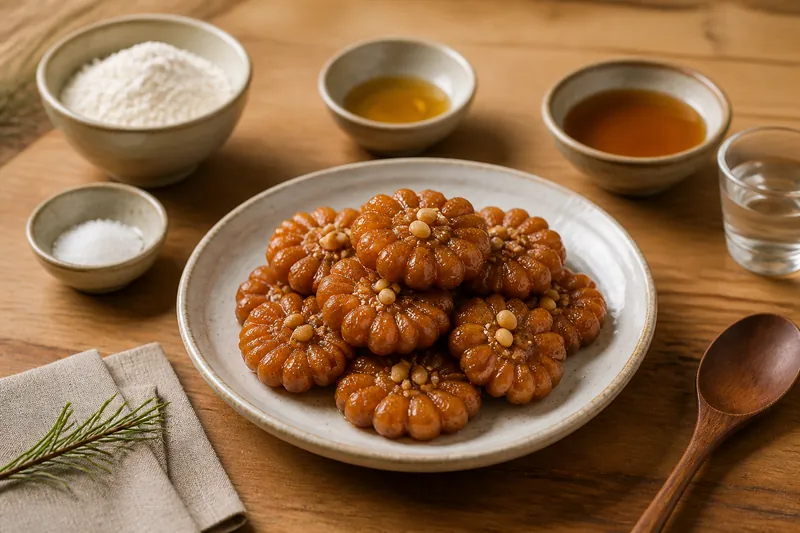 YakgwaKoreanOpen the recipe →
Yakgwa are deep-fried wheat cookies soaked in a honey or syrup mixture, often scented with sesame oil and ginger. They are dense, fragrant, and sweet without being airy; the texture is more tender than crisp once the syrup has soaked in. For serving six or more, they are practical because they keep well and can be made ahead. They are also rich enough that small pieces satisfy. One thing to know is that the dough and frying stage need control, since the cookies can brown too quickly and then absorb syrup unevenly.
For a large table, these dishes offer different kinds of generosity: broth, braise, rice cake, and cookie. Some ask for patience, others for careful handling, but all of them repay the effort with food that feels complete when shared.