Korean
Yukgaejang
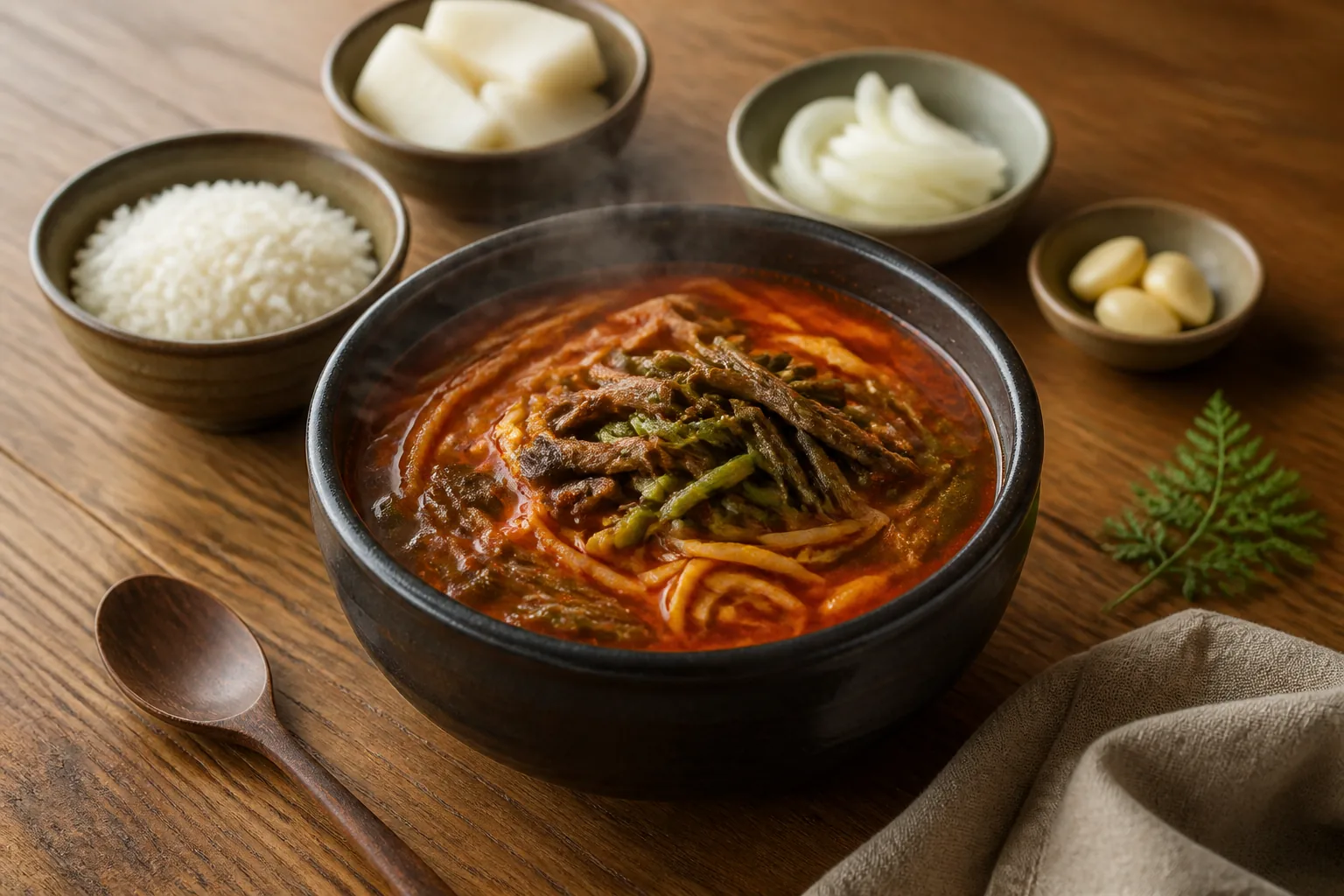
A deep, spicy Korean beef soup with shredded brisket, fernbrake, scallions, mushrooms, and mung bean sprouts in a red chile-scented broth. It is served steaming hot, often with rice on the side to soak up the savory heat.
 Watch it madeRina Takagi · 1:30
Ingredients
- Beef brisket or beef shank250g
- Water6 cups
- Korean radish, cut into large chunks120g
- Onion1/2 medium
- Garlic cloves5
- Ginger slice1 thin slice
- Boiled gosari, Korean fernbrake80g
- Mung bean sprouts120g
- Daepa or large scallions3 stalks
- Oyster mushrooms, torn into strips80g
- Dangmyeon, sweet potato glass noodles40g
- Korean gochugaru2 1/2 tbsp
- Sesame oil1 1/2 tbsp
- Neutral oil1 tbsp
- Guk-ganjang, Korean soup soy sauce2 tbsp
- Gochujang1 tsp
- Minced garlic1 tbsp
- Fine sea saltto taste
- Ground black pepper1/4 tsp
- Egg, lightly beaten1
- Cooked short-grain rice, for serving2 bowls
Method
- Soak the dangmyeon in cool water for 30 minutes, then drain and cut into shorter lengths.
- Place the beef, water, radish, onion, whole garlic cloves, and ginger in a pot and bring to a boil over high heat.
- Skim off foam, reduce the heat to low, cover partly, and simmer for 1 hour 15 minutes until the beef is tender.
- Lift out the beef and radish, strain the broth, and discard the onion, garlic, and ginger.
- Shred the beef along the grain and cut the cooked radish into bite-size pieces.
- Blanch the mung bean sprouts for 1 minute and rinse briefly, then drain well.
- Cut the scallions into 7cm lengths and split any thick white parts lengthwise.
- In a bowl, combine the shredded beef, gosari, mung bean sprouts, scallions, oyster mushrooms, gochugaru, sesame oil, neutral oil, guk-ganjang, gochujang, minced garlic, and black pepper, mixing by hand or tongs to coat evenly.
- Heat a soup pot over medium heat, add the seasoned beef and vegetables, and stir-fry for 3 to 4 minutes until fragrant and the chile oil stains everything red.
- Pour in 4 cups of the strained beef broth and add the cooked radish.
- Bring to a boil, then reduce to a lively simmer and cook for 20 minutes so the vegetables soften and the broth turns deep red.
- Add the soaked dangmyeon and simmer for 5 minutes until translucent and tender.
- Taste and season with salt or a little more guk-ganjang if needed.
- Slowly drizzle in the beaten egg without stirring for 20 seconds, then gently nudge the broth once to form soft ribbons.
- Serve the yukgaejang very hot in bowls with cooked short-grain rice on the side.
Common questions
Can I substitute gosari, mung bean sprouts, or dangmyeon if I can’t find them?
Yes. Dried gosari can be replaced with bracken fern, or omitted in a pinch. Mung bean sprouts can be swapped with thinly sliced napa cabbage. Dangmyeon can be left out, or replaced with glass vermicelli added at the end.
How long does yukgaejang take, and can I make part of it ahead?
Plan on about 2 hours total, mostly simmering time. The broth and shredded beef can be made a day ahead. Soak the noodles, blanch sprouts, and mix the seasoned beef just before the final simmer.
What are the most common mistakes when making yukgaejang?
The biggest mistakes are boiling the broth too hard, which makes it cloudy and toughens the beef, and overcooking the sprouts and noodles so they go mushy. Also, season the beef mixture well before adding broth.
How should I store leftovers, and does the soup keep well?
Store the soup and noodles separately if possible. Refrigerate for up to 3 days. The broth tastes even better the next day, but dangmyeon keeps absorbing liquid, so add extra broth when reheating or cook noodles fresh.
What’s the best way to serve yukgaejang?
Serve it piping hot in a large bowl with steamed rice on the side, or spoon the rice directly into the soup. Finish with extra scallions or sesame oil if you want more aroma and richness.