Korean
Galbitang
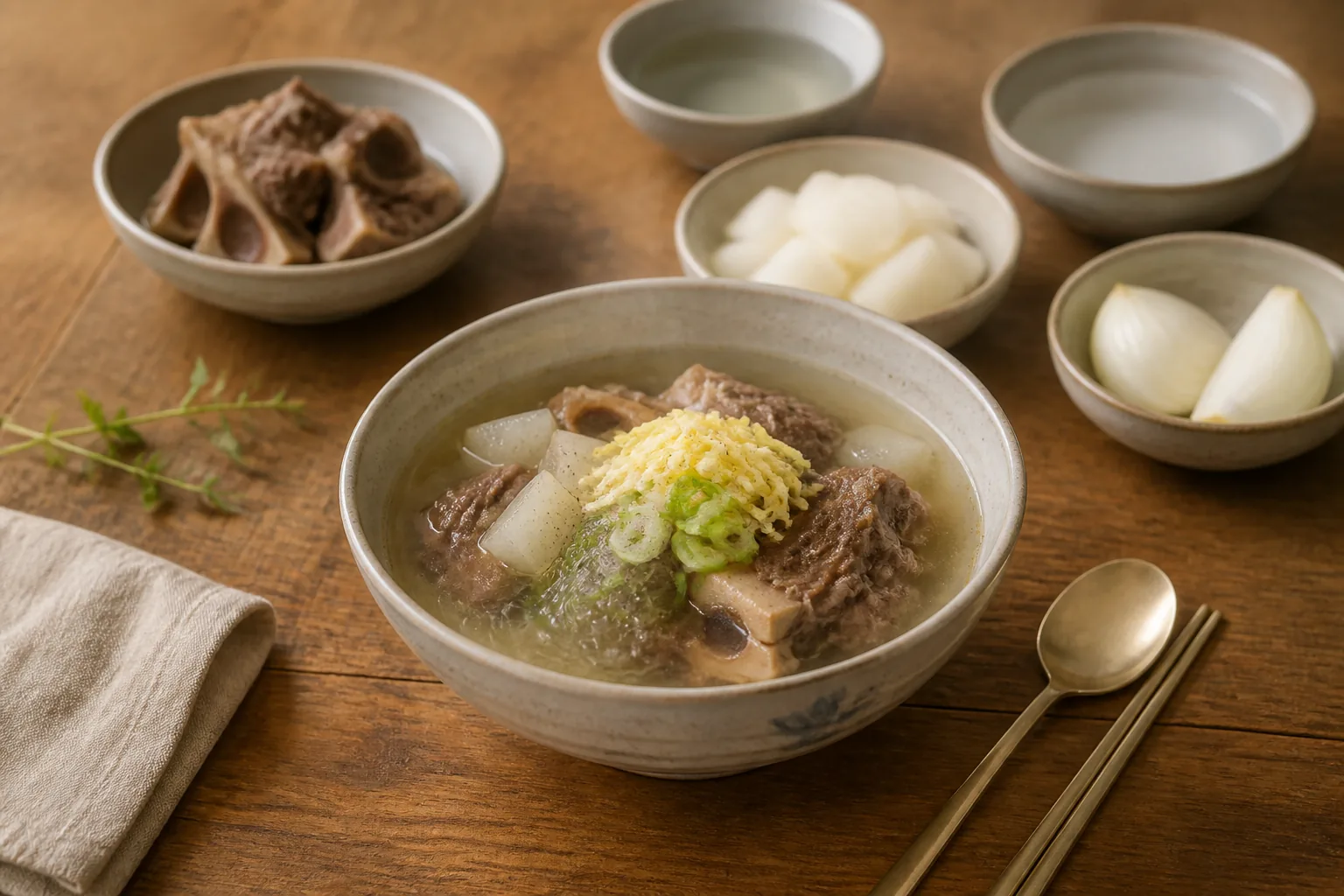
Galbitang is a clear Korean beef short rib soup with tender meat, sweet radish, and a clean, savory broth. It is served steaming hot with scallions, egg garnish, and a little salt and pepper to season at the table.
 Watch it madeMaangchi · 7:59
Ingredients
- beef short ribs, cut across the bone700g
- cold water, for soakingas needed
- water, for broth8 cups
- Korean radish or daikon, peeled and cut into large chunks250g
- yellow onion, halved1/2 medium
- garlic cloves5
- ginger slices3 thin slices
- large scallion, white part for broth and green part for garnish1
- whole black peppercorns1 tsp
- Korean soup soy sauce1 tbsp
- fine sea salt1 tsp, plus more to taste
- dangmyeon sweet potato starch noodles40g
- egg1
- neutral oil1/2 tsp
- ground black pepperto taste
Method
- Soak the beef short ribs in a bowl of cold water for 1 hour, changing the water once or twice to draw out the blood.
- Drain the ribs, place them in a pot, cover with fresh water, bring to a boil, and blanch for 5 minutes.
- Drain the ribs, rinse them under warm running water, and wash the pot to remove any scum.
- Return the ribs to the clean pot with 8 cups water, Korean radish, onion, garlic, ginger, scallion white, and peppercorns.
- Bring to a boil, skim the surface well, then reduce to a gentle simmer and cook uncovered for 1 hour 30 minutes.
- Remove the radish when tender, cut it into thick bite-size slices, and set it aside.
- Continue simmering the ribs for 30 to 45 minutes more, until the meat is tender but still attached to the bone.
- Strain the broth through a fine sieve, discard the aromatics, and skim off excess fat from the surface.
- Return the clear broth, ribs, and sliced radish to the pot, then season with soup soy sauce and salt.
- Soak the dangmyeon in warm water for 20 minutes, then add it to the soup and simmer for 5 minutes until translucent and tender.
- Beat the egg, cook it in a lightly oiled skillet as a thin omelet, cool slightly, and slice into fine strips for garnish.
- Ladle the hot soup into bowls and top with sliced scallion greens, egg strips, and ground black pepper.
- Serve with extra salt and pepper on the side so each bowl can be seasoned to taste.
Common questions
Can I substitute boneless beef or another cut for galbitang short ribs?
Yes, but flavor and texture change. Boneless beef shank, chuck, or brisket can work in a pinch; simmer until tender. Short ribs give the cleanest, richest broth and the classic bone-in presentation.
How long does galbitang take, and when should I know the ribs are done?
Plan on about 2.5 to 3 hours total, plus soaking time. The ribs are done when the meat is tender but still clinging to the bone and the broth tastes clean, beefy, and balanced.
What are the most common mistakes when making galbitang?
Skipping the soak, not blanching and rinsing the ribs, boiling too hard, and not skimming fat can make the broth cloudy or greasy. Also, don’t overcook the radish; remove it once just tender.
How should I store and reheat leftover galbitang?
Cool quickly, refrigerate the broth, ribs, and radish separately if possible, and use within 3 to 4 days. The broth also freezes well for up to 2 months. Reheat gently so the meat stays tender.
How is galbitang usually served, and can I add noodles or rice?
Serve it hot with sliced green scallion, salt, and soup soy sauce on the side so each person seasons to taste. Dangmyeon noodles are traditional, and steamed rice is a very common and welcome addition.