Korean
Seolleongtang
Seolleongtang is a milky Korean ox bone soup served steaming hot with tender slices of beef, rice, scallions, salt, and pepper added at the table. The deep white broth comes from patiently soaking, blanching, and hard-simmering the bones until their marrow and collagen enrich the soup.
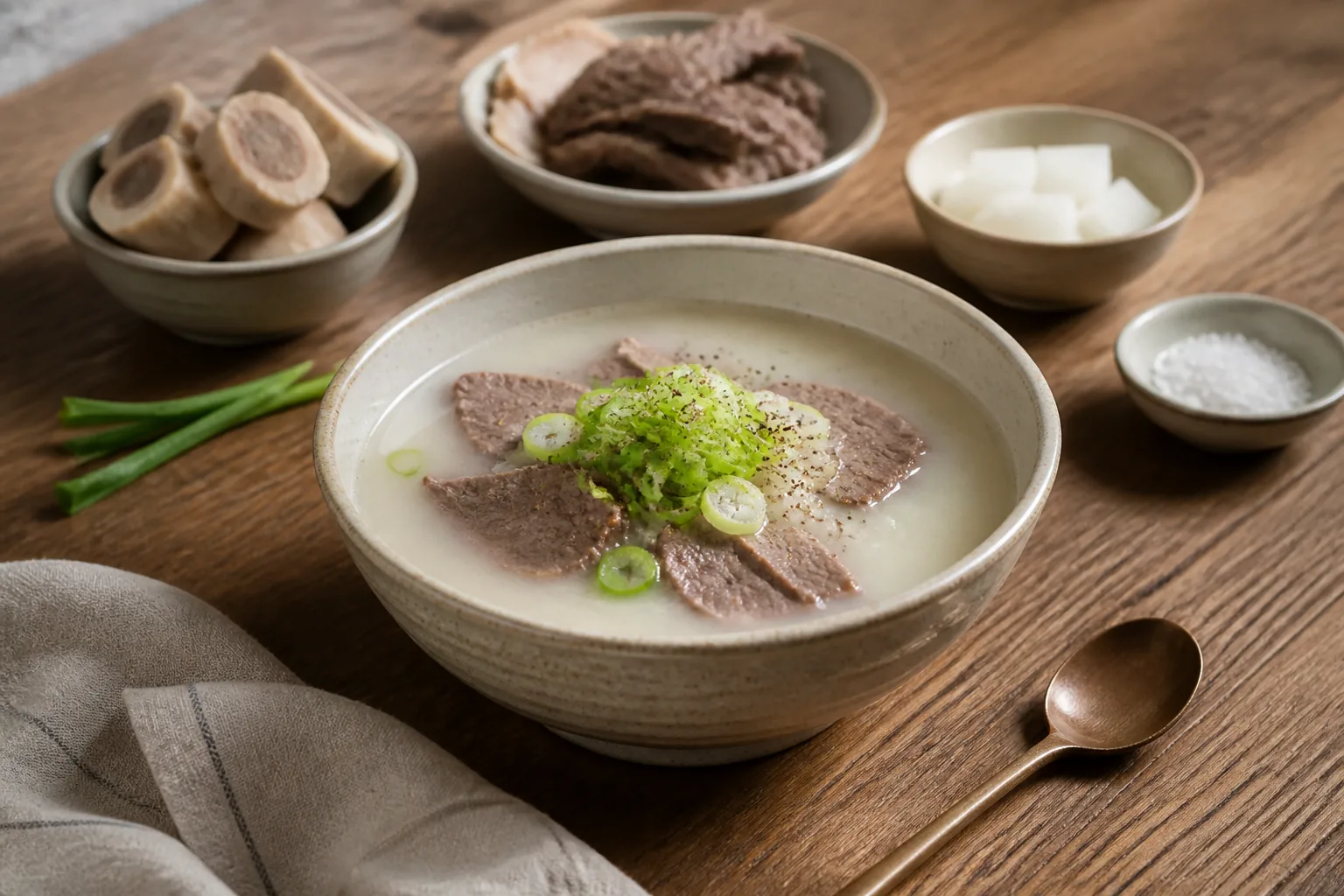
Ingredients
- Beef leg bones or ox bones, cut crosswise1.2 kg
- Beef brisket or shank250 g
- Cold water, for soakingas needed
- Water, for broth3.5 liters
- Korean radish, peeled150 g
- Large green onion, white part1 piece
- Garlic cloves4
- Cooked short-grain rice2 bowls
- Green onions, thinly sliced3 tablespoons
- Fine sea saltto taste
- Ground black pepperto taste
- Kkakdugi or napa cabbage kimchi, for servingas desired
Method
- Place the beef bones in a large bowl, cover with cold water, and soak for at least 8 hours or overnight, changing the water 2 to 3 times to draw out blood.
- Put the soaked bones in a large pot, cover with fresh water, bring to a boil, and boil hard for 10 minutes.
- Drain the bones, discard the blanching water, rinse the bones under running water, and scrub the pot clean to remove scum.
- Return the clean bones to the pot, add 3.5 liters water, and bring to a strong boil.
- Boil vigorously uncovered for 20 minutes, then keep the broth at a steady lively simmer for 3 hours, adding hot water as needed to keep the bones covered.
- Add the brisket or shank, Korean radish, green onion white part, and garlic, then simmer for 1 1/2 to 2 hours until the beef is tender.
- Remove the beef and radish, discard the green onion and garlic, and let the beef cool slightly before slicing it thinly across the grain.
- Continue simmering the bones for 2 to 3 more hours, adding hot water as needed, until the broth is cloudy, white, and full-bodied.
- Strain the broth through a fine sieve, then skim excess fat from the surface while leaving some richness in the soup.
- Return the broth to the pot, bring it back to a boil, and do not season the whole pot.
- Divide cooked rice between 2 large bowls, top with sliced beef and a few slices of cooked radish, and ladle the boiling broth over the top.
- Serve immediately with sliced green onions, salt, black pepper, and kimchi on the side so each person can season their bowl.
Common questions
Can I substitute other bones or cuts if I can’t find beef leg bones or ox bones?
Yes. Use marrow bones, knuckle bones, or a mix of soup bones and shank. For the meat, brisket, shank, or chuck all work. Choose pieces with some fat and collagen so the broth tastes rich and opaque.
How long does seolleongtang take from start to finish, including soaking?
Plan on about 10 to 14 hours total, mostly inactive time. Soaking takes 8 to 12 hours, then blanching, boiling, and simmering take another 5 to 6 hours depending on the size of the bones and meat.
What are the most common mistakes when making the broth?
Skipping the soak, not blanching and rinsing the bones, and simmering too hard or too gently are the biggest errors. Also, don’t let the bones sit uncovered; keep them submerged with hot water so the broth stays milky and clean.
How should I store leftover seolleongtang and beef?
Cool the broth quickly, then refrigerate it separately from the sliced beef for up to 3 days. For longer storage, freeze the broth in portions for up to 2 months. Reheat gently and add fresh rice, salt, and garnishes when serving.
What’s the best way to serve seolleongtang?
Serve it piping hot over cooked short-grain rice with sliced beef on top or beside it. Season individually with fine salt and black pepper at the table, then add scallions and kimchi. Kkakdugi is the classic pairing and helps cut the richness.