8 Easy Korean Dishes to Cook at Home
These eight Korean dishes use a short list of pantry staples and come together quickly, with clear flavors and little fuss.
Korean home cooking often looks more complicated than it is. Many of the most useful dishes rely on a few core ingredients: kimchi, soy sauce, sesame oil, garlic, scallions, dried anchovies, and stock. Once those are in the kitchen, the rest is mostly timing.
These are the easiest dishes to start with because they are direct, forgiving, and satisfying. Some are stews, some are pancakes, and one is a steamed egg dish, but all of them make a useful weeknight meal or side dish.
Soft steamed eggs
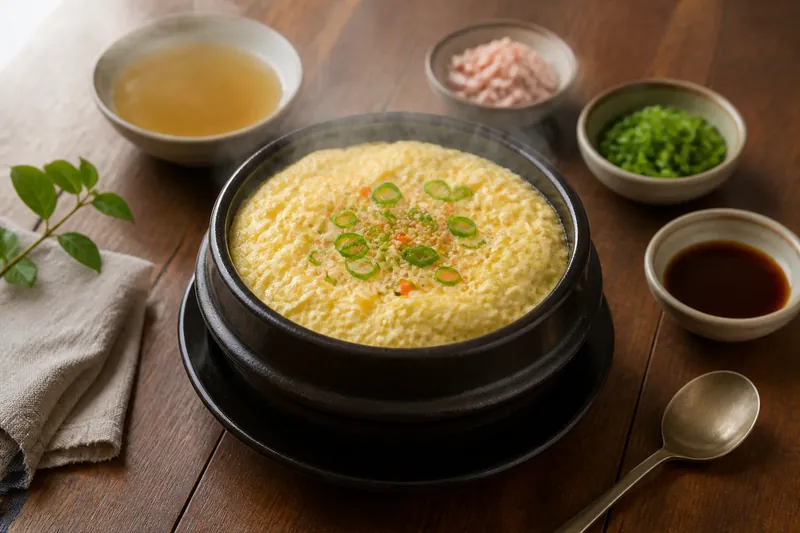
Gyeran-jjimKoreanOpen the recipe →Gyeran-jjim is a gently steamed egg custard, light and savory, often finished with scallions or sesame oil. It tastes clean and comforting, with a texture somewhere between scrambled eggs and custard. It is worth cooking because it comes together fast and works as a side dish for almost any Korean meal. The main thing to know is that heat should stay low and steady; rushed cooking makes the eggs tough or bubbly instead of smooth.
Crisp kimchi pancakes
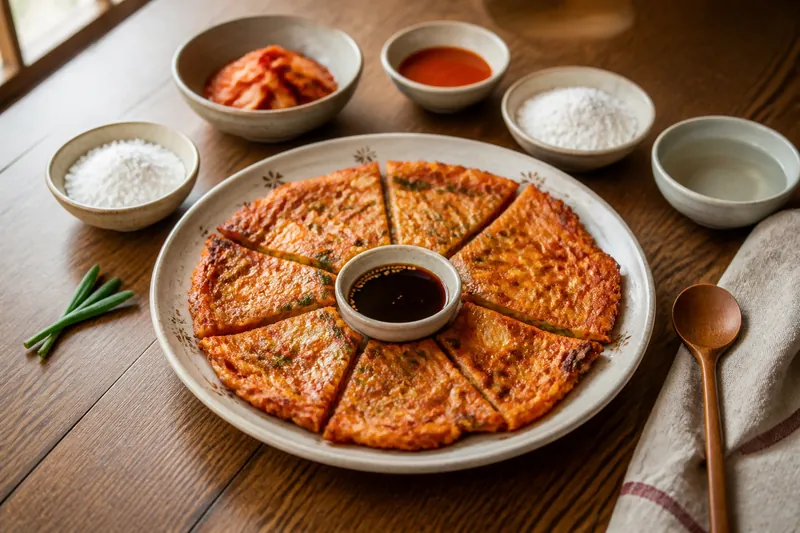 Kimchi JeonKoreanOpen the recipe →
Kimchi Jeon is a savory pancake made with chopped kimchi and a thin batter, fried until the edges are crisp. It tastes tangy, salty, and just a little fiery, with a chewy middle and a browned crust. It is worth cooking because it uses kimchi at its most useful, turning a jar in the fridge into something hot and immediate. One thing to know before starting is that the batter should stay loose; too much flour gives you a heavy pancake instead of a crisp one.
Clear soybean sprout soup
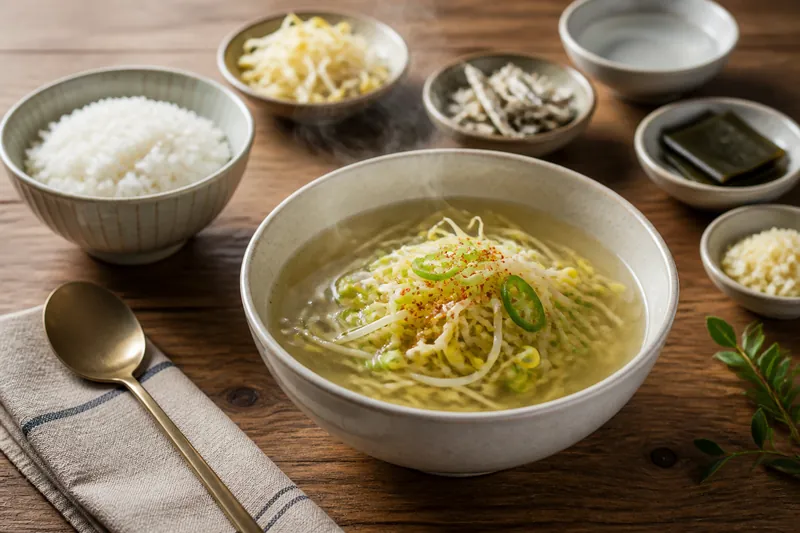 Kongnamul-gukKoreanOpen the recipe →
Kongnamul-guk is a clear soup made with soybean sprouts, garlic, scallions, and a simple broth. It tastes clean, slightly nutty, and lightly bracing, with the sprouts adding crunch. It is worth cooking because it is one of the easiest ways to make a light meal or side dish that still feels complete. Before you start, know that the sprouts need enough heat to cook through but not so much that they lose their fresh bite.
Miso-like soybean paste stew
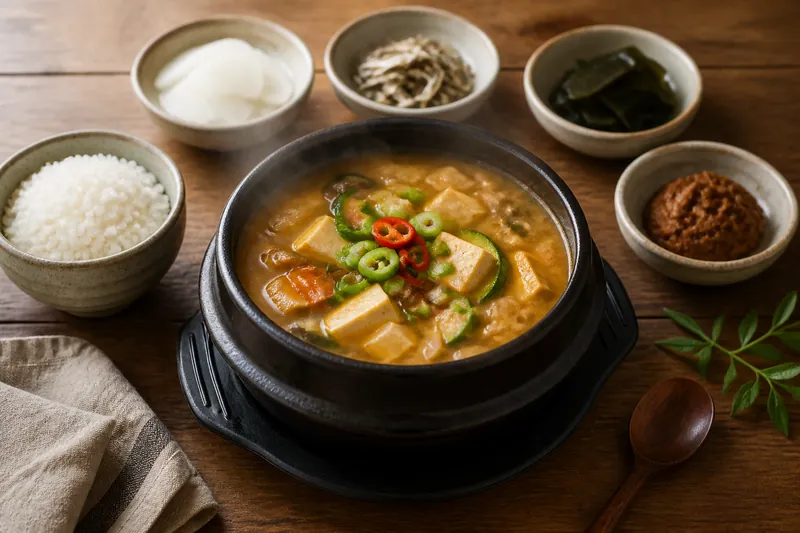 Doenjang JjigaeKoreanOpen the recipe →
Doenjang Jjigae is a rustic stew built on fermented soybean paste, usually with tofu, vegetables, and sometimes mushroom or zucchini. It tastes deep, earthy, and savory, with a fermented edge similar to miso but more assertive. It is worth cooking because it gives a lot of flavor from a small amount of pantry seasoning. The cook should know that doenjang is strong; taste as you go, since too much paste can make the stew muddy and overly salty.
The classic kimchi stew
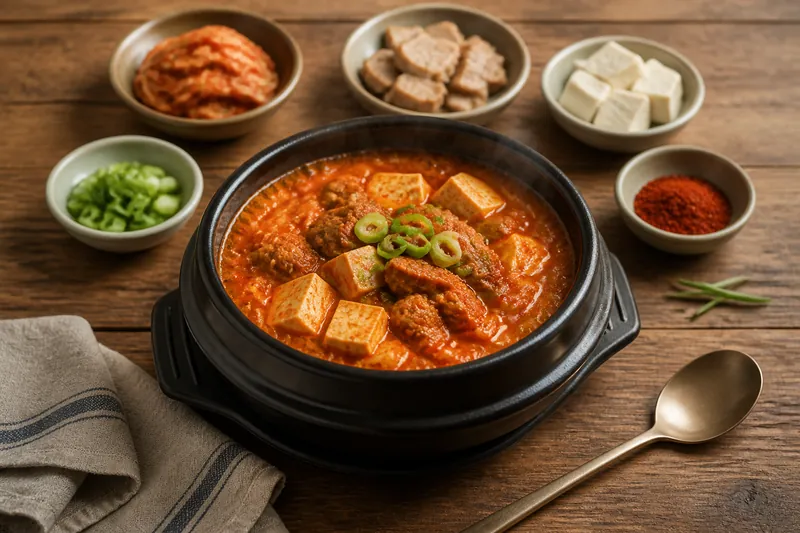 Kimchi JjigaeKoreanOpen the recipe →
Kimchi Jjigae is one of the most familiar Korean stews, made with well-fermented kimchi, broth, tofu, and often pork or other add-ins. It tastes hot, sour, and savory, with the fermented kimchi giving the stew its depth. It is worth cooking because it turns older kimchi into dinner and improves as it simmers. One thing to know is that ripe kimchi matters here; very fresh kimchi will not give the same rounded, tangy flavor.
Chewy rice cakes in sauce
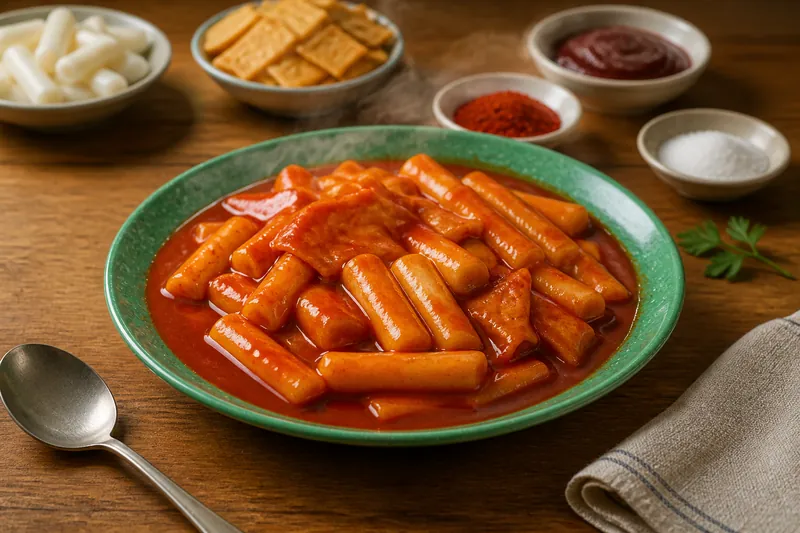 TteokbokkiKoreanOpen the recipe →
Tteokbokki is made from chewy rice cakes simmered in a thick, spicy-sweet sauce, often with fish cake or scallions. It tastes bold, slightly sweet, and deeply savory, with the rice cakes providing the main pleasure through their soft chew. It is worth cooking because it is fast, filling, and easy to adjust to your preferred heat. The important thing to know is that the rice cakes need enough liquid to soften; if the sauce reduces too fast, they can stick and stay hard in the middle.
Army stew with many parts
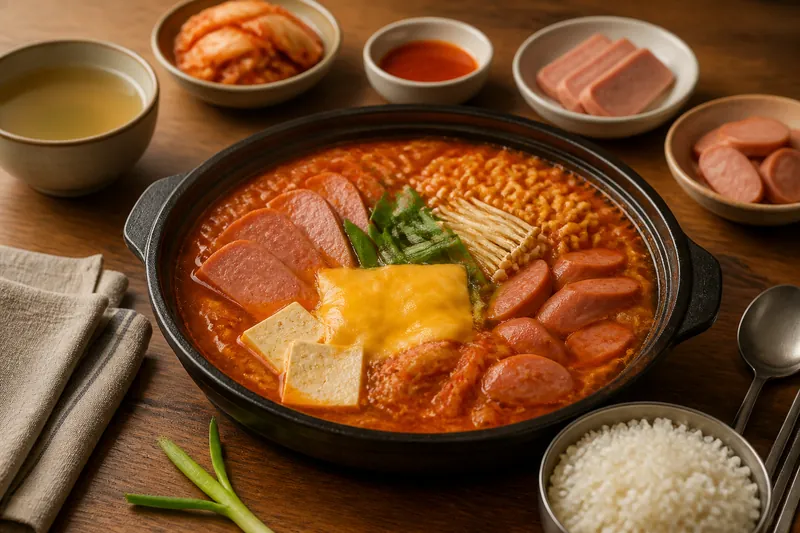 Budae JjigaeKoreanOpen the recipe →
Budae Jjigae is a hearty stew that mixes kimchi, broth, noodles, tofu, and often ingredients like sausage or canned beans. It tastes smoky, spicy, and salty, with a little sweetness from the broth and processed meats. It is worth cooking because it is flexible and made for using what you have, while still landing as a distinct Korean dish. Before you begin, know that the stew works best when the ingredients are layered carefully so the noodles and tofu do not collapse.
Seaweed soup with depth
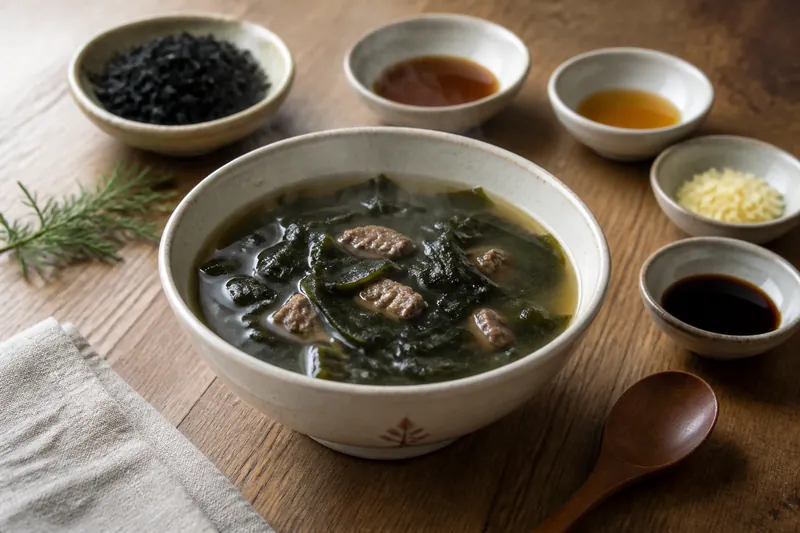 Miyeok-gukKoreanOpen the recipe →
Miyeok-guk is a seaweed soup usually made with beef or seafood and simmered until the broth turns savory and clean. It tastes mellow, mineral, and nourishing, with the seaweed becoming soft and slippery in the broth. It is worth cooking because it is both simple and full of character, and because dried seaweed keeps well in the pantry. One thing to know is that miyeok must be soaked before cooking; that step is not optional, since it needs to rehydrate fully before it can simmer properly.
These dishes make a practical path into Korean cooking. Start with the quickest ones, then move toward the stews once the pantry is stocked. Most of the work is in learning a few ingredients and trusting simple methods.