10 Brazilian Dishes to Know, From Acarajé to Cocada
These ten dishes show Brazilian cooking at its most direct: beans, cassava, coconut, seafood, and sweets with clear regional roots.
Brazilian cooking shifts from the salt fish and beans of the coast to the coconut-rich food of the northeast, with rice, cassava, and sweets tying it together. These dishes are not a single tradition so much as a map of regional habits, passed from home kitchens and street stalls.
Some are meant to be eaten as a meal, others as a snack or dessert, but each has a plain, durable appeal. They taste of what is close at hand: dried beans, manioc, shrimp, maize, coconut, and sugar, handled in ways that give each dish its own weight and character.
Black-eyed pea fritters with depth
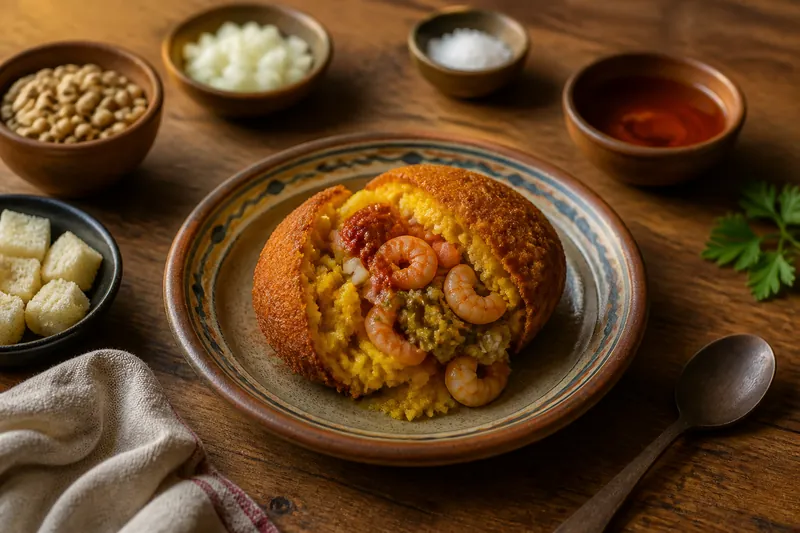
AcarajéBrazilianOpen the recipe →Acarajé are split black-eyed pea fritters, ground with onion and salt, then fried until crisp and deeply savory. They are most often split and filled, but the fritter itself is the point: earthy inside, craggy outside, with a clean bean flavor that stands up to heat. They are worth making for that contrast alone, and because they show how simple ingredients can become layered food. The main thing to know is that the beans need overnight soaking, and the batter should be handled with enough care to keep it light before frying.
Rice cooked with meat and memory
 Arroz carreteiroBrazilianOpen the recipe →
Arroz carreteiro is a hearty rice dish built around beef, often dried or cured, cooked until the grains take on the meat’s salt and depth. It is the sort of food made to use what is available, and it tastes robust rather than elaborate, with the rice carrying the flavor of the pan. It is worth cooking because it is practical, filling, and exact in its balance of starch and seasoning. One thing to know before starting: if the meat is salty or dried, it needs soaking first so the finished dish does not tip too far in that direction.
Rice and beans as a full meal
 Baião de DoisBrazilianOpen the recipe →
Baião de Dois combines rice and beans into a single dish, usually with queijo coalho or another firm cheese, and often with cured meat. The result is creamy but not soft, with the beans giving body and the rice holding everything together. It tastes warm, savory, and a little smoky, and it works as both a side and a main course. It is worth cooking because it turns staples into something complete. Before starting, the beans may need overnight desalting if they come from salted or cured preparation, and that step matters to the final balance.
Long-cooked beef in a sealed pot
 BarreadoBrazilianOpen the recipe →
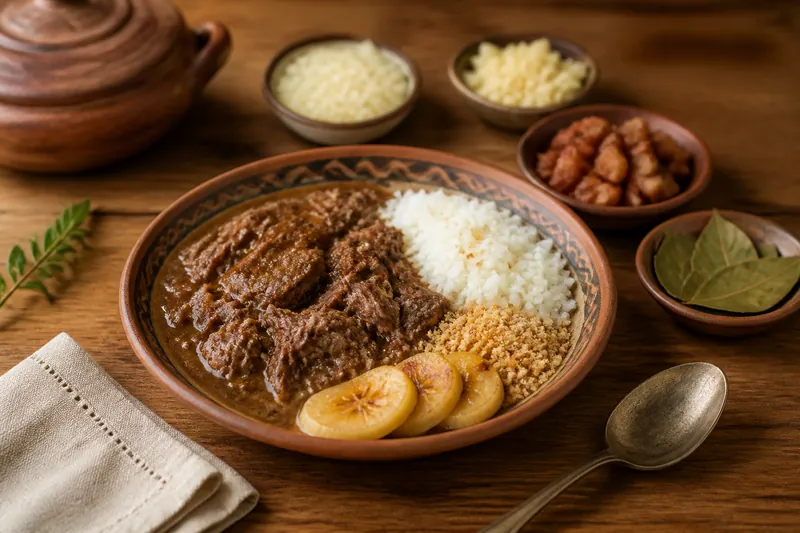
Barreado is a slow braise of beef cooked with seasoning until it becomes very soft and the sauce turns thick from the meat itself. Traditionally it is sealed in a clay pot and cooked for hours, which gives it a dense, concentrated flavor and a texture that can be spooned. It tastes earthy, meaty, and faintly spiced, best when served with rice, flour, or bananas. It is worth cooking if you want to understand patience in Brazilian food. The one thing to know is that this is not a shortcut dish; the long cooking time is what makes it work.
Shrimp in a cassava cream
 Bobó de CamarãoBrazilianOpen the recipe →
Bobó de Camarão is a shrimp stew thickened with puréed cassava, often with coconut milk, onion, garlic, and palm oil. It is smooth, fragrant, and rich without being heavy in the way cream-based stews can be. The cassava gives it a soft, starchy body, while the shrimp keeps the dish bright and marine. It is worth cooking because the contrast between sea and root is so specific and satisfying. Before starting, the cassava must be cooked until fully tender and then blended or mashed well, or the stew will not have its proper texture.
Thin layers rolled with guava
 Bolo de RoloBrazilianOpen the recipe →
Bolo de Rolo is a rolled cake made from many very thin layers of sponge, spread with guava paste and wound into a tight spiral. It slices neatly and shows its layers at once, which is part of its appeal: delicate, precise, and slightly chewy from the filling. It tastes buttery and fruity, with the guava giving sharp sweetness against the plain cake. It is worth making for the discipline it demands and the elegance it produces. The main thing to know is that the batter must be spread thin and baked quickly, so the layers stay pliable enough to roll.
Chocolate sweets made from condensed milk
 BrigadeiroBrazilianOpen the recipe →
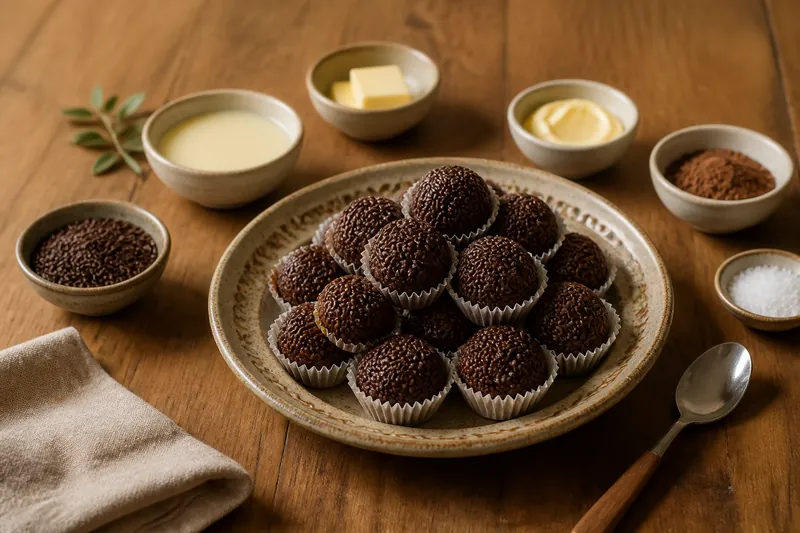
Brigadeiro are small chocolate candies made by cooking condensed milk with cocoa and butter until the mixture thickens enough to roll. They are soft, fudgy, and very sweet, with a simple milk-chocolate flavor that explains why they remain so common at parties and family gatherings. They are worth making because they need little equipment and always land in the same friendly place between dessert and confection. One thing to know before starting is that the mixture must be cooked long enough to leave the pan cleanly; too soon, and it will not hold its shape.
Sweet maize pudding with spice
 CanjicaBrazilianOpen the recipe →
Canjica is a dessert of hominy-style maize cooked slowly with milk, sugar, and often cinnamon or coconut. It is soft, milky, and gently sweet, with the corn giving it a grainy richness rather than a smooth custard texture. It is worth cooking because it shows how Brazilian sweets can be comforting without being plain. The flavor deepens as it sits, so it is a good dish to make ahead. Before starting, the maize needs overnight soaking, and that step is not optional if you want the kernels to cook evenly and turn tender.
Okra stew with shrimp and spice
 CaruruBrazilianOpen the recipe →
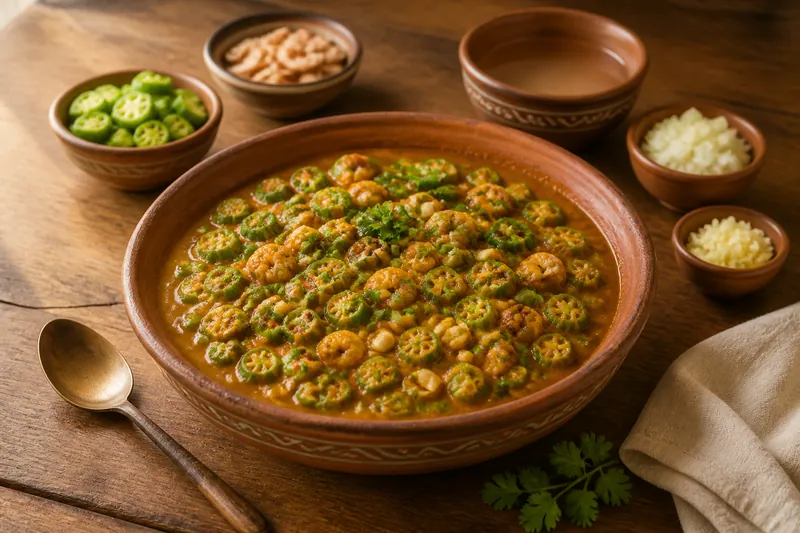
Caruru is a Bahian dish of okra cooked with onion, garlic, nuts or seeds, and often dried shrimp, brought together in a thick, aromatic stew. The okra gives it body and a particular silkiness, while the seasoning keeps it savory and rounded. It tastes earthy, slightly nutty, and distinctly coastal, with enough acidity or heat to keep it lively. It is worth cooking for its clear regional character and the way it uses okra as a main ingredient rather than a side note. One thing to know is that the okra should be handled carefully so it cooks down without becoming stringy.
Coconut candy with a firm bite
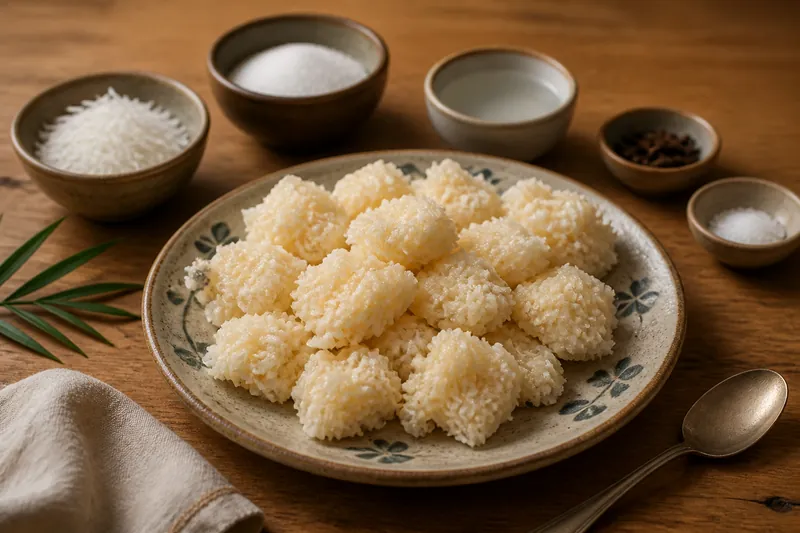 CocadaBrazilianOpen the recipe →
Cocada is a coconut sweet made by cooking grated coconut with sugar until it becomes dense, chewy, and set in mounds or slabs. It can be pale or deeply caramelized, but the basic flavor is always coconut first, with a toasted sweetness that lingers. It is worth making because it is direct and economical, and because it captures coconut at its most concentrated. The one thing to know before starting is that it cooks quickly once the sugar comes together, so you need to watch the pan closely to keep it from becoming hard or grainy.
Taken together, these dishes show how Brazilian cooking turns everyday ingredients into food with a strong sense of place. Some are festive, some are sustaining, and some are sweet enough to stand alone, but all of them carry a clear regional voice.