Brazilian
Barreado
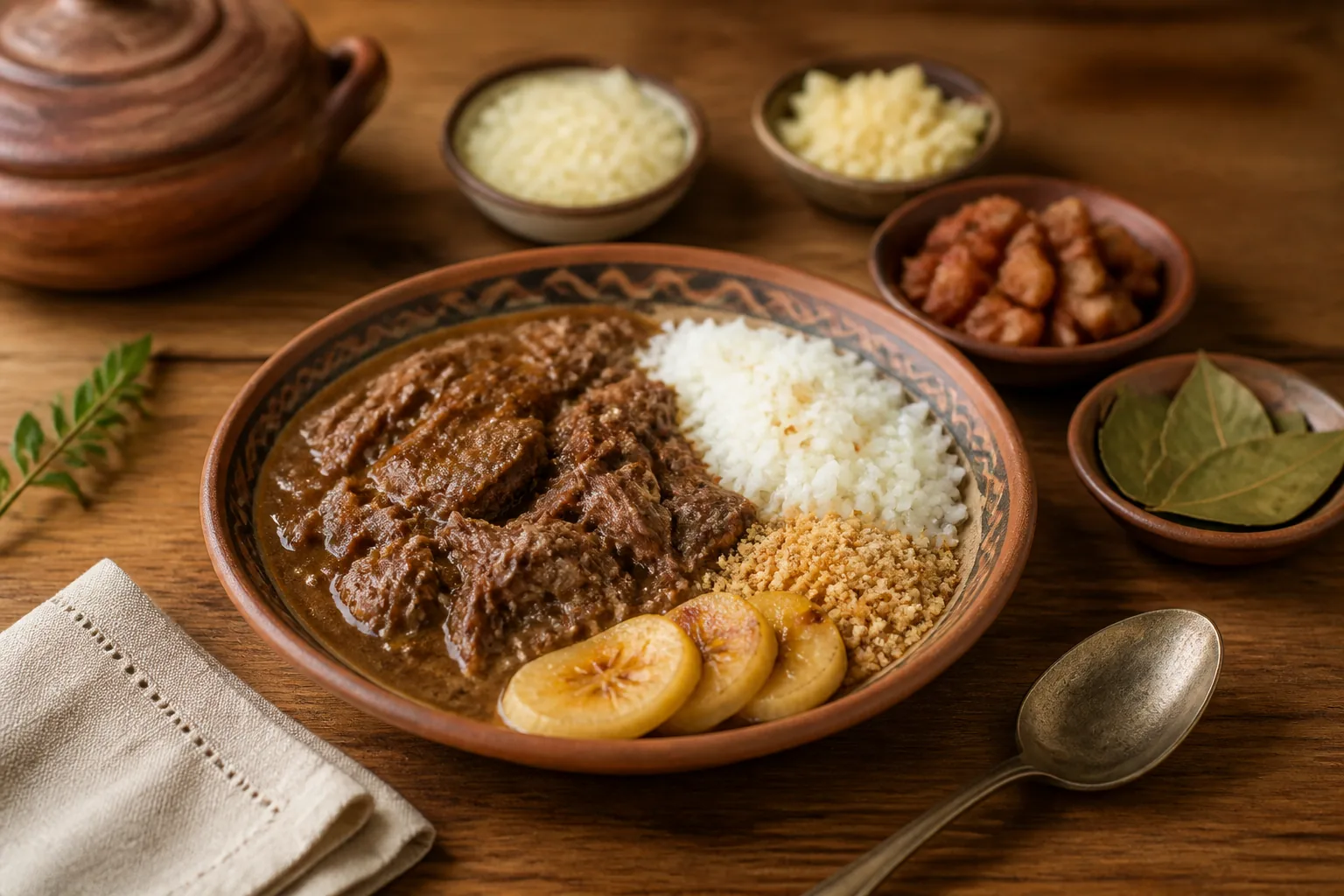
A slow-cooked beef stew from Paraná, sealed in the pot with a manioc flour paste until the meat collapses into a rich, cumin-scented broth. It is served the traditional way with farinha de mandioca to thicken, white rice, and sliced banana.
 Watch it madeMark Wiens Abroad · 14:12
Ingredients
- Beef chuck or brisket, cut into large cubes500g
- Smoked bacon or toucinho, diced60g
- Yellow onions, finely chopped2 medium
- Garlic cloves, minced3
- Bay leaves2
- Ground cumin1 tsp
- Black pepper1/2 tsp
- Salt1 tsp, plus to taste
- White vinegar1 tbsp
- Water or light beef stock2 cups
- Cassava flour for sealing the pot1/2 cup
- Water for the sealing pasteabout 1/4 cup
- Toasted cassava flour for serving1/2 cup
- Cooked white rice2 cups
- Ripe banana, sliced1
Method
- Season the beef with the salt, cumin, black pepper, garlic, vinegar, and bay leaves, then let it rest for 15 minutes while you prepare the pot.
- Place the bacon in a heavy clay pot or Dutch oven and cook over medium heat until it releases some fat but does not become crisp.
- Add the onions and cook until soft and translucent, scraping the bottom of the pot.
- Add the seasoned beef and all its juices, turning the pieces just until lightly coated with the onion and bacon mixture.
- Pour in the water or light stock; the liquid should come about halfway up the meat, not fully cover it.
- Mix the cassava flour for sealing with enough water to make a thick, pliable paste.
- Cover the pot and press the cassava paste all around the seam between the lid and the pot to seal it completely, as in the traditional barreado method.
- Cook over the lowest possible heat for 5 to 6 hours, adding a heat diffuser if needed; do not open the pot during cooking.
- Break the seal carefully, open the pot, and stir the meat until it shreds into the broth; adjust salt if needed.
- Spoon the barreado into shallow bowls and let each serving be thickened with toasted cassava flour to form a loose pirão.
- Serve hot with white rice and slices of ripe banana on the side.
Common questions
Can I substitute the clay pot or sealed lid for a regular Dutch oven when making barreado?
Yes. A heavy Dutch oven works well. If you can’t seal the lid with cassava paste, use a tight lid and a sheet of foil underneath to reduce steam loss. Keep the heat very low so the beef braises slowly.
How long does barreado take to cook, and how do I know the beef is ready?
Plan on 5 to 6 hours over the lowest heat. The beef is ready when it shreds easily with a fork and the sauce has reduced into a thick, deeply flavored braising liquid. Stir gently only at the end.
What are the most common mistakes when making barreado?
The biggest mistakes are boiling too hard, adding too much liquid, and breaking the seal too early. The pot should barely simmer. Also avoid overcooking the bacon until crisp, which can make the base taste bitter.
How should I store leftover barreado, and does it reheat well?
Store leftovers in an airtight container in the refrigerator for up to 4 days. It reheats very well on low heat with a splash of water or stock if needed. The flavor often improves the next day after resting.
What is the best way to serve barreado with rice and cassava flour?
Serve the shredded beef and sauce over hot white rice, then sprinkle toasted cassava flour on top or on the side. The flour adds texture and helps thicken each bite. A little extra broth on the rice is traditional.