Brazilian
Acarajé
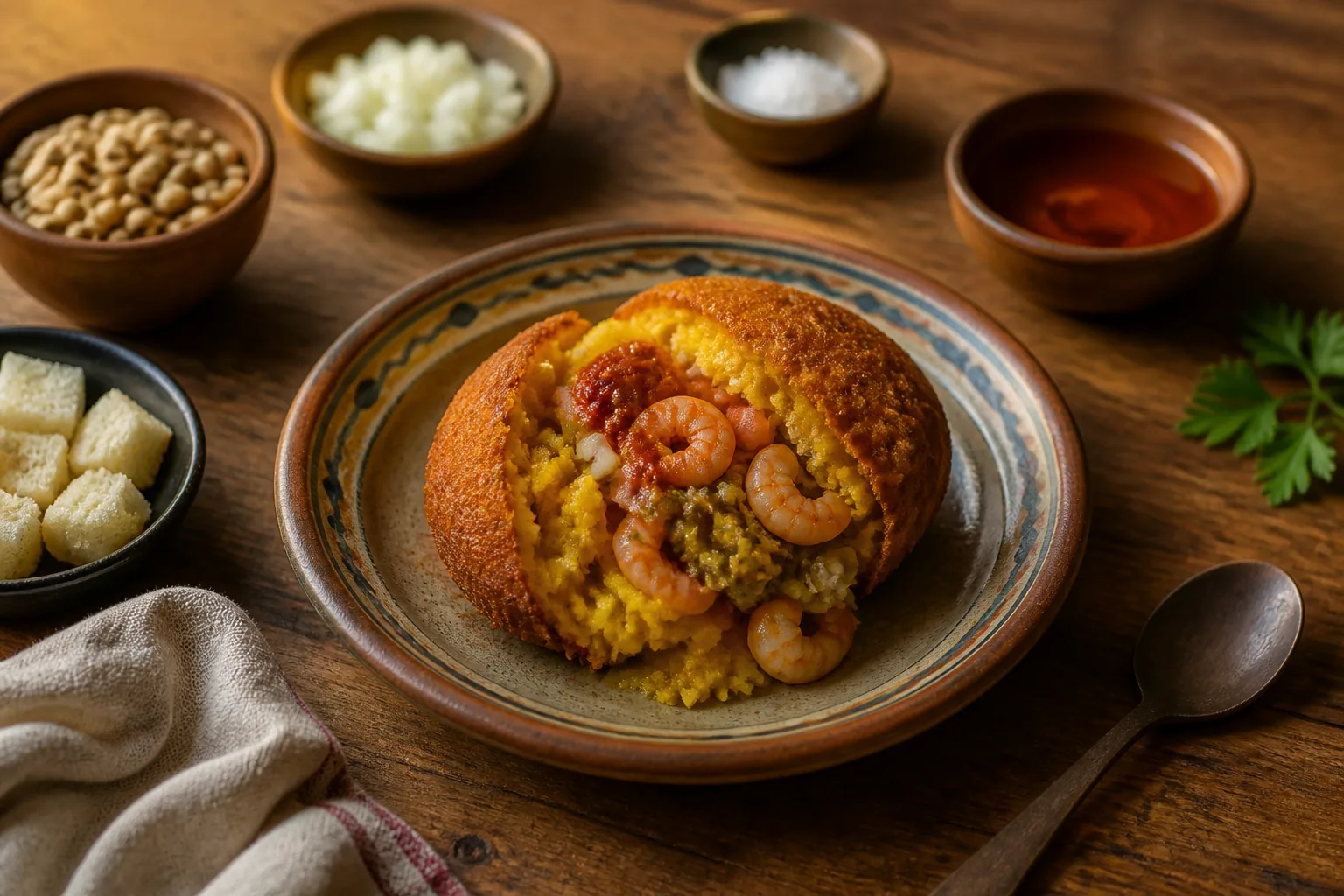
Crisp, deep-golden bolinhos de feijão-fradinho fried in dendê and split open while hot. They are filled in the Bahian way with creamy vatapá, caruru, tomato salad, dried shrimp, and a little malagueta heat.
 Watch it madeMark Wiens · 46:53
Ingredients
- Dried black-eyed peas1 cup
- Yellow onion, roughly chopped1/2 small
- Fine sea salt1 1/4 tsp, divided
- Dendê oil, for frying and cooking3 cups
- Day-old white bread, crusts removed2 slices
- Coconut milk1/2 cup
- Roasted unsalted peanuts2 tbsp
- Roasted unsalted cashews2 tbsp
- Dried smoked shrimp, rinsed1/3 cup, divided
- Garlic clove1
- Fresh ginger, grated1/2 tsp
- Okra, thinly sliced1 cup
- Tomato, finely diced1 small
- Red onion, finely diced2 tbsp
- Cilantro, chopped1 tbsp
- Lime juice1 tsp
- Malagueta pepper sauceto taste
Method
- Cover the black-eyed peas with plenty of water and soak overnight.
- Drain the peas, rub them firmly between your hands in fresh water to loosen the skins, and skim off and discard the floating skins until the peas are mostly peeled.
- Drain the peeled peas very well and grind them with the chopped onion and 3/4 teaspoon salt in a food processor until thick, smooth, and spoonable, adding only a teaspoon of water if absolutely needed.
- Scrape the batter into a bowl and beat it vigorously with a wooden spoon for 5 to 8 minutes, until lighter in color and slightly fluffy.
- For the vatapá, soak the bread in the coconut milk for 5 minutes.
- Blend the soaked bread, peanuts, cashews, half of the dried shrimp, garlic, ginger, 2 tablespoons onion from the diced red onion, and 1/4 teaspoon salt into a smooth paste.
- Cook the vatapá paste with 1 tablespoon dendê over medium-low heat, stirring constantly, for 8 to 10 minutes until glossy, thick, and creamy; keep warm.
- For the caruru, heat 1 tablespoon dendê in a small pan, add the okra, a spoonful of the remaining dried shrimp, and a pinch of salt, and cook for 6 to 8 minutes until soft and silky.
- Mix the tomato, remaining diced red onion, cilantro, lime juice, and a pinch of salt to make the salad.
- Heat the remaining dendê in a deep pot to 340°F or 170°C.
- Shape the bean batter into 4 oval fritters using two large spoons and slide them carefully into the hot dendê.
- Fry the acarajés, turning once, for 4 to 5 minutes per side until deep orange-brown, crisp outside, and cooked through.
- Drain the acarajés on a rack or paper towels and let them rest for 2 minutes.
- Split each acarajé open without cutting all the way through, then fill with vatapá, caruru, tomato salad, the remaining dried shrimp, and malagueta pepper sauce to taste.
Common questions
Can I substitute black-eyed peas or dendê oil if I can’t find them for acarajé?
Black-eyed peas are essential for the texture; other beans will taste different and may not peel the same way. If you can’t get dendê oil, use neutral oil for frying, but the flavor will be less authentic.
How long does it take to make acarajé, including soaking and peeling the peas?
Plan ahead: soak the peas overnight, then allow 20 to 30 minutes for peeling and 15 minutes for grinding and beating. The vatapá filling and frying usually take another 20 to 30 minutes.
What are the most common mistakes when making acarajé dough?
The biggest mistakes are not peeling enough skins, adding too much water, and not beating the batter long enough. The batter should be thick, airy, and spoonable; too wet batter will fry up heavy and oily.
How should I store leftover acarajé and filling?
Store fried acarajé shells and the filling separately. Refrigerate both in airtight containers for up to 2 days. Reheat the shells in a hot oven or air fryer so they crisp back up before serving.
What should I serve with acarajé, and how is it usually eaten?
Serve acarajé hot, split open, and filled with vatapá, chopped tomato, and red onion. It’s often paired with additional dried shrimp or hot sauce. Eat it immediately after filling so the shell stays crisp.