Six Polish Dishes That Feed a Crowd
From broth and beet soup to pastry and sweets, these six Polish dishes are built for generous tables and make enough for family or guests.
Polish cooking has a practical streak. It stretches meat, makes the most of grains and cabbage, and turns simple doughs and broths into food that serves many people well.
These six dishes are the sort worth making when the table is full. Some are savory mains, some are holiday sweets, and all of them are meant to feed six or more without feeling thin or rushed.
The broth that starts many meals
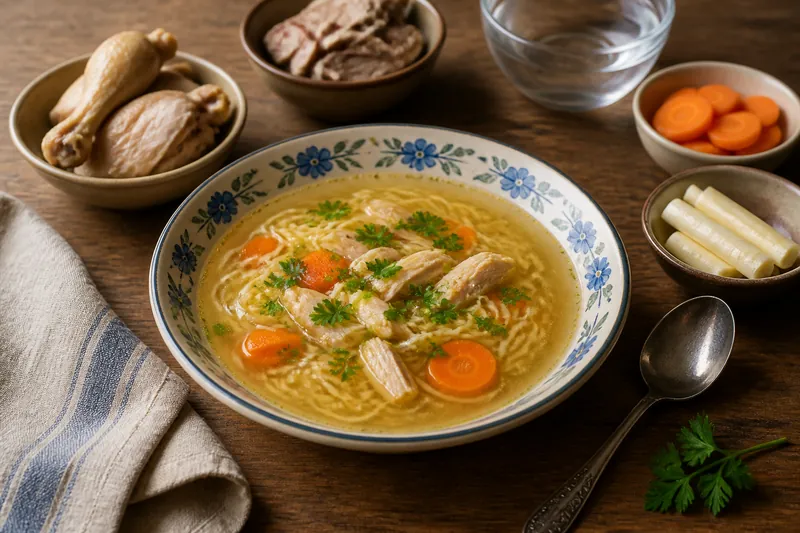
RosółPolishOpen the recipe →Rosół is the clear chicken soup at the center of many Polish family tables. It is gently savory, with the sweetness of carrot, onion, and long-cooked meat, and it tastes clean rather than heavy. Served with noodles, it makes a large pot that feeds a crowd with little fuss. What makes it worth cooking is its reach: one pot becomes lunch, supper, and often the base for other dishes. The main thing to know is that patience matters. Keep the simmer low so the broth stays clear and the meat gives up flavor slowly.
Sharp, creamy soup with real depth
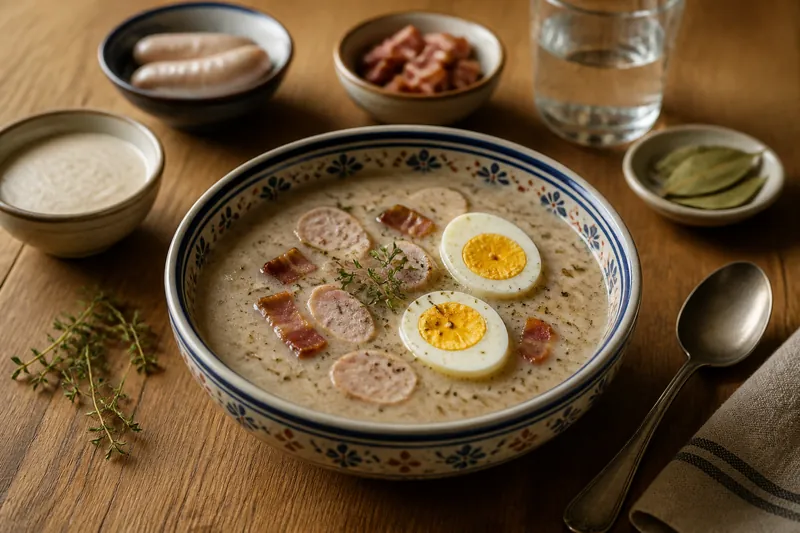 ŻurekPolishOpen the recipe →
Żurek is a sour rye soup, usually finished with sausage, bacon, and sometimes egg or potato. Its flavor is tangy, smoky, and earthy, with a creaminess that comes from the rye starter rather than dairy alone. It is the kind of soup that feels substantial enough for a meal and scales well for a larger group. It is worth making because it offers something distinct: not delicate, but layered and satisfying. Before starting, check that your starter is ready and properly sour, since it drives the whole dish.
Beet broth with dumplings for a special table
 Barszcz czerwony z uszkamiPolishOpen the recipe →
Barszcz czerwony z uszkami is a clear beet soup served with tiny mushroom-filled dumplings. The broth is bright, sweet, and lightly tart, while the uszka bring an earthy, meaty note even when the filling is only mushrooms. It feeds a group well because the soup can be made in a large pot and the dumplings shaped ahead of time. The dish is worth cooking for its balance and its ceremony; it tastes festive without being heavy. One thing to know: the broth should stay clear, so avoid boiling after the beets go in.
Wheat, poppy seed, and honey in one bowl
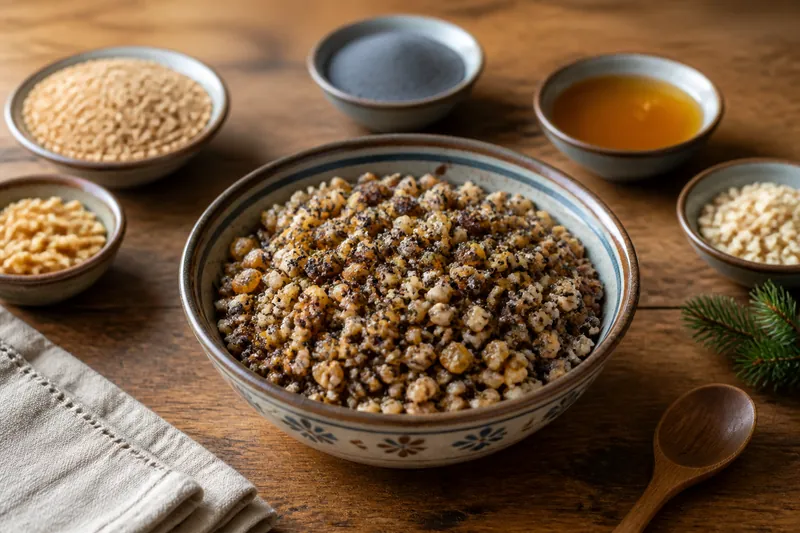 KutiaPolishOpen the recipe →
Kutia is a sweet grain dish made with cooked wheat berries, poppy seeds, honey, nuts, and dried fruit. The flavor is nutty, floral, and gently chewy, with enough sweetness to feel like a treat but not a dessert that cloys. It is worth making for a large gathering because it is economical, filling, and keeps well once assembled. The cook should plan ahead, since the wheat needs soaking overnight and then long cooking. That time is part of the dish’s character, and rushed kutia never has the same texture.
Poppy seed cake for a full table
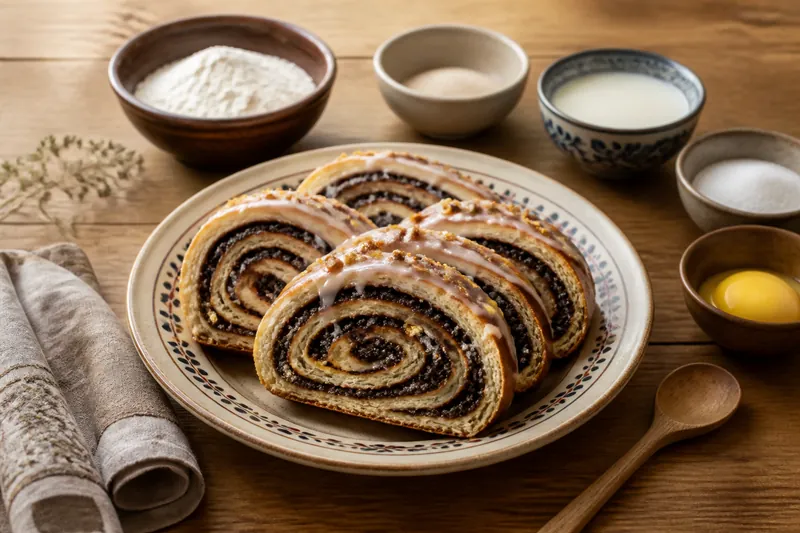 MakowiecPolishOpen the recipe →
Makowiec is a rolled yeast cake filled with poppy seed paste, often with raisins, citrus, and nuts. It is soft, slightly rich, and aromatic, with the poppy seed filling giving a dense, almost fudgy center against the lighter dough. It is worth baking because it slices neatly and serves many people from one loaf or roll. The key thing to know is that the filling should be thick and fairly dry, or it can leak and make the dough soggy. Let the roll cool before cutting so the slices hold together.
Light pastry meant for sharing
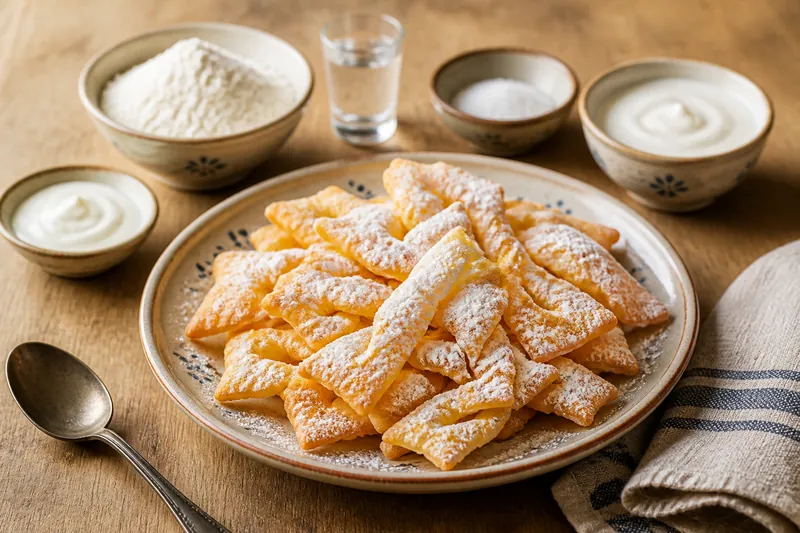 FaworkiPolishOpen the recipe →
Faworki are crisp, twisted strips of fried dough, dusted with powdered sugar. They are delicate, airy, and brittle rather than rich, with a faint eggy flavor and a clean finish from the sugar. They are worth making for a crowd because they are easy to pile high on a tray and serve with coffee or tea. The batch disappears quickly, which is part of their appeal. Before you start, know that the dough should be rolled thin and handled carefully; if it is too thick, the pastries turn heavy instead of crisp.
These dishes show how Polish cooking feeds a room: with broth, grain, pastry, and careful seasoning. Some are for supper, some for feast days, and some for the sweet end of the table, but all of them are built to serve generously.