Polish
Faworki
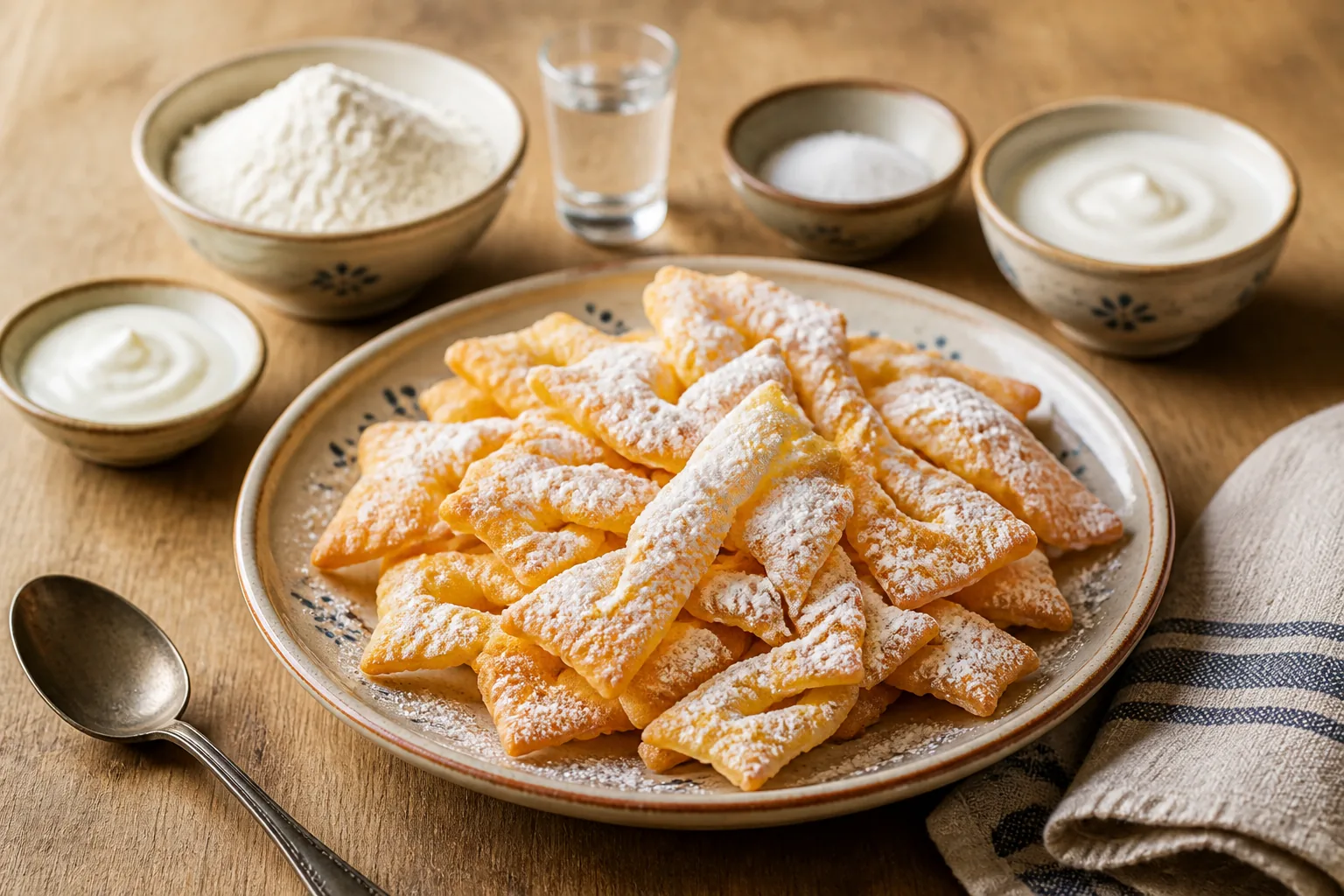
These delicate Polish carnival pastries are rolled paper-thin, twisted into ribbons, fried until blistered and crisp, then dusted generously with powdered sugar. A little spirytus or vodka in the dough helps keep them light rather than greasy.
 Watch it madeOrchideli · 3:52
Ingredients
- All-purpose flour1 cup, plus more for dusting
- Egg yolks2
- Sour cream3 tbsp
- Spirytus or vodka1 tbsp
- Fine salt1 pinch
- Unsalted butter, softened1 tsp
- Lard or neutral frying oil2 cups, for frying
- Powdered sugar3 tbsp, for dusting
Method
- Place the flour on a work surface or in a bowl and make a well in the center.
- Add the egg yolks, sour cream, spirytus or vodka, salt, and softened butter to the well.
- Mix with a fork, then knead by hand for 8 to 10 minutes until the dough is smooth, firm, and elastic.
- Beat the dough firmly with a rolling pin for 5 minutes, folding it over several times, to incorporate air and create the characteristic bubbles.
- Wrap the dough and let it rest at room temperature for 20 minutes.
- Divide the dough in half and roll one piece at a time as thinly as possible, dusting very lightly with flour only if needed.
- Cut the dough into strips about 1 inch wide and 4 inches long.
- Make a small slit lengthwise in the center of each strip, then pull one end through the slit to form a twisted ribbon.
- Heat the lard or oil in a deep pot to 350°F.
- Fry the faworki in small batches for 30 to 45 seconds per side, turning once, until pale golden and blistered.
- Lift them out with a slotted spoon and drain on paper towels.
- While still slightly warm, dust generously with powdered sugar and serve crisp.
Common questions
Can I substitute vodka or spirytus in faworki dough?
Yes. Use another neutral, high-proof spirit if you have it; it helps make the pastry crisp. In a pinch, use water, but the faworki may be slightly less delicate and airy after frying.
How long does faworki dough need to rest and can I rest it longer?
A 20-minute rest at room temperature is enough for the dough to relax. You can rest it a bit longer, covered, if needed, but don’t let it dry out or it will become harder to roll thin.
What are the most common mistakes when making faworki?
The biggest mistakes are rolling the dough too thick, adding too much flour, and frying at the wrong temperature. Also avoid skipping the pounding step, which helps create bubbles and a lighter texture.
How should I store leftover faworki and keep them crisp?
Store completely cooled faworki in an airtight container at room temperature for up to 3 days. If they soften, re-crisp briefly in a low oven for a few minutes. Avoid refrigeration, which makes them stale faster.
What is the best way to serve faworki?
Serve them generously dusted with powdered sugar just before eating. They’re best fresh the same day, alongside coffee, tea, or hot cocoa. Stack loosely so they stay crisp and don’t lose their delicate shape.