The Syrian Dishes to Know, From Hummus to Kibbeh
A clear guide to the Syrian dishes that travel well, feed many, and show the balance of tang, spice, grain, and yogurt in the kitchen.
Syrian cooking is broad, but some dishes have become the ones people ask for first. They show up as mezze, family suppers, and Friday food, each with a distinct texture and a firm place at the table.
Some are built on chickpeas, lentils, or freekeh; others rely on minced meat, yogurt, or syrup. What they share is careful seasoning and a habit of turning simple ingredients into something complete.
The foundation plate
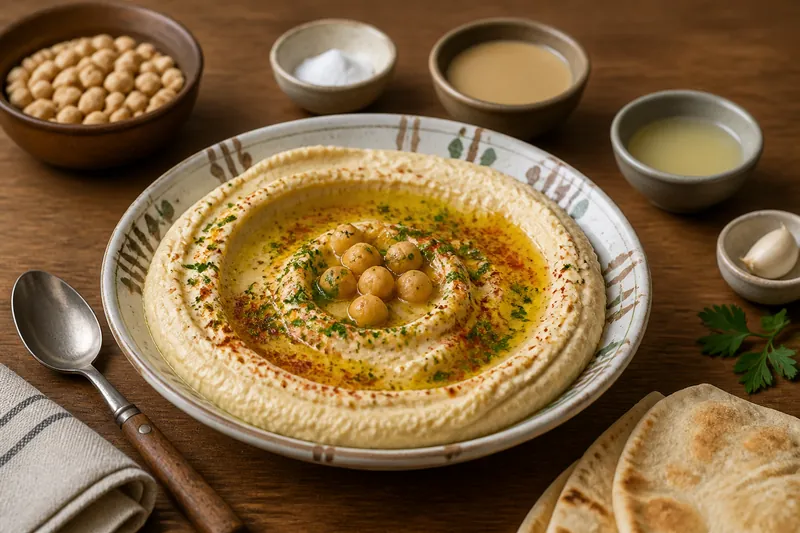
Hummus bi TahiniSyrianOpen the recipe →Hummus bi tahini is the classic chickpea purée of the Syrian table, smooth, nutty, and quietly rich with tahini and lemon. When done well, it tastes clean rather than heavy, with garlic that supports instead of dominates. It is worth cooking because it shows how far careful blending and good seasoning can take a few pantry ingredients. Serve it warm or at room temperature with olive oil and bread. One thing to know before starting: the chickpeas need a long soak, and they cook best until very soft, so do not rush that stage.
A layered breakfast-meal
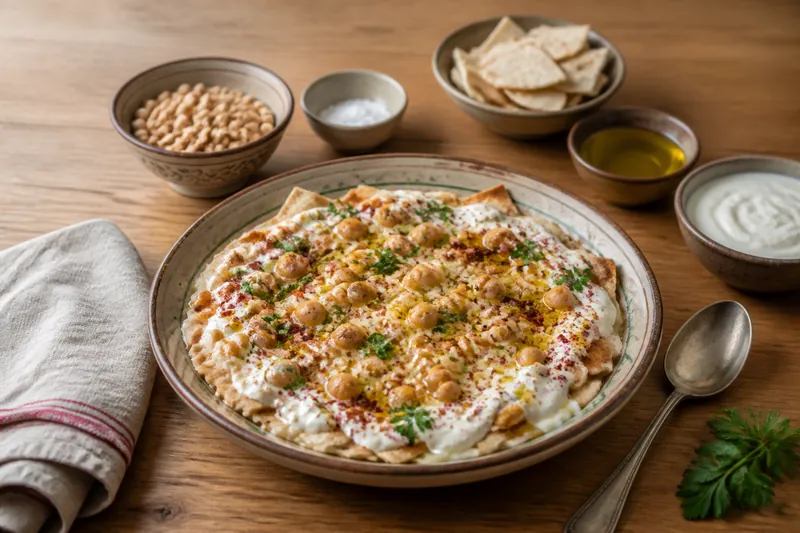 Fatteh HummusSyrianOpen the recipe →
Fatteh Hummus builds on chickpeas, bread, and yogurt, making a dish that is soft, crisp, tangy, and filling all at once. The bread soaks up stock and yogurt, while the chickpeas keep the texture grounded. It is worth cooking because it turns humble leftovers into a proper meal, especially for breakfast or lunch. The taste should be balanced, with acidity from yogurt and brightness from lemon or vinegar, depending on the version. One thing to know before starting: the bread should be toasted or fried just before serving so it keeps some edge under the yogurt.
Sharp, earthy, and comforting
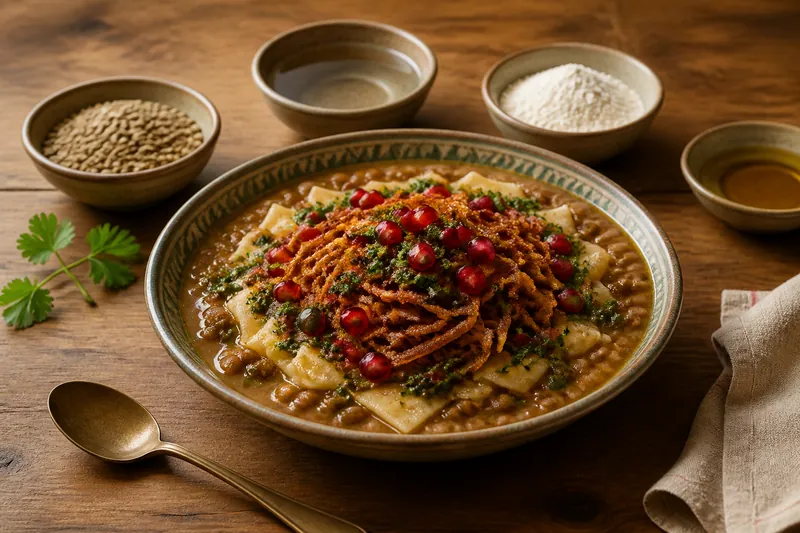 Harak OsbaoSyrianOpen the recipe →
Harak Osbao is a lentil and pasta dish finished with tamarind, garlic, herbs, and fried onions. The flavour is dark and tangy, with a steady sweetness from onions and a deep earthiness from the lentils. It is worth cooking because it feels both frugal and complete, the kind of dish that feeds many without losing character. The noodles give it body, and the herbs lift the sauce at the end. One thing to know before starting: the tamarind should be tasted carefully, since it can dominate quickly if added too aggressively.
Meatballs in a tomato pan
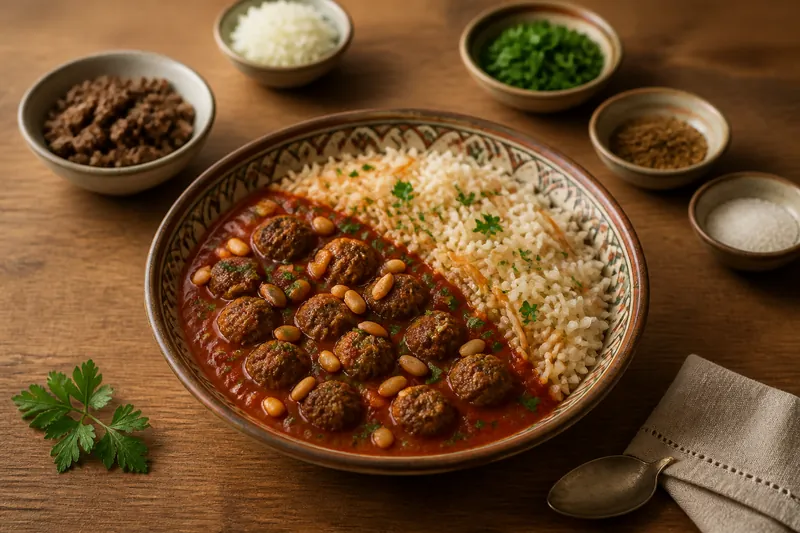 Dawood BashaSyrianOpen the recipe →
Dawood Basha is a dish of small meatballs simmered in a tomato sauce, usually with onions and sometimes pine nuts in the mix. It tastes savoury and lightly spiced, with the sauce mellowing the meat and pulling everything together. It is worth cooking because it is straightforward, satisfying, and easy to serve with rice or bread. The meatballs should stay tender, not dense, so gentle mixing matters. One thing to know before starting: brown the meatballs lightly before they go into the sauce, but do not cook them through first, or they can dry out.
A spiced, sweet-sour stew
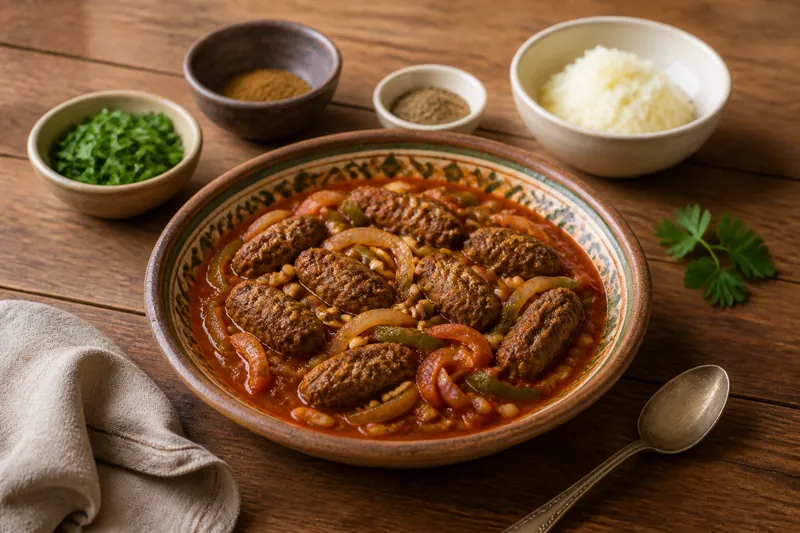 Kabab HindiSyrianOpen the recipe →
Kabab Hindi is a Syrian dish of meat and fruit, usually with tamarind or pomegranate for a sour edge that cuts through the richness. It tastes deep, slightly sweet, and tangy, with enough spice to keep it lively. It is worth cooking because it shows another side of Syrian cooking, where sourness is used with confidence and not as an accent. The sauce should be thick and glossy, good over rice. One thing to know before starting: balance is everything, so add the sour element gradually and adjust at the end rather than trying to correct it later.
Kibbeh in a yogurt sauce
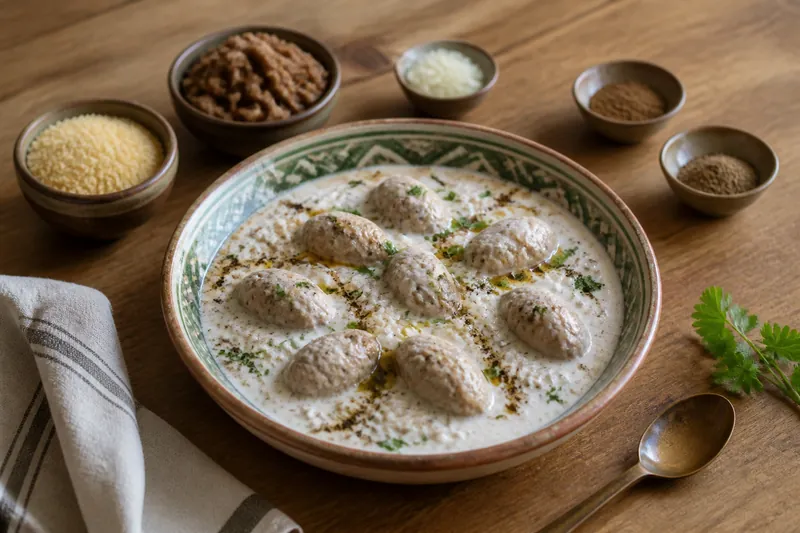 Kibbeh bi-labanSyrianOpen the recipe →
Kibbeh bi-laban pairs stuffed or shaped kibbeh with a yogurt sauce, giving the dish a cool tang that softens the richness of the meat and bulgur. The flavour is gentle but full, with yogurt, mint, and sometimes garlic making the sauce feel bright. It is worth cooking because it is both elegant and homely, the kind of dish that can sit at the centre of a meal. One thing to know before starting: the yogurt must be handled carefully over heat so it does not split, which means steady stirring and moderate heat throughout.
Smoky grain with chicken
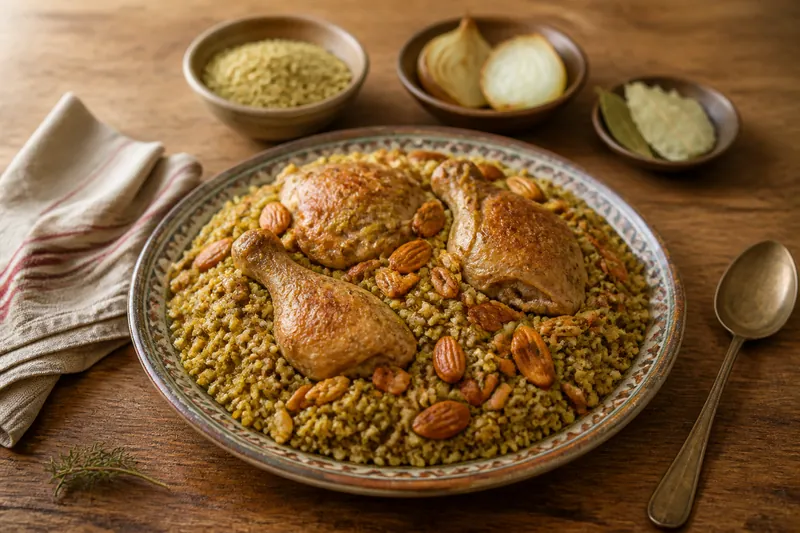 Freekeh bi-DajajSyrianOpen the recipe →
Freekeh bi-dajaj combines freekeh, the green cracked wheat with a smoky taste, and chicken cooked until tender. The result is hearty and savoury, with the grain holding the chicken broth and giving the dish a nutty depth. It is worth cooking because freekeh has a character that rice cannot match, and the dish feels substantial without being heavy. The chicken should be well seasoned, since the grain takes on whatever flavour the broth carries. One thing to know before starting: rinse the freekeh if needed, and watch the liquid closely, because it absorbs steadily and can tighten quickly.
Flatbread with meat and spice
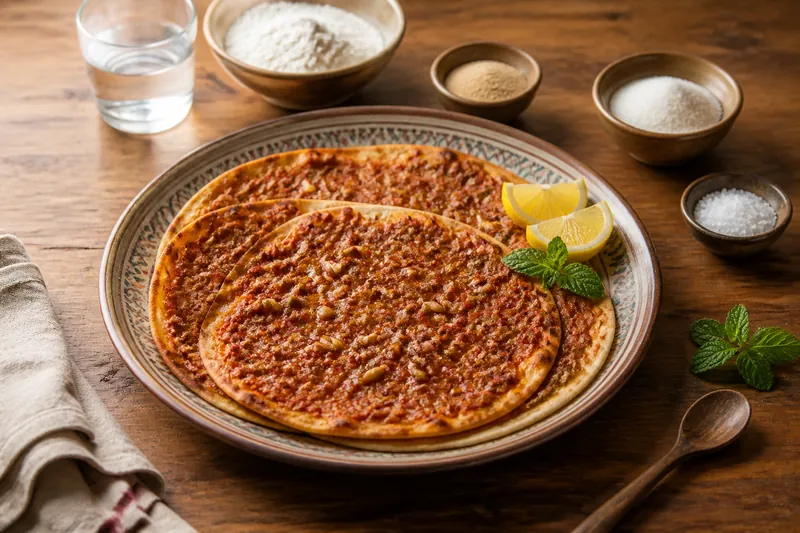 Lahm bi 'ajinSyrianOpen the recipe →
Lahm bi 'ajin is a thin dough spread with seasoned minced meat, tomato, onion, and spice, then baked quickly until the edges crisp. It tastes savoury and slightly sharp, with the dough acting as a soft base rather than a thick crust. It is worth cooking because it is direct and satisfying, and it makes a strong case for simple oven food. The topping should be spread thinly so it cooks evenly. One thing to know before starting: the dough needs proper resting and stretching, or it will fight back and bake unevenly.
A warm semolina sweet
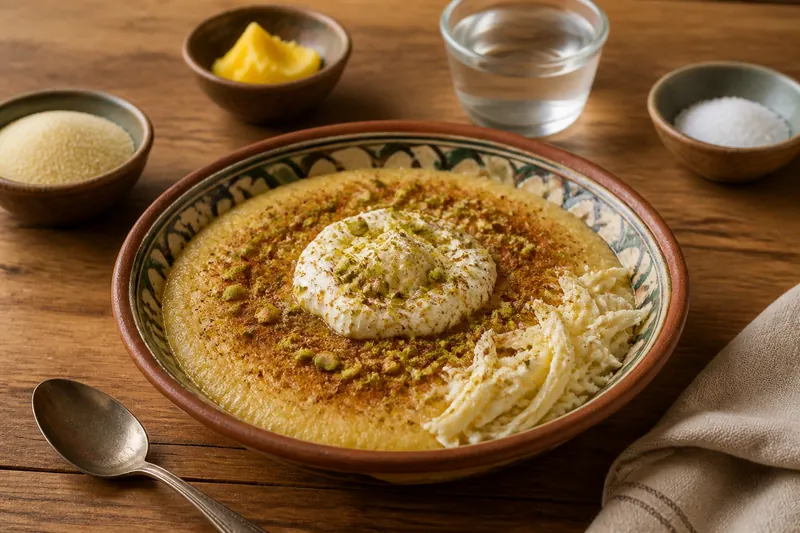 MamouniyehSyrianOpen the recipe →
Mamouniyeh is a quick Syrian sweet made with semolina, butter, and sugar syrup, often finished with cream or cheese depending on the version. It tastes warm, soft, and fragrant, with a texture somewhere between porridge and pudding. It is worth cooking because it comes together quickly and gives a clear sense of how Syrian sweets use simple starch and syrup for comfort. The key is texture: smooth but not gluey, sweet but not cloying. One thing to know before starting: the semolina must be stirred steadily as it cooks, or it can catch on the pan and turn grainy.
Elastic, cold, and distinct
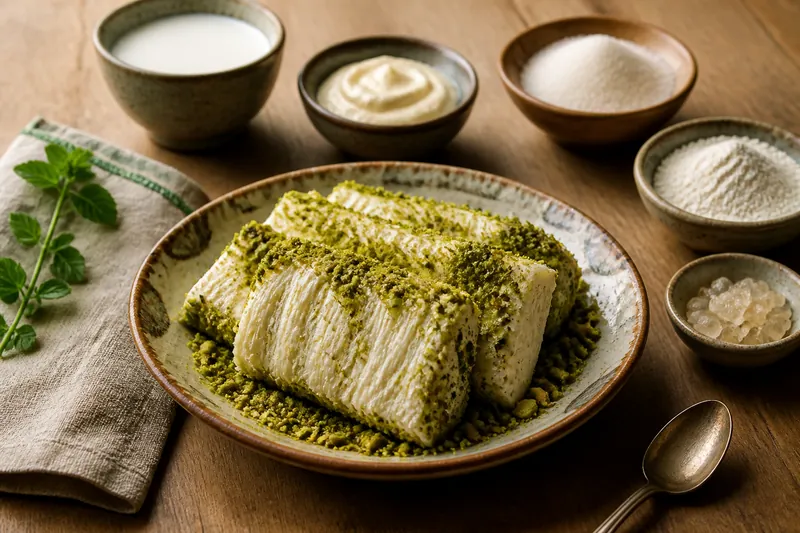 Booza 'ArabiyyehSyrianOpen the recipe →
Booza 'Arabiyyeh is the Syrian ice cream known for its chew, built with salep and mastic so it stretches rather than melts like ordinary ice cream. The flavour is milky, gently perfumed, and often finished with pistachios. It is worth cooking because it is one of the region’s most recognisable sweets, and the texture is the point as much as the taste. The mixture needs beating and freezing with care to keep that elastic quality. One thing to know before starting: use the right stabilising ingredients and keep the freezing process controlled, or the final texture will be ordinary rather than distinctive.
These dishes are the clearest route into Syrian cooking: chickpeas and lentils, yogurt and grain, meat and sour fruit, sweets and frozen desserts. Taken together, they show a cuisine that is practical, precise, and generous with flavour without wasting effort.