Syrian
Harak Osbao
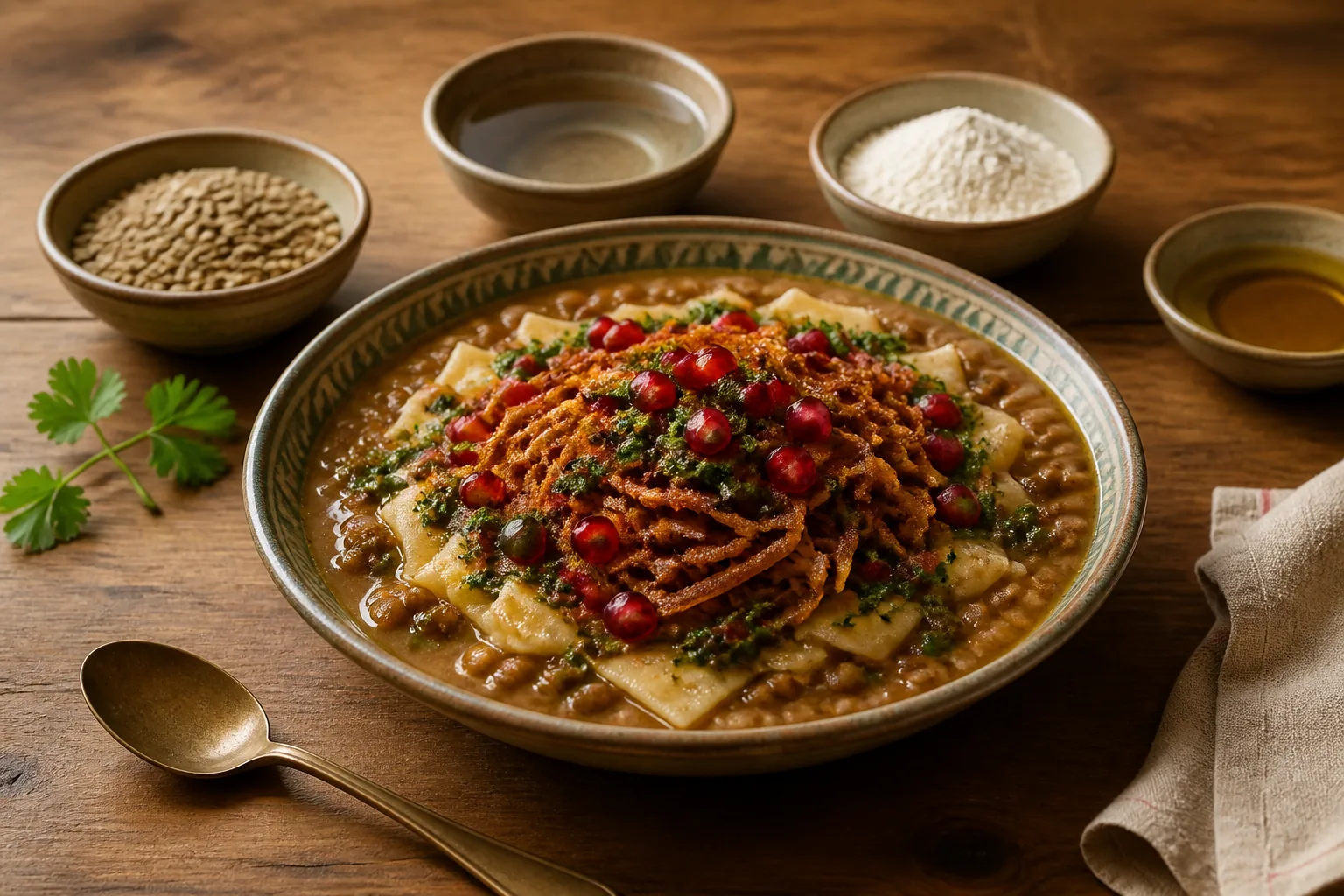
A beloved Damascene lentil and dough dish, sharpened with tamarind and pomegranate molasses, then finished with crisp onions, fried dough, garlic, coriander, and pomegranate seeds. It is hearty, sour, and deeply aromatic in the traditional Syrian way.
 Watch it madeHabibimbaps · 1:33
Ingredients
- Brown or green lentils3/4 cup
- Water3 cups
- All-purpose flour1 cup
- Fine salt1 1/4 teaspoons, divided
- Olive oil or sunflower oil4 tablespoons, divided
- Warm water for dough1/3 cup, as needed
- Yellow onions, thinly sliced2 medium
- Tamarind pulp1 1/2 tablespoons
- Hot water for soaking tamarind1/2 cup
- Pomegranate molasses1 tablespoon
- Garlic cloves, crushed4
- Fresh coriander, chopped1/2 cup
- Ground cumin1/2 teaspoon
- Black pepper1/4 teaspoon
- Lemon juice1 tablespoon, or to taste
- Pomegranate seeds1/4 cup
Method
- Put the tamarind pulp in 1/2 cup hot water, mash it with a spoon, and let it soak for 10 minutes.
- Mix the flour with 1/4 teaspoon salt and 1 teaspoon oil, then add warm water gradually and knead to a firm, smooth dough.
- Cover the dough and rest it for 10 minutes.
- Roll the dough thinly on a lightly floured surface and cut it into small squares or short strips about 1.5 cm wide.
- Heat 2 tablespoons oil in a wide pot and fry the sliced onions over medium heat, stirring often, until deeply golden and crisp at the edges.
- Lift out about one-third of the onions for garnish and leave the rest in the pot.
- Add the lentils and 3 cups water to the pot, bring to a boil, then simmer for 20 to 25 minutes until the lentils are just tender but not falling apart.
- Strain the soaked tamarind through a fine sieve into the lentil pot, pressing well to extract the sour liquid and discarding the seeds and fibers.
- Stir in the pomegranate molasses, cumin, black pepper, and 1 teaspoon salt.
- Drop about two-thirds of the raw dough pieces into the simmering lentils, stirring gently so they do not stick, and cook for 10 to 12 minutes until the dough is tender and the stew is thick.
- Meanwhile, heat the remaining oil in a small pan and fry the remaining dough pieces until golden and crisp, then drain them on paper towel.
- In the same small pan, briefly fry the crushed garlic for 20 seconds, add the chopped coriander, and stir for another 30 seconds until fragrant.
- Stir most of the garlic-coriander mixture into the lentils, reserving a spoonful for the top.
- Taste and adjust with lemon juice, more salt, or a little extra pomegranate molasses until the flavor is balanced, sour, and savory.
- Spoon the harak osbao into shallow bowls and top with the reserved fried onions, fried dough pieces, remaining garlic-coriander mixture, and pomegranate seeds.
Common questions
Can I substitute the tamarind pulp or pomegranate molasses in Harak Osbao?
Yes. If you lack tamarind, use extra pomegranate molasses plus a little lemon juice for brightness. The flavor will be less earthy and more fruity, but it still gives the dish its essential sweet-sour balance.
How long does Harak Osbao take from start to finish?
Plan for about 45 to 60 minutes. The onions take the longest because they need to become deeply golden and crisp. The lentils cook in 20 to 25 minutes, while the dough needs only a short rest.
What are the most common mistakes when making Harak Osbao?
Overcooking the lentils is the biggest mistake; they should be tender but hold their shape. Another common issue is underbrowning the onions, which makes the dish flat. Also strain the tamarind well to avoid fibers in the sauce.
How should I store leftovers, and can I make components ahead?
Store the lentil-tamarind base in the fridge for up to 3 days. Keep fried onions separate so they stay crisp. The dough pieces can also be cut ahead and chilled, or frozen briefly on a tray before cooking.
How should Harak Osbao be served for the best texture and flavor?
Serve it hot, topped with the reserved crispy onions, fresh coriander, and a drizzle of olive oil if desired. It’s best when the lentils are spoonable and the dough pieces are tender, not mushy.