10 German Dishes That Define the Table
From breakfast skillet food to pastries and beer hall staples, these 10 dishes show the range and plainness of German cooking.
German cooking is often described by its comfort foods, but that misses how varied the food actually is. There are crisp flatbreads, filled pastries, sausages, stews, cabbage dishes, and a few things that ask for little more than good bread and a cold drink.
The dishes below are among the best known, and for good reason. Some are weekday food, some are regional specialties, and some belong to bakeries and fairs. All are worth knowing because they show how direct German cooking can be.
A skillet meal from leftovers
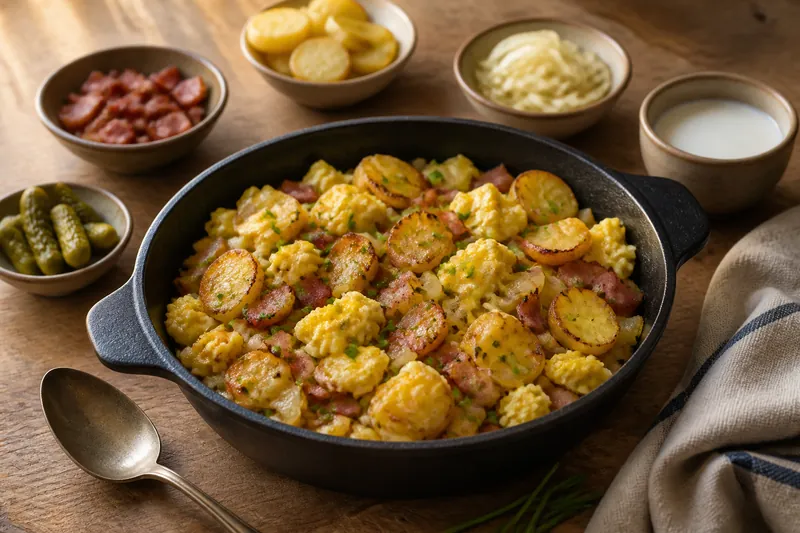
BauernfrühstückGermanOpen the recipe →Bauernfrühstück is a pan meal of potatoes, eggs, and often ham or bacon, cooked until the edges brown and the eggs just set. It tastes hearty, salty, and a little crisp, with enough richness to work as breakfast, lunch, or a late supper. The appeal is practical: it turns cooked potatoes into something better than the parts. What a cook should know is that the potatoes need to be cooked first and dry enough to brown; damp potatoes will steam instead of fry.
The filled doughnut people line up for
 Berliner PfannkuchenGermanOpen the recipe →
Berliner Pfannkuchen are yeasted doughnuts, usually filled with jam and finished with sugar. They are soft, light, and richly fried, with a sweet center that gives them their most familiar character. They are worth making because the dough is simple and the result has a proper bakery texture that is hard to fake. The main thing to know is that the dough needs time to rise and the oil must be steady, not overheated, so the centers cook through without burning the outside.
A cake with custard and almond topping
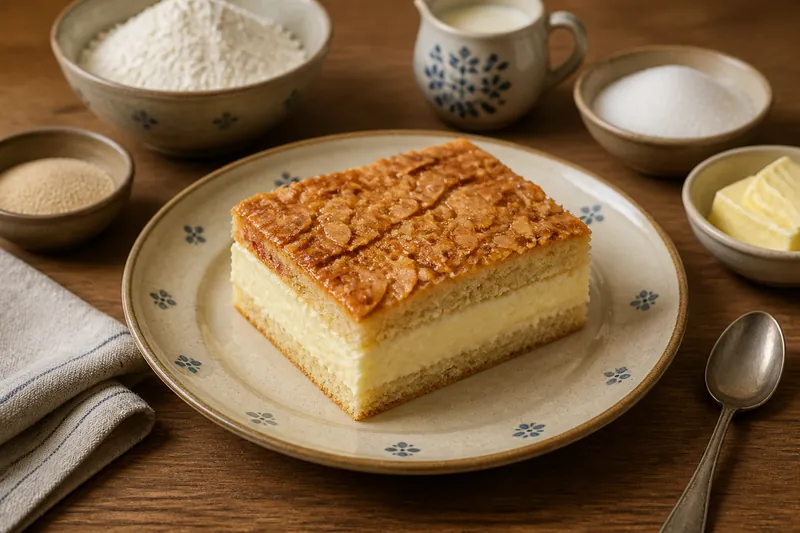 BienenstichGermanOpen the recipe →
Bienenstich is a yeasted or sponge-based cake with a custard or cream filling and a caramelized almond topping. It tastes mellow and sweet, with a contrast between the soft crumb and the brittle, nutty crust. It is worth cooking because it brings together plain cake, cream, and crunch in a very German way. The cook should know that the topping can set hard as it cools, so it is easier to cut the cake cleanly once it has had time to rest and the filling is chilled.
The basic grilled sausage
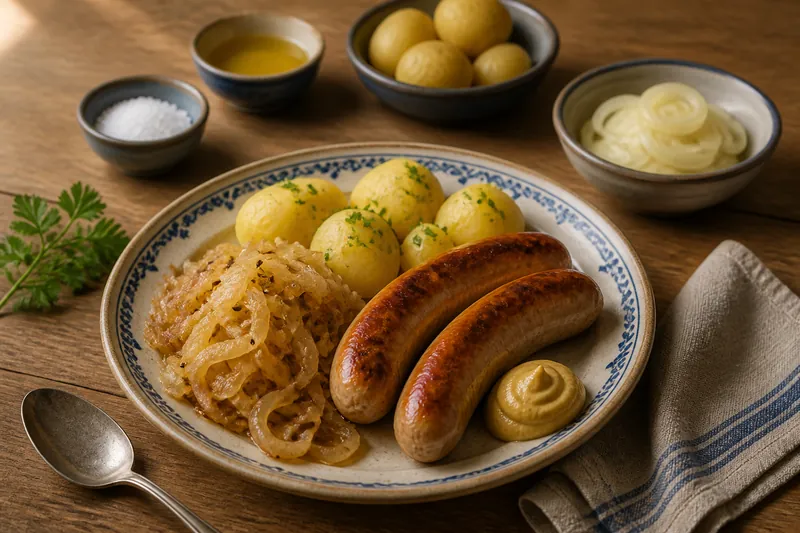 BratwurstGermanOpen the recipe →
Bratwurst is one of the most familiar German sausages, usually pork-based and seasoned with mild spices. It tastes savory, juicy, and straightforward, with a browned casing that gives the main texture. It is worth cooking because it is direct food: little more than sausage, heat, and bread or potatoes alongside. What matters most is gentle cooking. If the heat is too strong, the casing splits before the sausage is done, and the fat runs out instead of staying where it belongs.
Sausage with sauce and spice
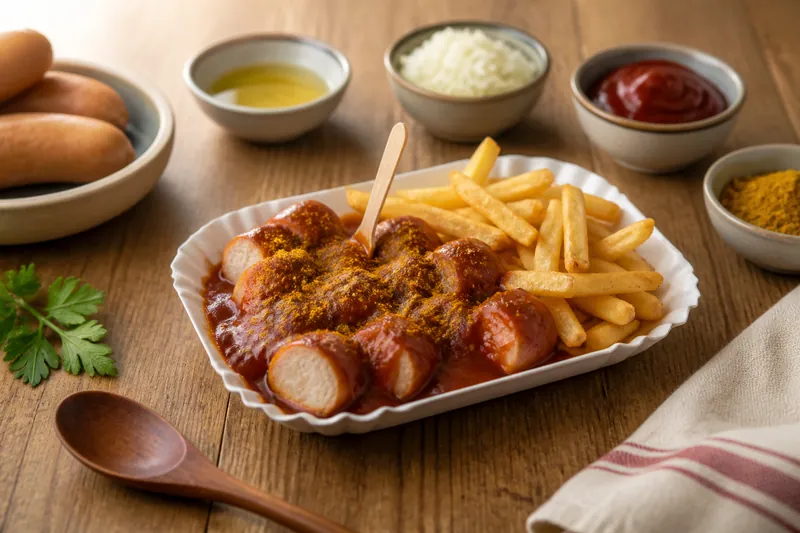 CurrywurstGermanOpen the recipe →
Currywurst is sliced sausage topped with a tangy, spiced tomato sauce and curry powder. It tastes sweet, sharp, and mildly hot, with the sausage carrying the sauce rather than competing with it. It is worth making because it shows how German street food can be simple and fully satisfying. The one thing to know is that the sauce matters as much as the sausage. It should be thick enough to coat, not run off, and the curry powder should be added with restraint so it sharpens the sauce instead of flattening it.
Slow-cooked pork with real weight
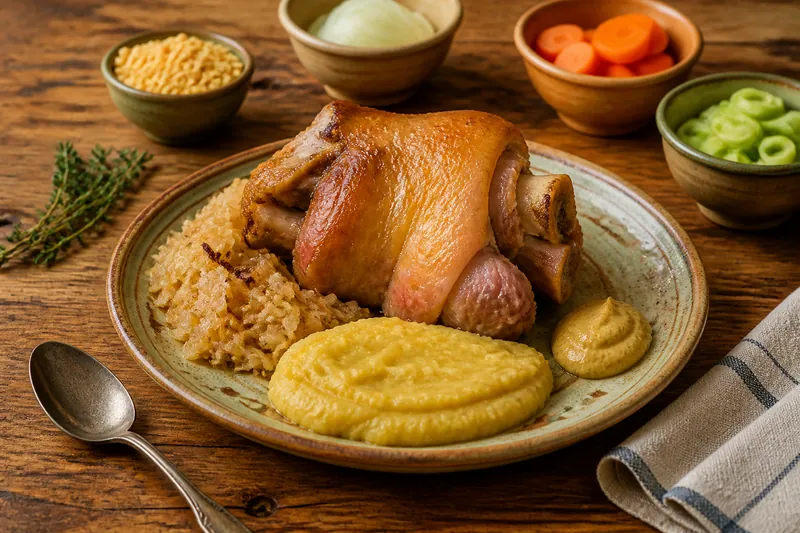 EisbeinGermanOpen the recipe →
Eisbein is cured pork knuckle, usually cooked until very tender and served with sauerkraut or peas. It tastes deep, salty, and richly meaty, with skin and fat that turn silky after long cooking. It is worth cooking when you want a dish that feels old-fashioned and substantial. The key thing to know is that the meat usually needs soaking overnight to calm the salt before cooking, and then it must be simmered patiently. Rushing it leaves the meat tough and the skin unhelpful.
Pea soup with body
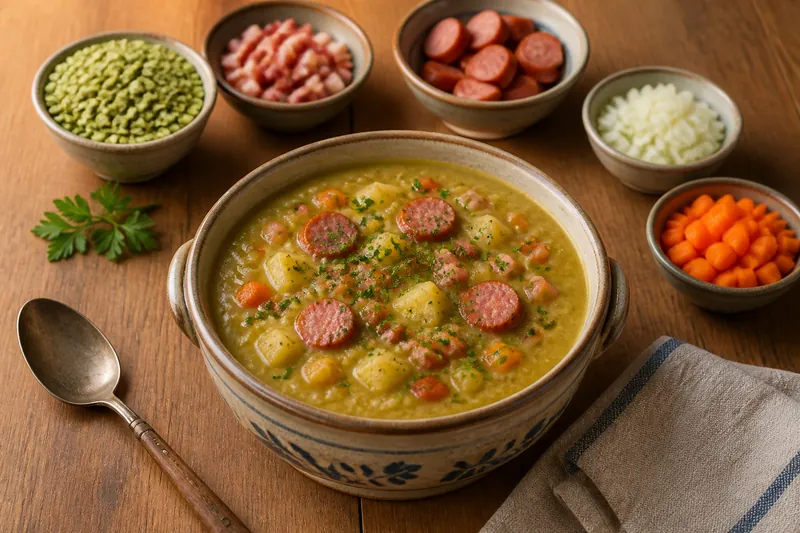 ErbsensuppeGermanOpen the recipe →
Erbsensuppe is a thick pea soup, often made with split peas, vegetables, and sometimes smoked meat or sausage. It tastes earthy, savory, and filling, with a natural sweetness from the peas and a roundness from long simmering. It is worth cooking because it is honest winter food that eats like a full meal. A cook should know that split peas need time and enough liquid to soften properly. Stir now and then, because the soup can catch on the bottom as it thickens.
Thin dough, cream, onion, bacon
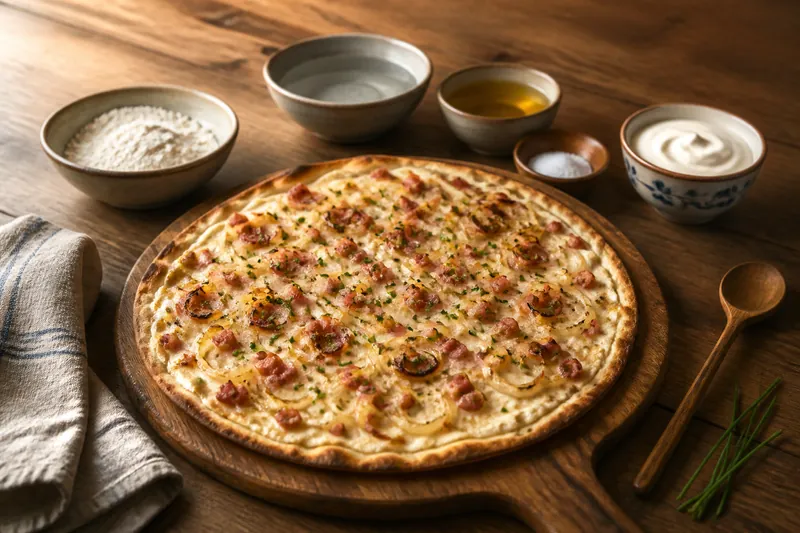 FlammkuchenGermanOpen the recipe →
Flammkuchen is a very thin flatbread topped with crème fraîche or sour cream, onions, and bacon. It tastes crisp, smoky, and lightly tangy, with very little excess. It is worth cooking because it comes together quickly and gives a sharp contrast between the thin crust and the soft topping. The thing to know is that the oven must be very hot and the dough rolled very thin. If it is too thick, it stops being Flammkuchen and turns into something heavier.
Kale with sausage and long simmering
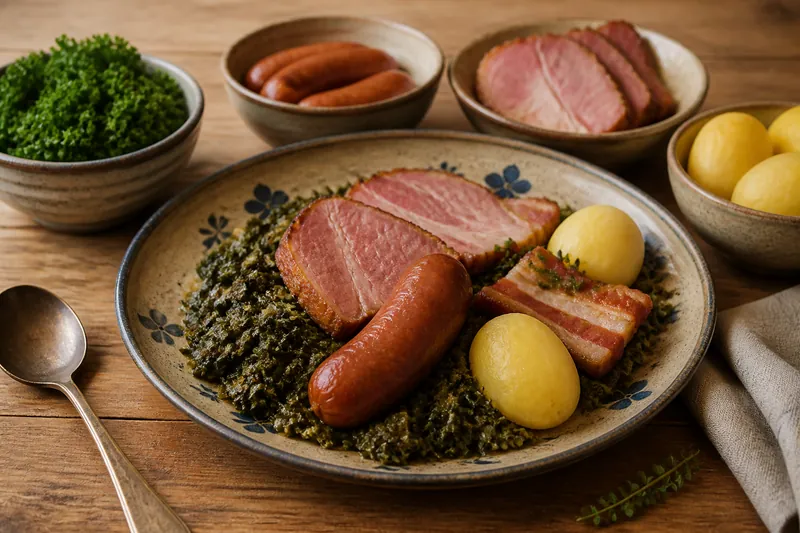 Grünkohl mit PinkelGermanOpen the recipe →
Grünkohl mit Pinkel is a winter dish of kale cooked with sausage, often served with potatoes. It tastes smoky, salty, and green, with enough fat to soften the kale and enough sausage to give the dish its core flavor. It is worth making because it turns a tough leafy vegetable into a meal that is deeply satisfying. The important point is that the kale needs time. Short cooking leaves it harsh; longer cooking makes it tender and lets the sausage flavor move through the pot.
A sharp cheese served as it is
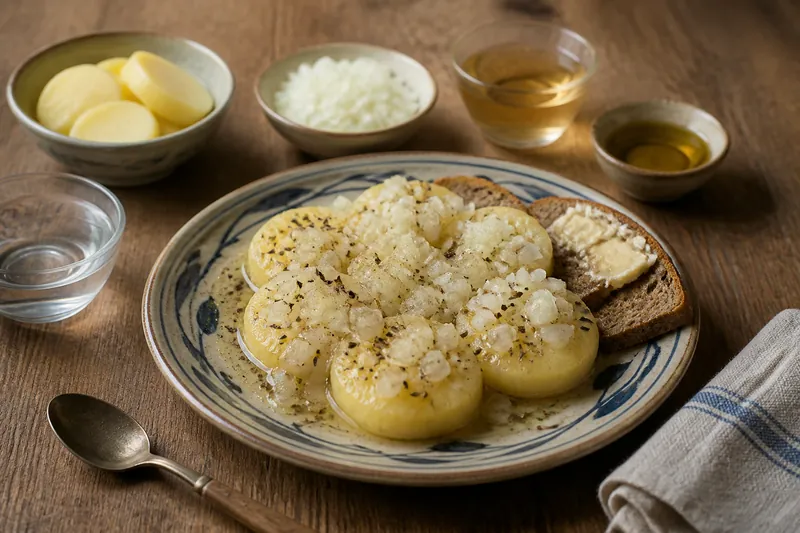 Handkäse mit MusikGermanOpen the recipe →
Handkäse mit Musik is a small sour milk cheese served with an onion marinade, often with vinegar and oil. It tastes pungent, tangy, and clean, with the onions giving it a sharp, raw edge. It is worth trying because it shows another side of German eating: something simple, cold, and built for bread. A cook should know that there is no real cooking here, only seasoning and time for the onions to mellow in the marinade. It is at its best after the flavors have had a little while to settle.
These dishes range from bakery sweets to sausage plates and winter stews, but they share a plain confidence. German cooking does not rely on fuss. It relies on good timing, direct flavors, and a respect for the ingredient in front of the cook.