German
Eisbein
A Berlin-style cured pork knuckle gently simmered with soup vegetables and spices until tender, served with tangy sauerkraut and smooth yellow pea purée. The meat should be soft and succulent, with the rich broth tying the plate together.
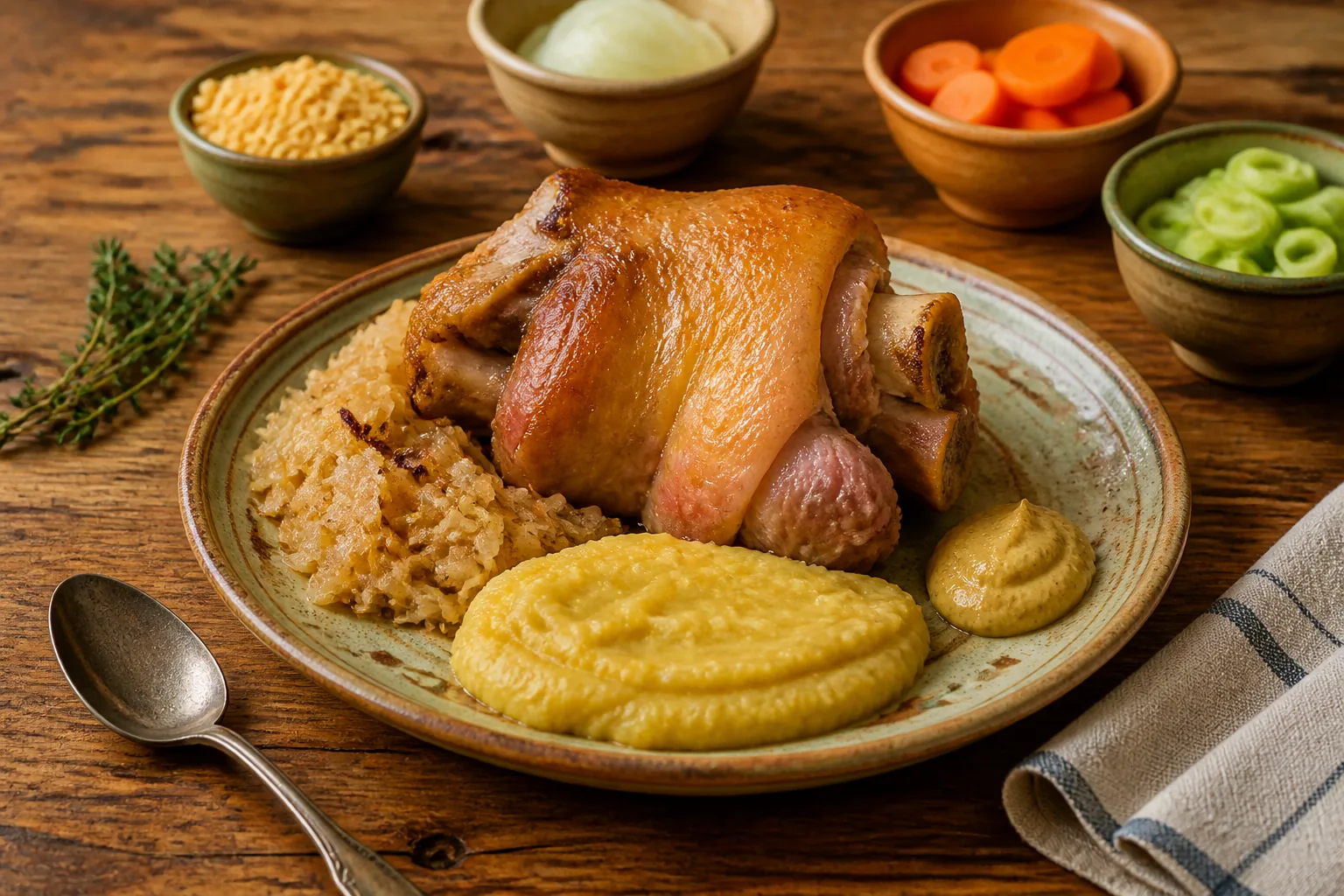
Ingredients
- Cured pork knuckle, bone-in and skin-on1 large, about 1.2 kg
- Yellow split peas150g
- Onion2 medium
- Carrot1
- Leek1 small
- Celeriac100g
- Bay leaves3
- Juniper berries8
- Black peppercorns1 tsp
- Allspice berries3
- Sauerkraut500g
- Rendered pork lard or butter2 tbsp
- Dry white wine100ml
- Caraway seeds1/2 tsp
- Smoked bacon, diced60g
- Marjoram1/2 tsp
- Saltto taste
- White pepperto taste
- German mustard2 tbsp, for serving
Method
- The night before cooking, cover the yellow split peas with plenty of cold water and soak overnight.
- Place the cured pork knuckle in a large pot and cover with cold water by about 3 cm.
- Halve 1 onion, chop the carrot, leek, and celeriac, and add them to the pot with 2 bay leaves, 6 juniper berries, the peppercorns, and allspice.
- Bring slowly to a gentle simmer, skim any foam, then cook uncovered at a low simmer for 2 to 2 1/2 hours, until the meat is very tender but not falling apart.
- While the pork cooks, drain the soaked peas and place them in a saucepan with fresh water to cover by 2 cm.
- Simmer the peas for 45 to 60 minutes until completely soft, adding a little water as needed so they do not catch.
- Finely dice the remaining onion, then cook half of it with the diced bacon in 1 tbsp lard or butter until the onion is soft and the bacon has rendered.
- Stir the cooked peas into the bacon mixture, season with marjoram, white pepper, and only a little salt, then mash or blend to a thick purée, loosening with pork broth if needed.
- For the sauerkraut, warm 1 tbsp lard or butter in a saucepan and cook the remaining diced onion until translucent.
- Add the sauerkraut, white wine, 1 bay leaf, 2 juniper berries, and caraway seeds, then pour in about 150ml of the pork cooking broth.
- Cover and simmer the sauerkraut gently for 35 to 45 minutes, stirring occasionally, until mellow and juicy.
- Lift the Eisbein from the broth and let it rest for 5 minutes; if desired, remove a little excess skin but keep the knuckle intact.
- Taste the pea purée and sauerkraut for seasoning, remembering the cured pork broth is already salty.
- Serve the Eisbein hot with sauerkraut, yellow pea purée, and German mustard on the side.
Common questions
Can I substitute fresh pork knuckle for cured Eisbein, and how should I adjust the seasoning?
Yes, but add salt to the cooking liquid because cured knuckle brings its own seasoning. Fresh knuckle may need a little longer to become tender, usually 2.5 to 3 hours, depending on size and age.
When should I start the split peas so they finish at the same time as the pork?
Soak them the night before, then simmer them during the last hour of the pork cooking time. They need about 45 to 60 minutes to turn fully soft and will hold well if finished early.
What are the most common mistakes when cooking Eisbein?
The biggest errors are boiling too hard, which toughens the meat and clouds the broth, and undercooking the peas so they stay grainy. Keep both at a gentle simmer and check water levels often.
How do I store leftover Eisbein and sauerkraut safely?
Cool everything quickly, then refrigerate in separate airtight containers for up to 3 days. Reheat the pork gently in its cooking liquid or steam it, and warm the peas and sauerkraut separately.
What is the best way to serve Eisbein for a traditional meal?
Serve the knuckle hot with the pea purée or mash, sauerkraut, and boiled potatoes or crusty bread. A little mustard on the side is traditional, and a dry white wine or beer pairs well.