6 Algerian Dishes That Feed a Crowd
Sweet pastries, syrup-soaked cake, and fruit-based desserts that are made for sharing, with a few savory notes for balance.
Algerian cooking has a strong tradition of generous trays and platter desserts, the kind you set down in the middle of a table and let everyone take from. These dishes are the ones that do that work well, because they hold, slice, and serve for a crowd.
Some are fried, some baked, and some barely need the stove. All six are practical for large gatherings, and each brings a different texture, from crisp and syrupy to soft, rich, and fragrant.
Crisp ribbons in honey
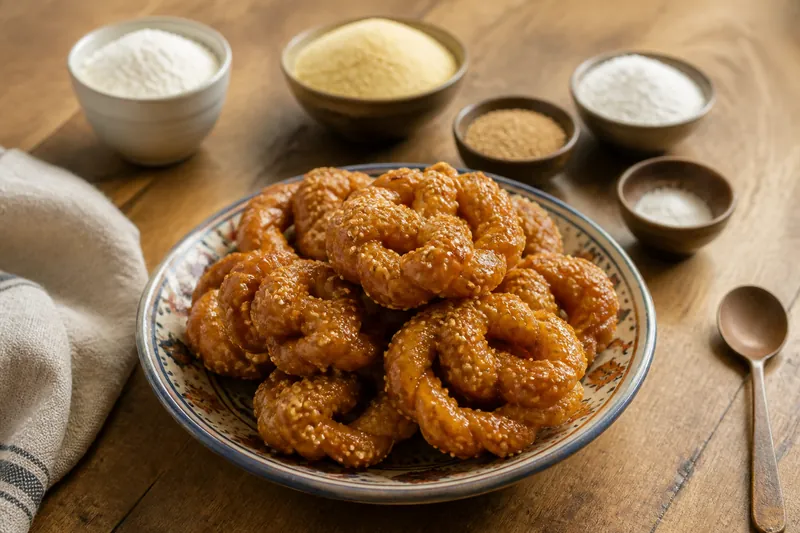
GriwechAlgerianOpen the recipe →Griwech is a deep-fried Algerian pastry shaped into twisted ribbons or braids, then soaked in honey and finished with sesame. It is crisp at first bite, then gives way to a dense, lightly spiced interior and a sticky glaze. It earns its place on a large table because it keeps well and feels festive without needing delicate plating. The shaping takes patience, and that is the main thing to know before you start. Keep the dough covered as you work, and make sure the oil is steady and hot enough to brown the pastry without soaking it.
Orange-scented semolina tray bake
 Kalb el LouzAlgerianOpen the recipe →
Kalb el Louz is a syrup-soaked semolina cake, cut into diamonds and often topped with almonds. It is soft, grainy, and deeply perfumed, usually with orange blossom or rose water, and it serves neatly in squares for a group. The flavor is sweet but not flat, with a pleasant chew from the semolina and a rich finish from the syrup. The resting time matters here, so plan ahead. Let the batter sit fully before baking, or the texture will be uneven and the cake will not hold together as cleanly when sliced.
Fruit and meat in one pot
 Lham LahlouAlgerianOpen the recipe →
Lham Lahlou is a sweet Algerian stew of meat cooked with fruit, often prunes, apricots, or apples, and scented with cinnamon. It is polished and unusual, with tender meat, glossy fruit, and a sauce that leans gently toward dessert without becoming one. It feeds a table well because it is served in a communal dish and paired with bread or plain rice. The cook should watch the balance between sweetness and salt. Use a light hand at first, then taste near the end, since the fruit and syrup reduce as they cook.
Semolina diamonds with a date center
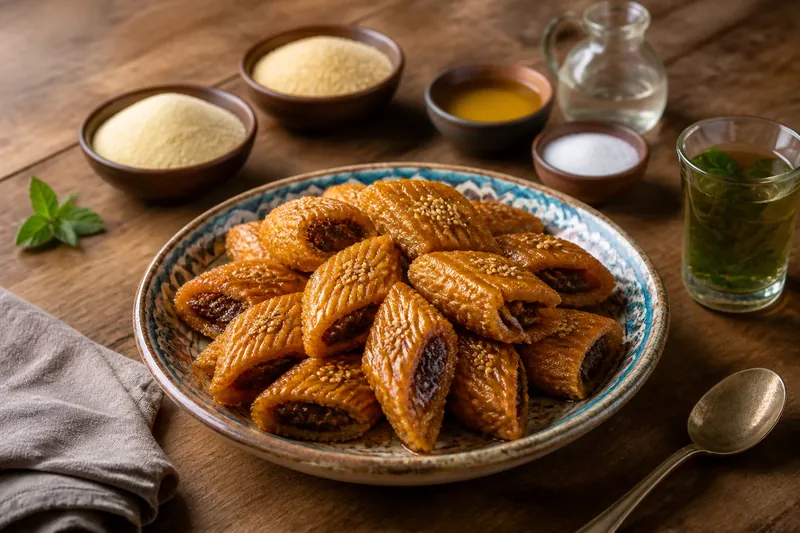 MakroudAlgerianOpen the recipe →
Makroud is a classic Algerian pastry made from semolina dough filled with a date paste, shaped into diamonds, fried or baked, and dipped in syrup or honey. It is firm outside, tender inside, and strongly flavored with dates and sometimes a little citrus or spice. For a crowd, it is useful because the pieces are small, neat, and easy to arrange on a tray. The filling should be smooth and dry enough to roll cleanly. If it is too soft, the pastry can split during shaping, so chill it before assembling.
Quick almond and semolina sweet
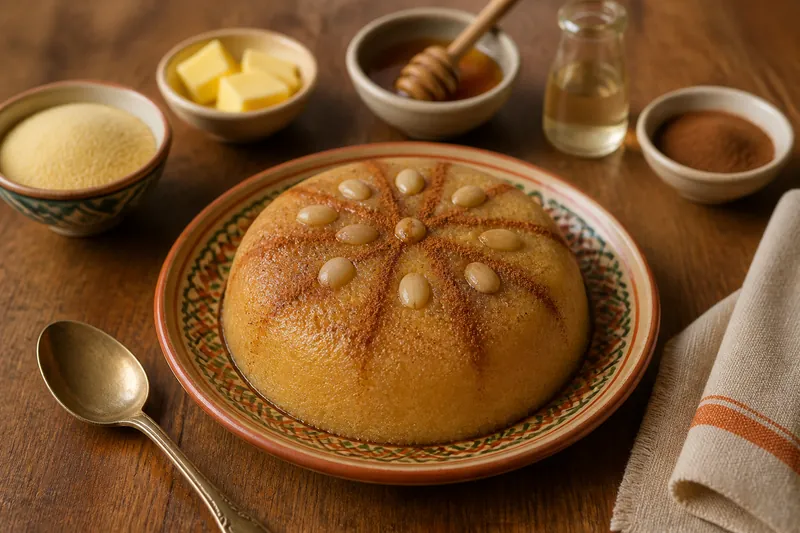 TaminaAlgerianOpen the recipe →
Tamina is a fast Algerian sweet made from toasted semolina, butter, and honey, often finished with cinnamon and ground nuts. It is rich, sandy, and warm in flavor, more like a soft confection than a cake. Because it sets into a sliceable mass, it is useful when you need a dessert that can be made in a small pot and cut for many people. The key is to toast the semolina properly. Stir constantly so it browns evenly and does not turn bitter, then press the mixture firmly into the dish before it cools.
Half-moons for tea
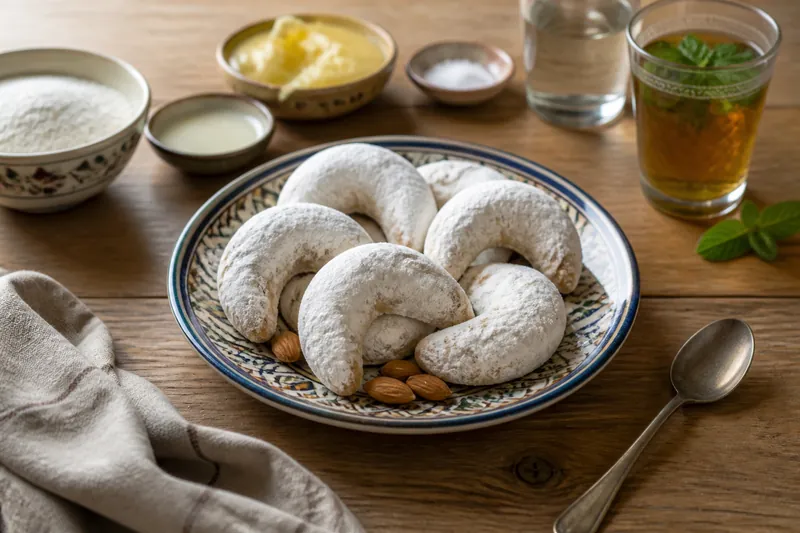 TcharekAlgerianOpen the recipe →
Tcharek are crescent-shaped Algerian cookies, usually filled with almond paste and flavored with orange blossom water. They are tender, lightly crisp at the edges, and finished with a sugar glaze or dusting that makes them suited to serving with tea. They feed a crowd because they are made as individual pieces and can be stacked, boxed, or arranged in rows without much trouble. The shaping takes steady hands, so make the dough pliable and not too dry. If it cracks while folding, let it rest a few minutes before continuing.
Taken together, these dishes show how Algerian sweets and stews are built for sharing. Some are best warm, some at room temperature, and some after a long rest, but all of them are meant to be set out in quantity and passed around with ease.