Eight Egyptian dishes you can make in half an hour
From creamy sweets to quick savory plates, these Egyptian dishes come together fast and bring a clear sense of place.
Egyptian cooking has a practical streak. Many of its best-known dishes rely on pantry staples, simple seasoning, and short cooking times, so they fit an ordinary evening as easily as a special meal.
These eight dishes all move from stove to table in about half an hour. Some are breakfast foods, some are sweets, and some are sharp, salty plates meant to be eaten with bread and company.
Slow comfort from a quick pot
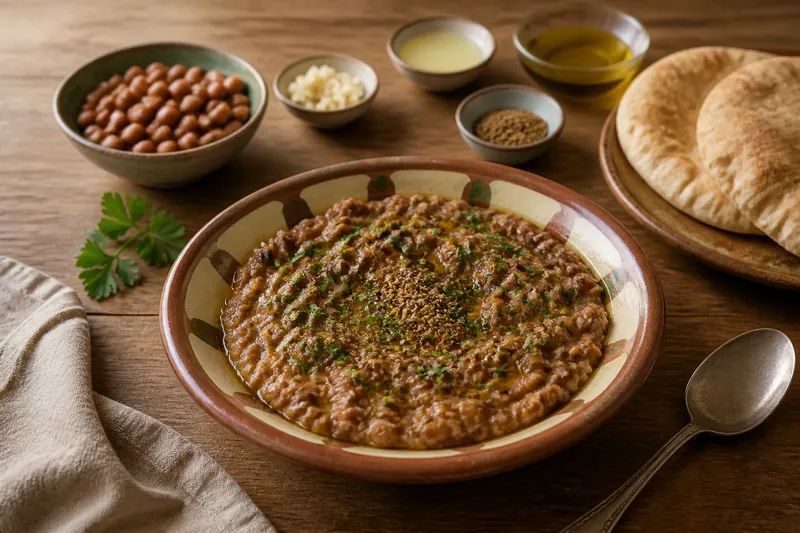
Ful MedamesEgyptianOpen the recipe →Ful medames is the Egyptian bean dish built from fava beans simmered until soft, then finished with oil, lemon, garlic, cumin, and often chopped tomato or herbs. It tastes earthy, bright, and a little nutty, with enough richness to eat for breakfast, lunch, or a light supper. It is worth cooking because it is filling, inexpensive, and easy to dress to taste at the table. Use cooked or canned fava beans if you want it on the table quickly; whole dried beans need much longer.
Bread pudding with a warm Egyptian finish
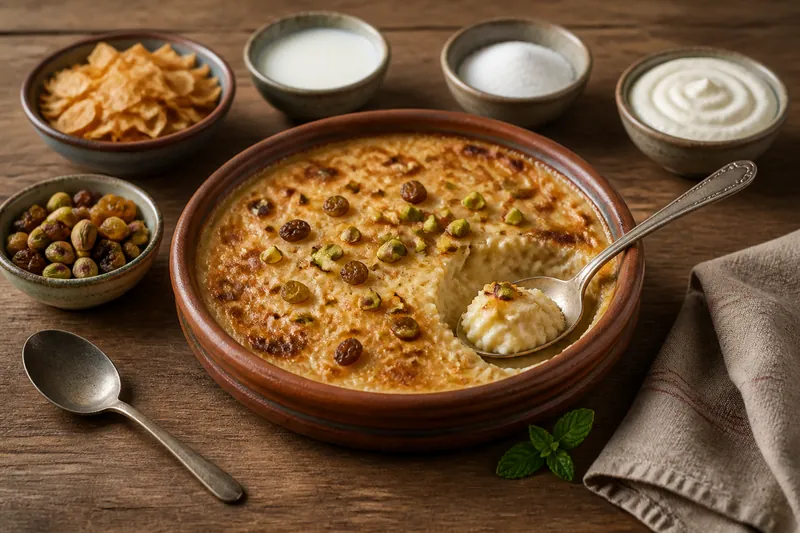 Om AliEgyptianOpen the recipe →
Om Ali is a baked bread pudding made with pastry or bread, milk, sugar, nuts, and sometimes raisins or coconut. It comes out soft in the middle and lightly crisp on top, with a flavor that sits between custard and toasted cream. It is worth making because it turns simple leftovers into a proper dessert. The main thing to know is that it should be assembled and baked briefly so the bread absorbs the milk without turning to mush; serve it soon after it comes from the oven.
Salted fish served as it is
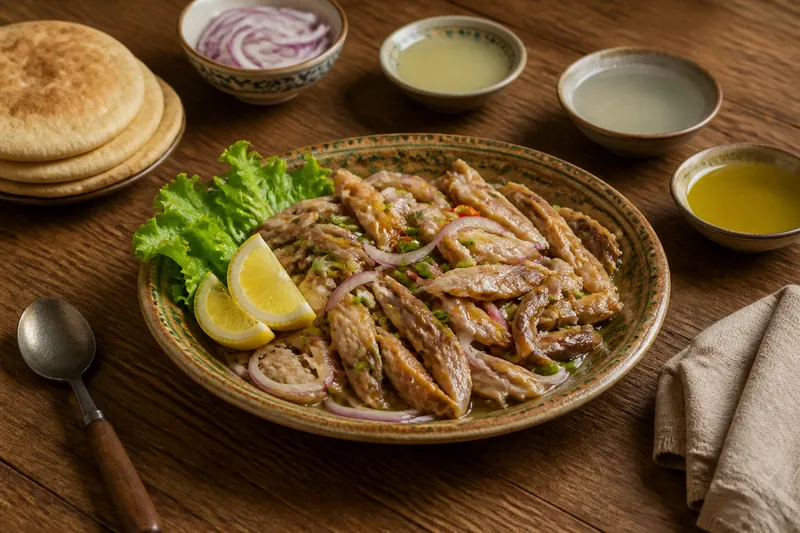 FesikhEgyptianOpen the recipe →
Fesikh is cured, heavily salted fish, usually mullet, served without cooking. Its taste is intense, salty, and very direct, with a firm texture and a strong aroma that is part of the dish’s identity. People eat it for specific occasions, especially spring festivals, and it is paired with bread, onion, lemon, and sometimes greens to balance the salt. The thing to know is that it is not a casual ingredient: it must be bought from a trusted source, handled carefully, and served with restraint because the flavor is powerful.
Festival candy with sesame and nuts
 Halawet el-MoulidEgyptianOpen the recipe →
Halawet el-Moulid is a traditional Egyptian sweet associated with the Mawlid celebrations. It is usually made in the style of nut and seed candy, with sesame, peanuts, sugar, and sometimes other mix-ins bound into a firm, crumbly sweet. The taste is toasty, sweet, and slightly caramelized, with enough crunch to make it more interesting than plain candy. It is worth cooking because it keeps well and needs only basic ingredients. Work carefully with the hot sugar mixture, which sets quickly and can burn if left unattended.
Alexandrian liver, fast and hot
 Kebda EskandaraniEgyptianOpen the recipe →
Kebda Eskandarani is an Alexandria-style liver dish cooked quickly with garlic, chili, cumin, and often peppers or lemon. The flavor is bold and savory, with a little heat and a clean metallic richness from the liver itself. It is worth cooking because it is fast, economical, and best when the liver stays tender. The important thing is not to overcook it; a short, hot sauté keeps it soft. Have all the seasoning ready before the pan goes on, because the liver moves from pink to firm very quickly.
Tiny pasta in a light broth
 Lisan Asfour SoupEgyptianOpen the recipe →
Lisan Asfour Soup is a simple soup made with rice-shaped pasta, usually cooked in broth with a tomato or stock base and finished with herbs or a little fat. The texture is gentle and comforting, and the flavor is clean rather than heavy. It is worth making because it is one of the quickest Egyptian soups and works as a starter or a light meal. Watch the pasta closely, since it cooks fast and can swell too far if it sits in the hot broth after the heat is off.
Silky milk pudding in minutes
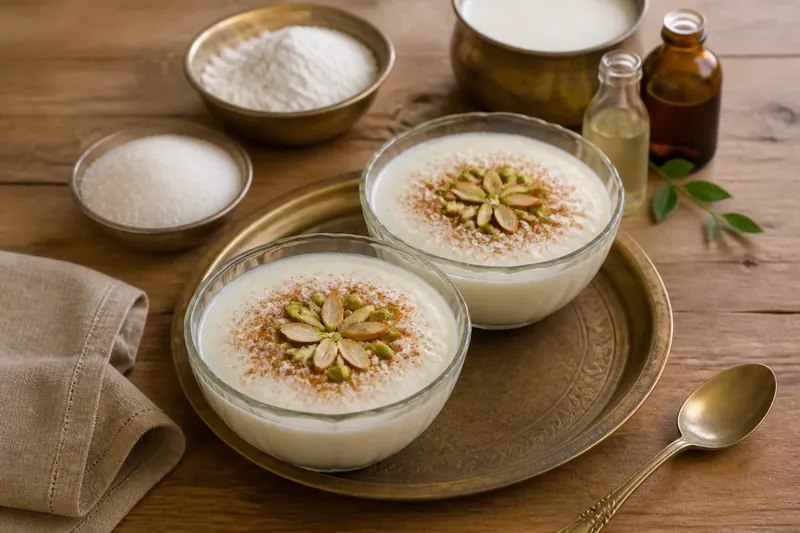 MahalabiaEgyptianOpen the recipe →
Mahalabia is a milk pudding thickened with starch and scented with sugar and often rosewater or orange blossom. It tastes mild, cool, and creamy, with a delicate perfume if you choose to use it. It is worth cooking because it needs little effort and can be served plain or topped with nuts. The main point is to stir constantly as it thickens so it stays smooth and does not catch on the bottom of the pan. Chill it if you want the texture to set fully before serving.
Smoked fish with sharp edges
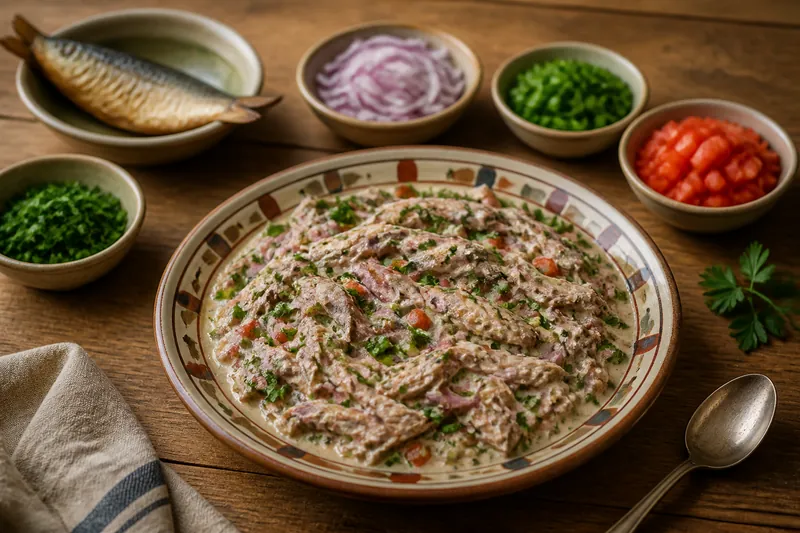 RingaEgyptianOpen the recipe →
Ringa is smoked herring, usually served with onion, lemon, oil, and sometimes tomato or tahini-based accompaniments. The flavor is smoky, salty, and assertive, with a supple texture that takes well to acid and raw aromatics. It is worth cooking in the sense of assembling because it gives you a full-flavored plate with almost no heat. One thing to know is that the fish is already cured and smoked, so the job is to balance it, not transform it. Keep the accompaniments bright and simple.
These dishes show how much Egyptian cooking can do with little time. Some are built for everyday eating, others belong to festivals or the street, but all of them depend on clear seasoning and careful handling rather than long preparation.