Six Easy Tunisian Dishes to Cook at Home
These six Tunisian dishes are practical, forgiving, and full of character, with a mix of quick skillet cooking and one longer, hands-off stew.
Tunisian home cooking often works with a short list of pantry staples: onions, garlic, peppers, tomatoes, chickpeas, eggs, and olive oil. The results are direct and generous, with heat, acidity, and plenty of texture.
The dishes here are among the easiest ways in. Some are fast enough for a weeknight, while Lablabi asks for a little planning but little effort. Each one teaches something useful about Tunisian cooking.
A quick tomato-and-egg pan
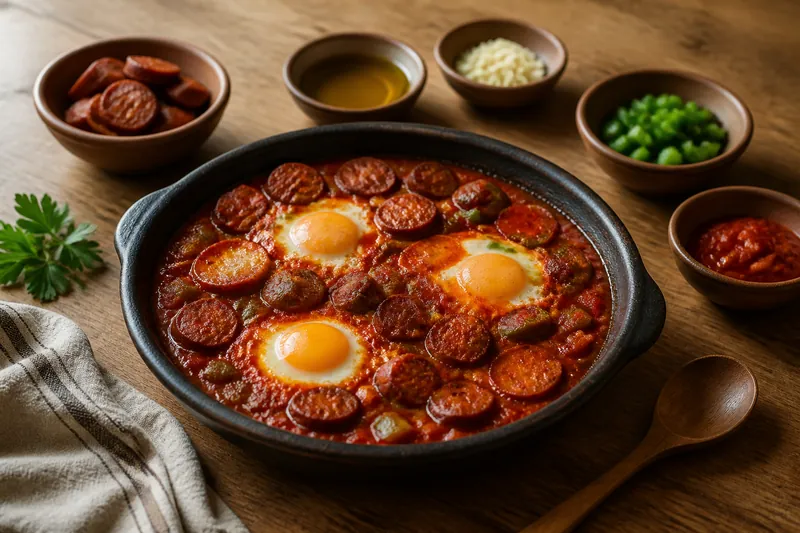
Ojja MerguezTunisianOpen the recipe →Ojja Merguez is a skillet dish of tomatoes, peppers, spices, eggs, and merguez sausage. It cooks down into a thick, fragrant sauce that is rich without being heavy, with the sausage giving smoke, heat, and fat to the pan. The eggs are usually set right in the sauce, so the dish stays loose and spoonable. It is worth cooking because it feels complete with very little work and uses ingredients many kitchens already have. One thing to know: keep the heat moderate so the sauce reduces without catching, and add the eggs only when the sauce is ready.
Carrots made sharp and sweet
 Omek HouriaTunisianOpen the recipe →
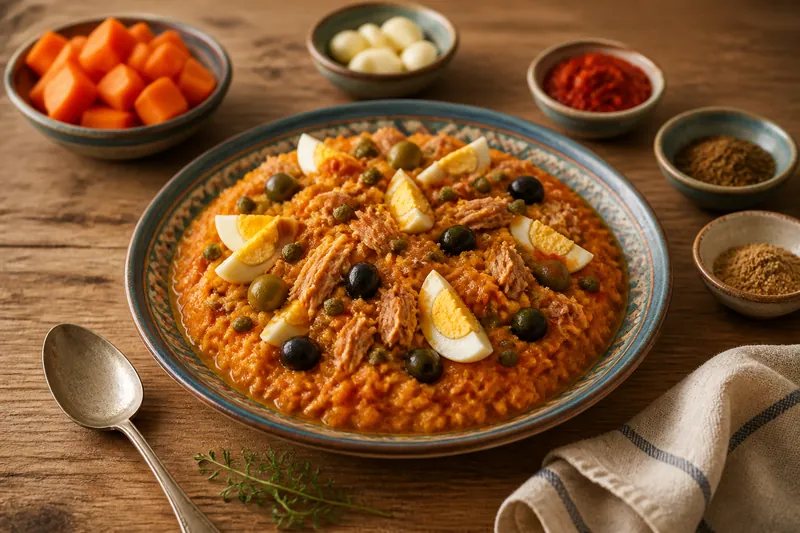
Omek Houria is a carrot salad with Tunisian seasoning, usually built from boiled or steamed carrots, garlic, cumin, caraway, harissa, olive oil, and vinegar or lemon. The texture is soft but not puréed, and the flavour moves between sweet carrot, warm spice, and gentle heat. It is worth making because it is simple, inexpensive, and good both warm and cold. One thing to know before starting: cook the carrots until just tender, not mushy, so they can hold the seasoning and still taste fresh after dressing.
Charred vegetables with a bright finish
 Salade MechouiaTunisianOpen the recipe →
Salade Mechouia is a salad of grilled or roasted peppers, tomatoes, onions, and often garlic, chopped and dressed with olive oil, lemon, and sometimes tuna or eggs. Its taste is smoky, juicy, and lively, with enough acidity to keep it from feeling soft or flat. It is worth cooking because the method turns a few simple vegetables into something layered and useful, as a starter or side. One thing to know: the char matters, so roast or grill the vegetables until the skins blister well before peeling and chopping them.
A pepper-and-egg side with bite
 TastiraTunisianOpen the recipe →
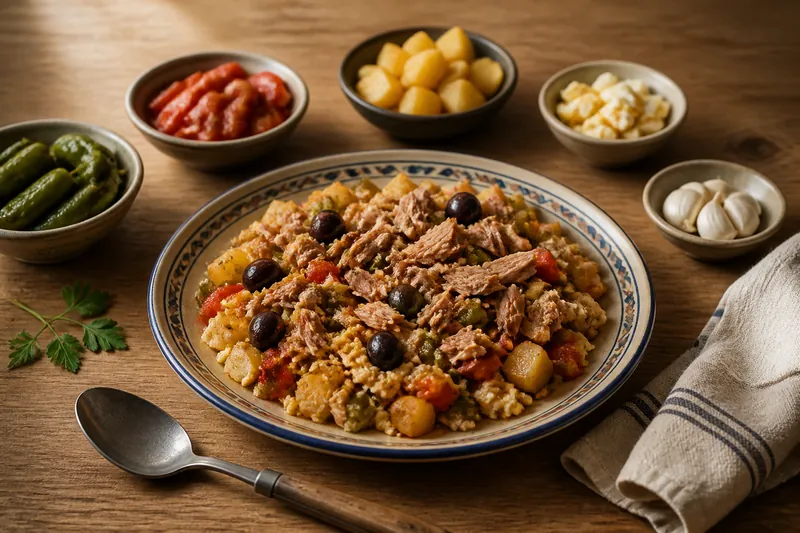
Tastira is a cooked mix of peppers, tomatoes, garlic, and eggs, often finished with harissa or other hot seasoning. It sits somewhere between relish and scramble: soft, glossy, and strongly seasoned, with the eggs binding the vegetables rather than taking over. It is worth cooking because it comes together quickly and can be served with bread, alongside fish, or as part of a larger meal. One thing to know is that the vegetables should cook down fully before the eggs go in, so the final dish stays concentrated rather than watery.
Eggs poached in spiced tomato sauce
 Tunisian ShakshoukaTunisianOpen the recipe →
Tunisian Shakshouka is a pan of tomatoes, peppers, onions, garlic, spices, and eggs cooked gently in the sauce. It is close in spirit to other North African egg dishes, but the Tunisian version usually leans deeper in pepper heat and sharper seasoning. The appeal is immediate: a few vegetables, a handful of spices, and a pan that can feed people with bread. One thing to know before starting is that the sauce should be reduced enough to cradle the eggs; if it is too loose, the whites spread and the dish loses its shape.
The long-cooked chickpea bowl
 LablabiTunisianOpen the recipe →
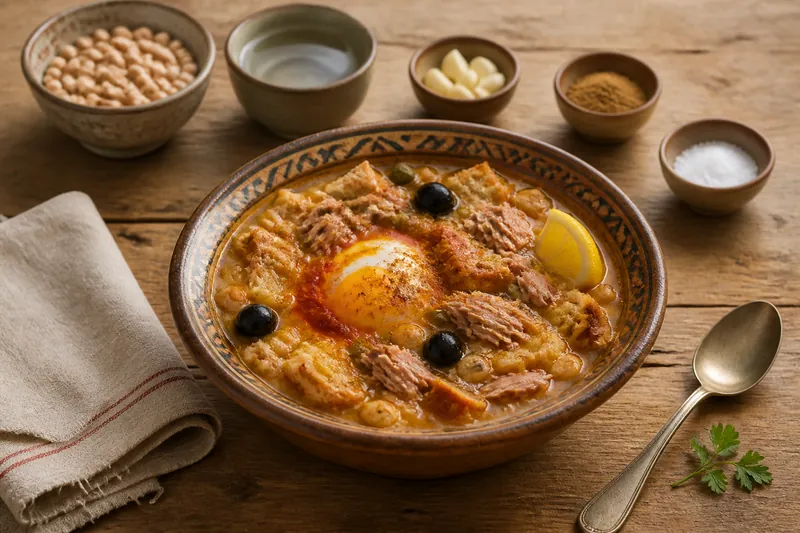
Lablabi is a chickpea soup built from soaked chickpeas simmered until tender, then served with garlic, cumin, harissa, olive oil, and bread torn into the bowl. It is simple food with a deep, brothy taste and a thick, comforting texture once the bread softens. It is worth cooking because it is filling, inexpensive, and more nuanced than it first appears, especially when the garnishes are added at the table. One thing to know before starting is that the soaking step is not optional: the overnight soak is what makes the long simmer manageable and gives the chickpeas their proper texture.
These dishes are a good place to start because they rely on a small set of ingredients and clear methods. Once you have made one or two, the rest follow easily. Tunisian cooking rewards attention to seasoning, a decent tomato base, and enough heat to bring the flavours forward.