The Polish Dishes Everyone Should Know First
From beet soup to dumplings and festive sweets, these are the Polish dishes that define the table and reward the cook.

Polish cooking is built on patience, useful ingredients, and a sharp sense of season. It gives comfort food a clear shape: soups with depth, dumplings with a plain dignity, pastries that vanish fast.
These are the dishes most often asked for, remembered, and cooked again. Some belong to holiday tables, others to winter suppers, but all show how Polish food turns simple ingredients into something lasting.
The clear beet soup of holidays
Barszcz czerwony z uszkamiPolishOpen the recipe →Barszcz czerwony z uszkami is a bright beet broth, usually clear and lightly sour, served with tiny mushroom-filled dumplings. The soup tastes earthy, clean, and gently sweet, with vinegar or souring giving it lift. It is worth cooking for its balance and for the way it opens a festive meal without heaviness. The uszka are the part that needs care: make the filling dry enough to hold its shape, and keep the dough thin so the little parcels stay delicate in the bowl.
Hunter’s stew with deep cabbage flavor
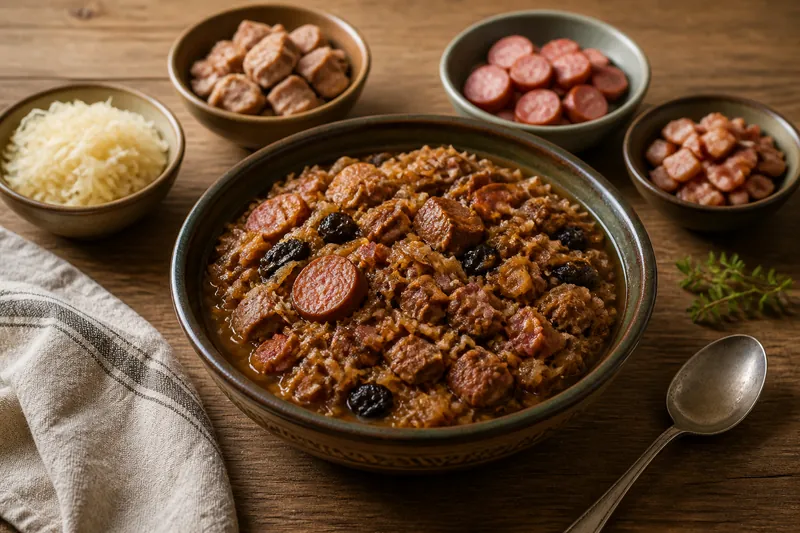 BigosPolishOpen the recipe →
Bigos is a slow stew of cabbage, sauerkraut, meat, and often sausage, cooked until the flavors meld into something dark, sour, and savory. It tastes richer the next day, which is part of its appeal. The pot reward is depth rather than delicacy. It is worth cooking because it uses time well and feeds many people without fuss. A cook should know that bigos wants long, gentle simmering and benefits from reheating, so do not rush it once everything is in the pot.
A soup with a stern, sweet-sour edge
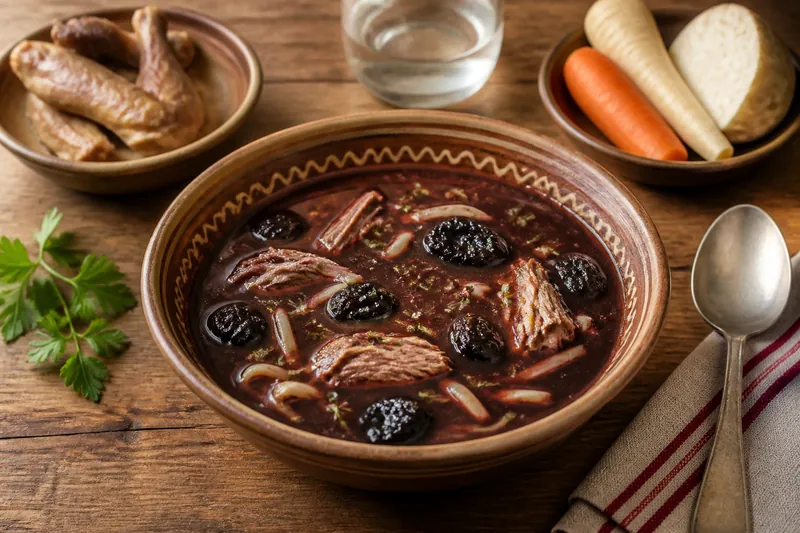 CzerninaPolishOpen the recipe →
Czernina is a traditional duck or goose blood soup, often sharpened with vinegar and rounded with dried fruit or noodles. Its flavor is unusual to first-timers: deep, slightly metallic, sour, and sometimes faintly sweet. That contrast is what makes it memorable. It is worth cooking as a document of older Polish kitchen practice, where nothing was wasted and flavor came from restraint. The main thing to know is that the blood must be handled carefully and tempered properly, or the soup can curdle; steady heat matters.
Crisp ribbons for Carnival
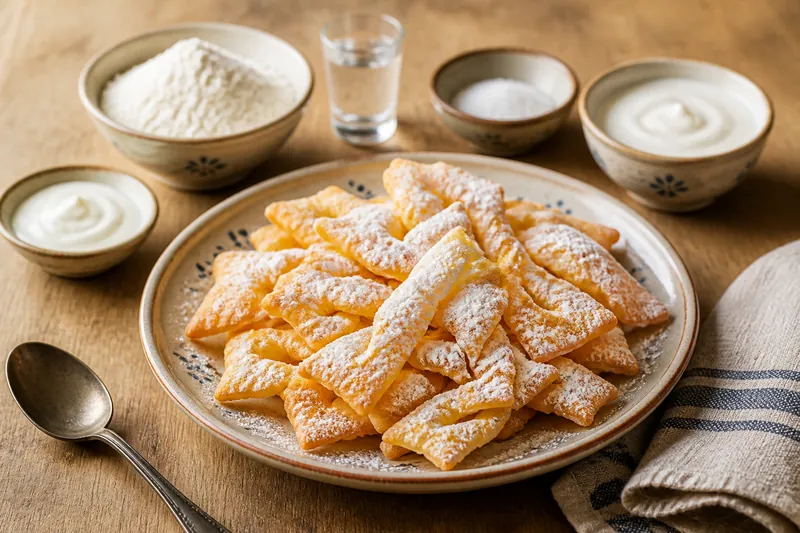 FaworkiPolishOpen the recipe →
Faworki are thin fried pastries, twisted into bows and finished with powdered sugar. They are crisp, light, and fragile, with a clean butter-and-egg richness rather than a heavy sweetness. Their appeal is texture: the shatter when you bite into them. They are worth cooking because they make a simple dough feel celebratory. The one thing to know is that the dough needs to be rolled very thin and beaten enough to develop elasticity, or the pastries will fry up dull instead of airy.
Slow-cooked tripe soup
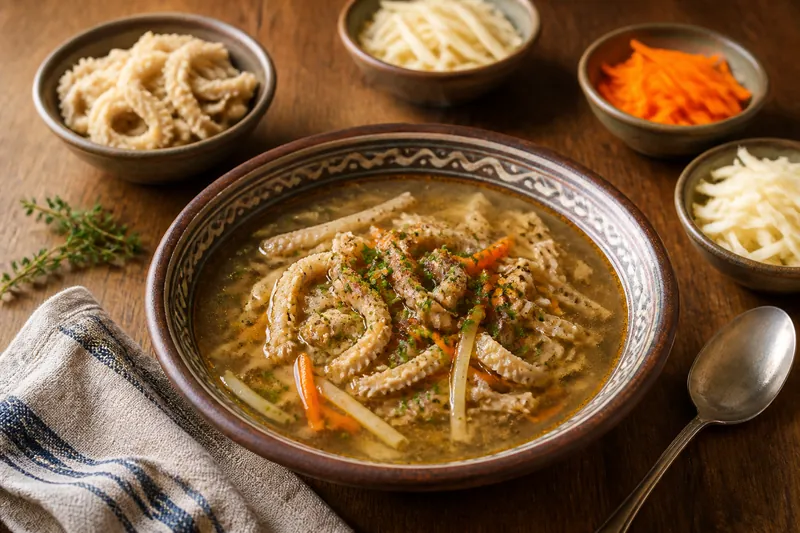 FlakiPolishOpen the recipe →
Flaki is a broth with tripe cut into fine strips, simmered with vegetables and spices until tender and aromatic. The taste is savory and gently peppery, with a softness that comes from long cooking rather than richness alone. It is worth making because it shows how Polish soups can be both economical and substantial. The texture of the tripe is central, so it must be cooked until fully tender and sliced evenly. A cook should plan on careful simmering and skimming to keep the broth clean.
Cabbage rolls with a proper filling
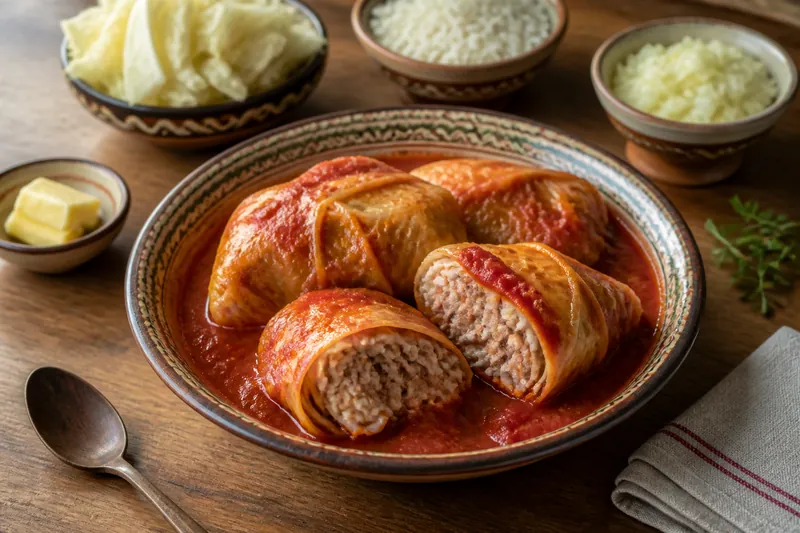 GołąbkiPolishOpen the recipe →
Gołąbki are cabbage leaves wrapped around a filling of meat and rice, then baked or simmered in sauce. They taste mild, homey, and satisfying, with the cabbage giving sweetness and the filling holding the dish together. They are worth cooking because they turn a few ordinary ingredients into a complete meal. The work is in the leaves: they need blanching or steaming until flexible enough to roll without tearing. Once assembled, keep the rolls packed snugly so they cook evenly and stay neat.
Pan-fried carp for the table
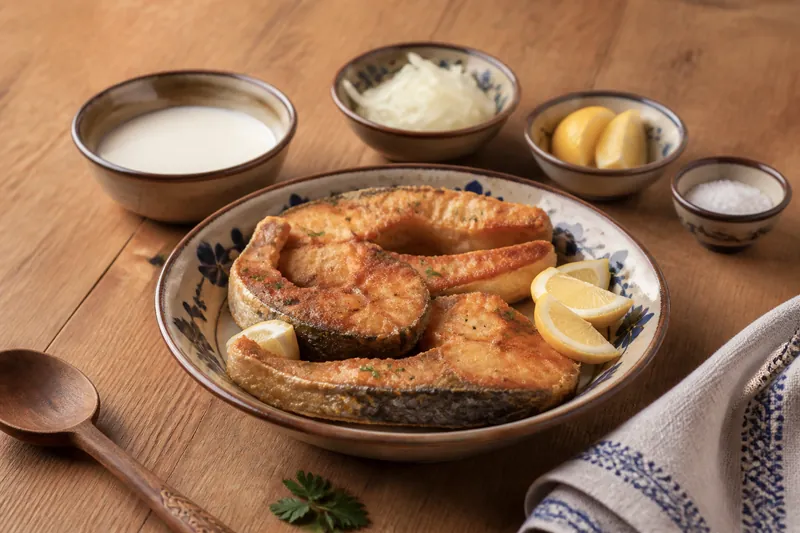 Karp smażonyPolishOpen the recipe →
Karp smażony is carp simply dredged and fried until the skin is crisp and the flesh flakes cleanly. Its flavor is mild, slightly sweet, and best when served hot with a squeeze of lemon or a little butter. It is worth cooking because it gives a traditional fish dish with very little interference. The main thing to know is that carp can taste muddy if it is not cleaned and dried properly, so pat it dry well and season with confidence before it hits the pan.
Sausage and onion in a skillet
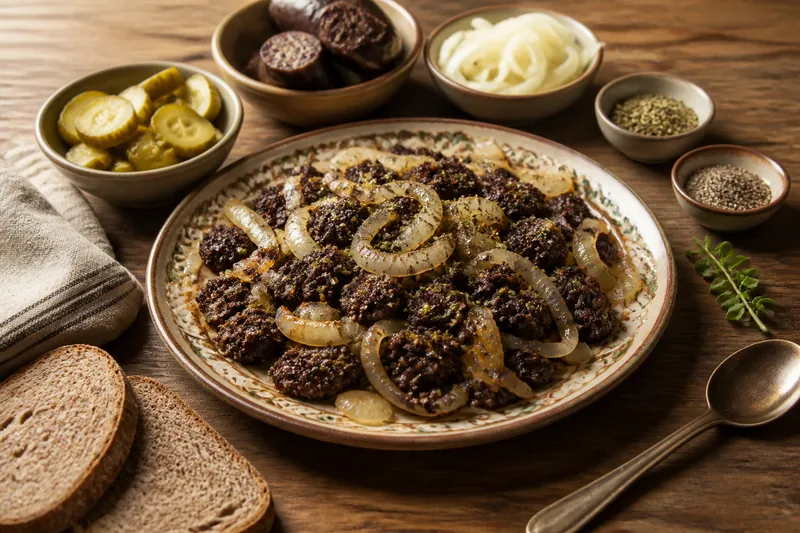 Kaszanka z cebuląPolishOpen the recipe →
Kaszanka z cebulą is blood sausage warmed or fried with plenty of onion until the edges brown and the onions turn soft and sweet. The flavor is earthy, rich, and peppery, with the onion adding necessary sweetness. It is worth cooking because it is direct, filling, and fast. A cook should know that kaszanka needs gentle handling: if it is overcooked, it can split or dry out. Cook it just until heated through and browned in spots, then serve immediately.
Soft potato dumplings with a thumbprint
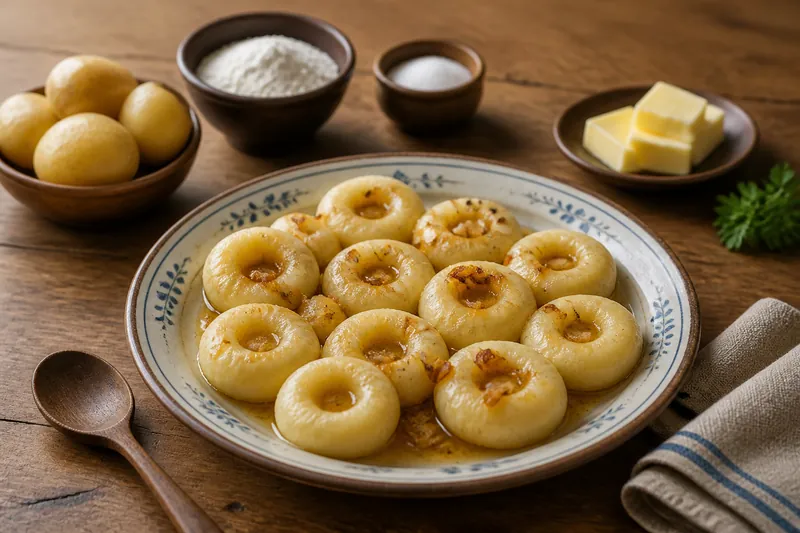 Kluski śląskiePolishOpen the recipe →
Kluski śląskie are smooth potato dumplings, usually round with a small indentation in the center. They taste mild and comforting, with a chewy-soft bite that makes them a good match for gravy and braised meats. They are worth cooking because they use the potato with precision, giving a texture plain boiled potatoes cannot. The cook should know that the dough depends on the right potato balance: too much flour makes them heavy, too little makes them fragile. Keep the dough mixed only until it comes together.
Everyday potato dumplings
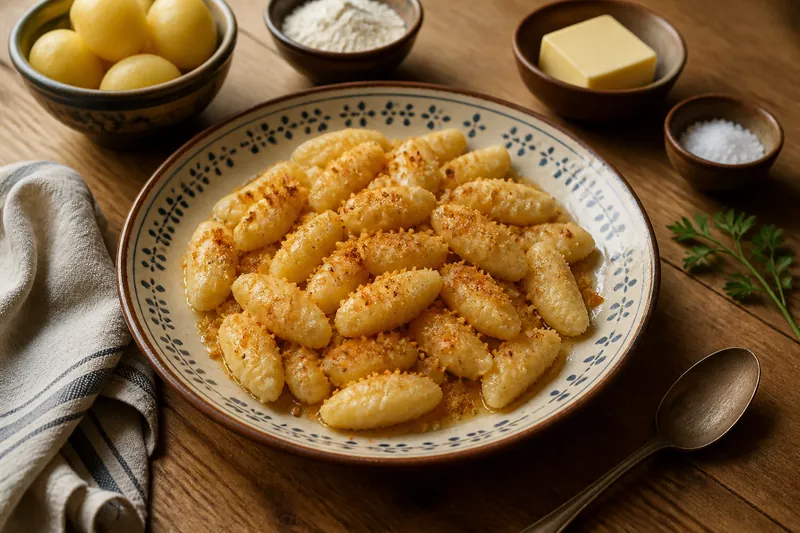 KopytkaPolishOpen the recipe →
Kopytka are small potato dumplings cut into diamonds and boiled until they float. They are soft, lightly chewy, and carry butter, breadcrumbs, or sauce well. Their charm is how practical they are: they turn leftover potatoes into a useful meal. They are worth cooking because they are quick and forgiving once the dough is right. The important thing is not to overload the mixture with flour, or they will turn dense. Shape them on a lightly floured board and cook in batches so they do not stick together.
Taken together, these dishes show the range of Polish cooking: broth and stew, dumpling and pastry, fish, sausage, and soup. They are not flashy. They are steady, exact, and built to be remembered, especially when served with time and care.