The Lebanese Dishes Everyone Should Know and Cook
From mezze to grilled meats, these are the Lebanese dishes that define the table, each with its own balance of freshness, spice, and comfort.

Lebanese cooking is built on contrast: cool herbs against warm bread, lemon against olive oil, smoke against creaminess. It is a cuisine of shared plates, sharp seasoning, and careful texture, where even the simplest dish feels composed.
These are some of the best-known dishes in the canon. Some are staples of mezze, some are grilled or baked, and some are the sort of food that arrives at the table with rice and becomes the centre of the meal.
Creamy, warm, and deeply savoury
Hummus with Spiced Meat (Hummus bil Lahme)LebaneseOpen the recipe →Hummus bil Lahme takes the familiar chickpea purée and turns it into a fuller dish by topping it with spiced meat, usually lamb or beef cooked with onion and warming spices. The hummus stays smooth and nutty, while the meat brings richness and a little sweetness from the seasoning. It is worth cooking because it bridges mezze and main course in one bowl. A cook should know that the hummus needs to be properly silky before the topping goes on; if it is stiff or grainy, the dish loses its balance.
Herb salad with real freshness
 Authentic Lebanese TabboulehLebaneseOpen the recipe →
Tabbouleh is a finely chopped salad of parsley, mint, tomato, onion, and soaked bulgur, dressed with lemon juice and olive oil. In the Lebanese style, it is herb-led rather than grain-led, bright and sharp rather than heavy. It tastes clean and lively, with the bulgur giving just enough body to hold the dressing. It is worth making whenever a meal needs lightness beside grilled meat or dip. The main thing to know is that the chopping matters: the herbs should be minced finely, and the salad should be dressed shortly before serving so it stays fresh.
Skewers with garlic and citrus
 Shish Tawook (Garlic Lemon Chicken)LebaneseOpen the recipe →
Shish Tawook is chicken marinated in garlic, lemon, yoghurt, and spices, then grilled or pan-cooked until lightly charred and juicy. The flavour is bold but not heavy: tangy from the citrus, savoury from the garlic, and gently spiced through the meat. It is one of the most reliable Lebanese dishes to cook at home because the marinade does most of the work and the cooking is quick. The key thing to know is that the chicken needs time in the marinade to take on flavour and stay tender, especially if you are cooking it over high heat.
Crisp shells, spiced filling
 Classic Fried KibbehLebaneseOpen the recipe →
Classic fried kibbeh is made from a shell of bulgur and minced meat wrapped around a seasoned filling, then fried until crisp and brown. The outside is firm and slightly nutty, while the centre is juicy with onion, pine nuts, and warm spices. It is one of the most distinctive Lebanese dishes because it combines fine texture with deep flavour and rewards careful shaping. A cook should know that the shell mixture must be worked until smooth enough to mould, and that keeping the kibbeh cold before frying helps it hold its shape.
Flatbread for breakfast or any time
 Manakish Za'atarLebaneseOpen the recipe →
Manakish Za'atar is a soft flatbread spread with olive oil and za'atar, then baked until the dough is tender and the topping fragrant. It tastes earthy, tart, and herbal, with sesame and sumac giving the surface a toasty, savoury finish. It is worth making because it is simple food with a clear, satisfying flavour and a use for good dough. The one thing to know is that the bread needs proper resting and shaping; if the dough is rushed, it will bake up dense rather than light and pliable.
Smoky eggplant, softened with tahini
 Baba GhanoujLebaneseOpen the recipe →
Baba Ghanouj is an eggplant dip made with tahini, lemon, garlic, and olive oil, with the eggplant usually roasted or charred first. The taste is smoky, creamy, and slightly bitter in a pleasant way, with the lemon and tahini keeping it bright. It is worth cooking because it offers a deeper, smokier alternative to hummus and works well with bread, vegetables, or as part of a mezze spread. A cook should know that the eggplant needs real browning or charring; without that, the dip will be flat and lose its character.
Chickpeas done simply and well
 BalilaLebaneseOpen the recipe →
Balila is a warm chickpea dish, usually seasoned with garlic, cumin, lemon, and olive oil. It is humble food, but the flavour is comforting and complete: nutty chickpeas, sharp garlic, and a roundness from the oil. It is often eaten for breakfast or as a light meal, especially with bread. It is worth cooking because it turns a pantry ingredient into something satisfying with very little embellishment. The main thing to know is that the chickpeas need to be soaked properly and cooked until fully tender, or the dish will feel dry and unfinished.
Okra stew with rice
 Bamieh w RizLebaneseOpen the recipe →
Bamieh w Riz pairs okra simmered in a tomato-based stew with rice on the side or underneath. The stew is savoury and slightly tangy, with the okra becoming soft without losing its shape when handled well. It is a home-style dish rather than a showy one, but that is part of its appeal: it is steady, filling, and deeply satisfying. A cook should know that okra benefits from careful cooking so it stays intact and does not turn slimy; letting the stew simmer gently is more effective than rushing it.
Potatoes with heat and herbs
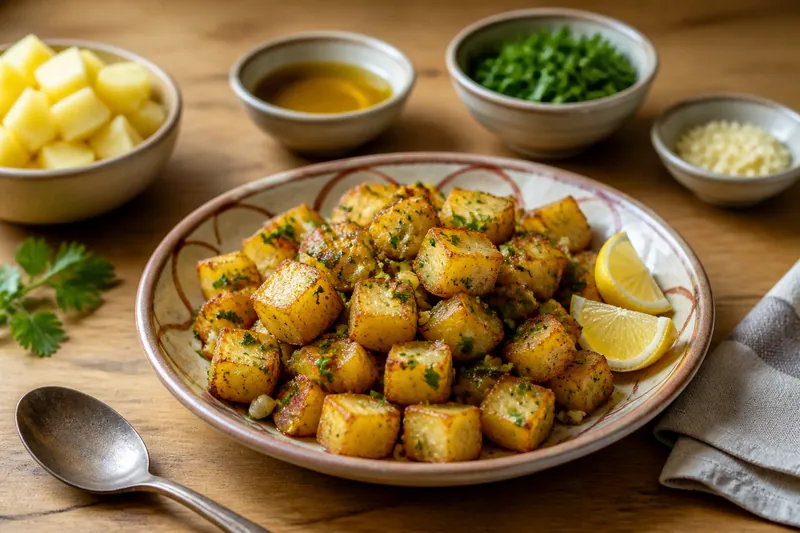 Batata HarraLebaneseOpen the recipe →
Batata Harra is a dish of potatoes tossed with garlic, coriander, chilli, and lemon. The potatoes are usually fried or roasted first, then finished in the spiced mixture so they stay crisp at the edges and fragrant through the middle. The taste is bright, peppery, and a little sharp from the lemon. It is worth cooking because it gives potatoes a stronger, more lively profile than the usual roast or fry. The main thing to know is that the potatoes need enough heat to brown properly before they meet the sauce, or they will go soft too soon.
Street-style meat with deep spice
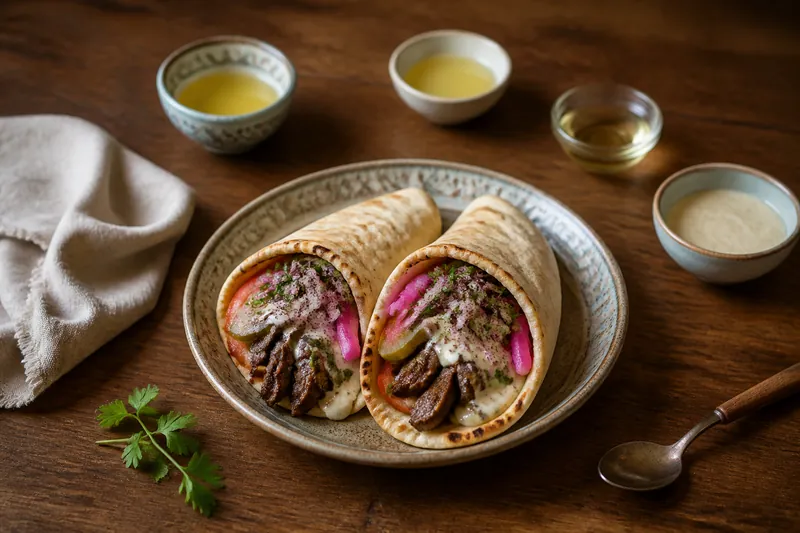 Beef ShawarmaLebaneseOpen the recipe →
Beef Shawarma is thinly sliced beef marinated in spices, garlic, lemon, and sometimes yoghurt, then cooked quickly so the edges brown while the meat stays tender. The flavour is layered and savoury, with warmth from the spices and acidity that keeps it from feeling heavy. It is worth cooking because the marinade creates a strong, familiar shawarma flavour at home without complicated technique. A cook should know that the long marinating time is not optional; the beef needs those hours to absorb seasoning and soften before it hits the pan or grill.
Taken together, these dishes show how Lebanese cooking moves between freshness, smoke, spice, and comfort. Some are built for mezze, some for breakfast, some for the centre of the table, but all depend on balance and restraint more than excess.