géorgienne
Churchkhela
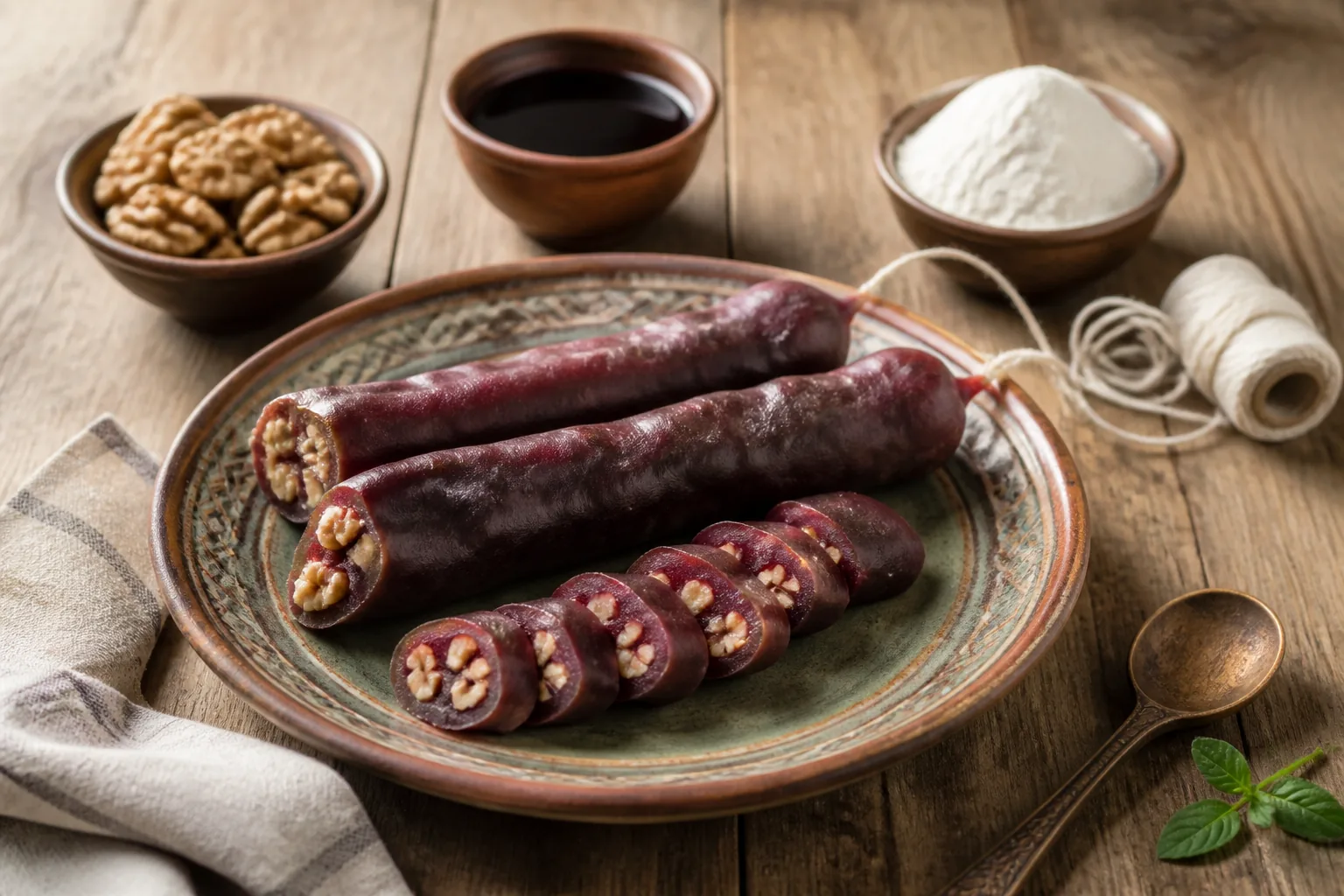
Churchkhela is a traditional Georgian sweet made by dipping strings of walnuts into thick grape must pudding called tatara. The finished pieces are chewy, nutty, and gently sweet, often dried and kept for autumn and winter tables.
 Le voir en vidéoFaraway Village · 38:17
Ingrédients
- Grape must or white grape juice4 cups
- Corn flour or wheat flour1/2 cup
- Walnuts1 cup
- Hazelnuts1/2 cup
- String or cotton thread2 lengths
- Sugar2 tbsp
- Ground cinnamon1 tsp
- Ground cloves1/4 tsp
- All-purpose flour2 tbsp
Préparation
- Shell the walnuts and hazelnuts, then thread them tightly onto strong cotton string to make two long nut strings.
- Tie a knot at one end of each string and leave enough length at the top for hanging.
- In a heavy pot, bring the grape must or white grape juice to a gentle simmer over medium heat.
- Whisk in the flour gradually, then cook, stirring constantly, until the mixture thickens into a smooth glossy paste.
- Add the sugar, cinnamon, and cloves, and cook briefly until fragrant and well combined.
- Dip each nut string into the thick grape mixture several times, allowing excess to drip off between coats.
- Hang the coated churchkhela strings in a dry, airy place until the outer layer sets and dries, then let them ripen for several days before serving.
Questions fréquentes
Puis-je remplacer les moitiés de noix par d'autres noix pour faire du churchkhela ?
Oui, mais les noix sont le choix classique car elles s'enfilent bien et tiennent la coque. Les noisettes ou les amandes peuvent fonctionner si elles sont grosses et assez régulières. Évitez les noix très grasses ou très petites, qui peuvent glisser ou s'enrober de manière inégale.
Combien de temps faut-il pour faire du churchkhela de A à Z ?
Prévoyez environ 1 à 1,5 heure au total, en incluant l'enfilage des noix, la préparation de la tatara et les trempages répétés. Le revêtement lui-même nécessite plusieurs périodes de prise courtes, puis les cordes finies doivent sécher plusieurs jours pour être complètement prêtes.
Pourquoi mon enrobage raisin-farine est-il grumeleux ou trop liquide ?
Les grumeaux viennent généralement d'une addition trop rapide de la farine ou d'un mélange insuffisamment lisse entre la farine et le jus. Trop liquide signifie qu'il faut prolonger la cuisson. Remuez constamment à feu doux jusqu'à ce que le mélange devienne brillant et épais comme un pudding.
Comment conserver le churchkhela et combien de temps se conserve-t-il ?
Conservez le churchkhela dans un endroit frais, sec et bien aéré, de préférence suspendu, ou enveloppé légèrement dans du papier. Évitez les contenants hermétiques tant qu’il n’est pas complètement sec. Un churchkhela bien séché peut se conserver plusieurs semaines à quelques mois.
Comment sert-on le churchkhela et le consomme-t-on immédiatement ?
Il se mange généralement en collation après plusieurs jours de séchage, quand l'extérieur est ferme et non collant. Coupez-le en tranches épaisses ou mangez-le entier depuis la corde. Il accompagne bien le thé, le café ou se mange comme une douceur à emporter.