Chinese
Zhajiangmian
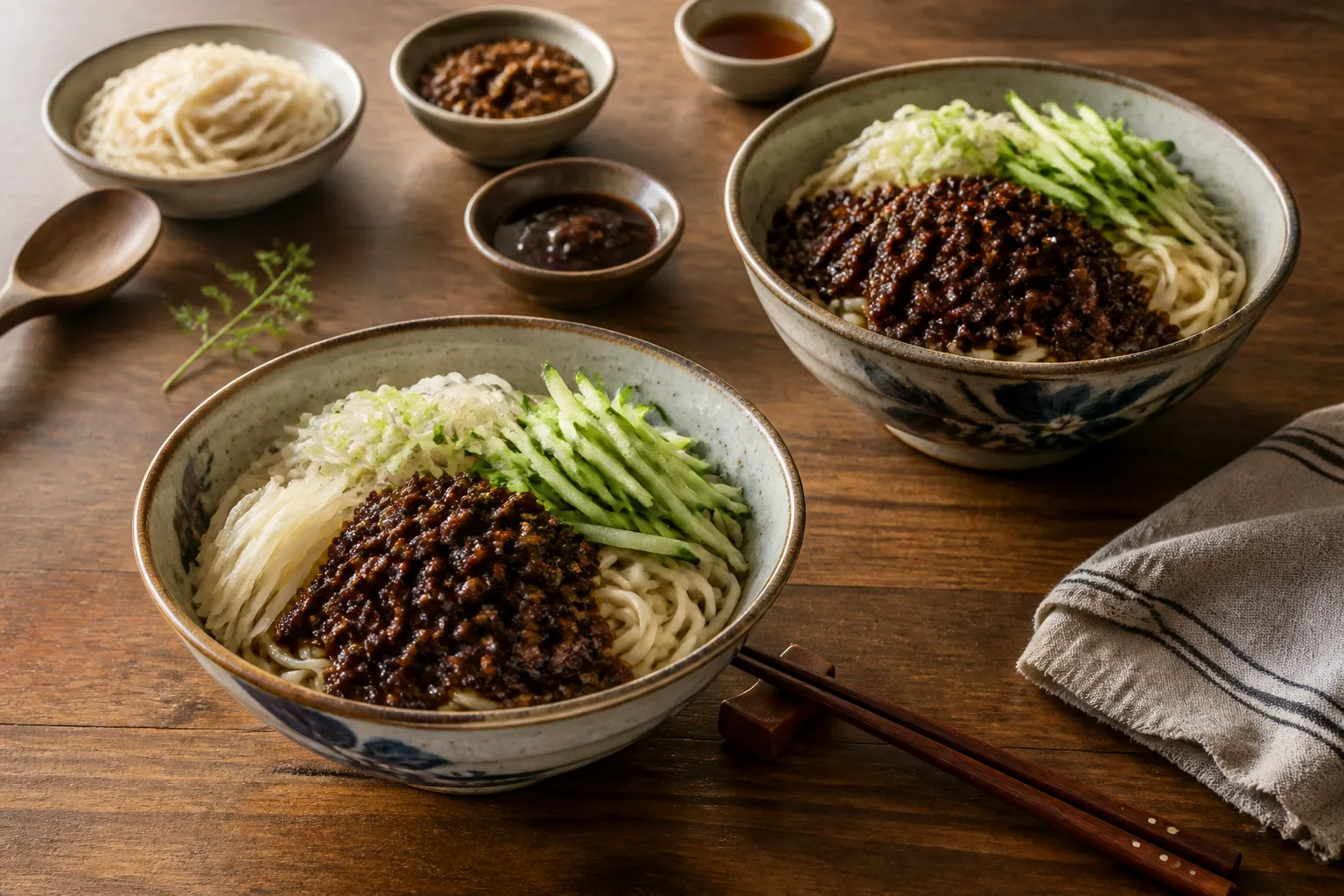
Beijing-style zhajiangmian pairs chewy wheat noodles with a deeply savory fried soybean paste sauce and crisp fresh vegetables. The pork is slowly cooked with huangjiang and tianmianjiang until the sauce turns glossy and fragrant.
 Watch it made美食台foodvideo · 8:13
Ingredients
- Fresh wheat noodles300g
- Pork belly or pork shoulder, finely diced180g
- Huangjiang fermented yellow soybean paste3 tbsp
- Tianmianjiang sweet wheat paste2 tbsp
- Shaoxing wine1 tbsp
- Neutral oil2 tbsp
- Ginger, minced1 tbsp
- Scallion whites, finely chopped2 stalks
- Light soy sauce1 tsp
- Sugar1 tsp
- Water120ml
- Cucumber, julienned1 small
- Carrot or xinlimei radish, julienned1/2 cup
- Bean sprouts1 cup
- Scallion greens, thinly sliced2 stalks
Method
- Mix the huangjiang, tianmianjiang, Shaoxing wine, light soy sauce, sugar, and water in a small bowl until smooth.
- Blanch the bean sprouts in boiling water for 20 seconds, then drain and set aside with the cucumber, carrot or radish, and scallion greens.
- Heat the neutral oil in a wok over medium heat, add the diced pork, and cook until the fat renders and the edges are lightly browned.
- Add the minced ginger and chopped scallion whites, then stir-fry for 30 seconds until fragrant.
- Lower the heat to medium-low, add the mixed sauce, and stir constantly for 2 minutes to fry the paste without scorching.
- Simmer the sauce for 10 to 12 minutes, stirring often, until the oil separates slightly and the sauce becomes dark, thick, and glossy.
- Bring a separate pot of water to a rolling boil and cook the fresh wheat noodles until chewy and just tender.
- Drain the noodles, briefly rinse with warm water if desired, and divide them between two bowls.
- Spoon the hot zhajiang sauce over the noodles and arrange the cucumber, carrot or radish, bean sprouts, and scallion greens on top.
- Toss each bowl thoroughly at the table so the sauce coats every strand before eating.
Common questions
Can I substitute the pork belly with a leaner cut in zhajiangmian?
Yes. Pork shoulder is the best leaner swap because it still has enough fat for a rich sauce. If using very lean pork, add 1 to 2 teaspoons extra oil so the paste fries properly and doesn’t taste dry.
How long should I simmer the soybean paste sauce, and how do I know it’s done?
After adding the mixed sauce, simmer 10 to 12 minutes over medium-low heat, stirring often. It’s done when the sauce turns dark, thick, and glossy, and you can see a little oil separating at the edges.
What are the most common mistakes when making zhajiangmian?
The biggest mistakes are burning the paste, cooking on heat that is too high, and undercooking the sauce. Also avoid adding too much water, or the sauce won’t cling to the noodles. Stir constantly once the paste goes in.
How should I store leftover zhajiang sauce and noodles?
Store the sauce and noodles separately in airtight containers. The sauce keeps 3 to 4 days in the fridge and freezes well for up to 1 month. Refrigerated noodles are best eaten within 1 to 2 days, then reheated briefly in hot water.
What’s the best way to serve zhajiangmian so the noodles don’t get soggy?
Drain the noodles well and toss them with a small spoonful of sauce first, then add more at the table. Serve with the cucumber, carrot or radish, bean sprouts, and scallions on top so everything stays crisp and fresh.