Syrian
Yalanji
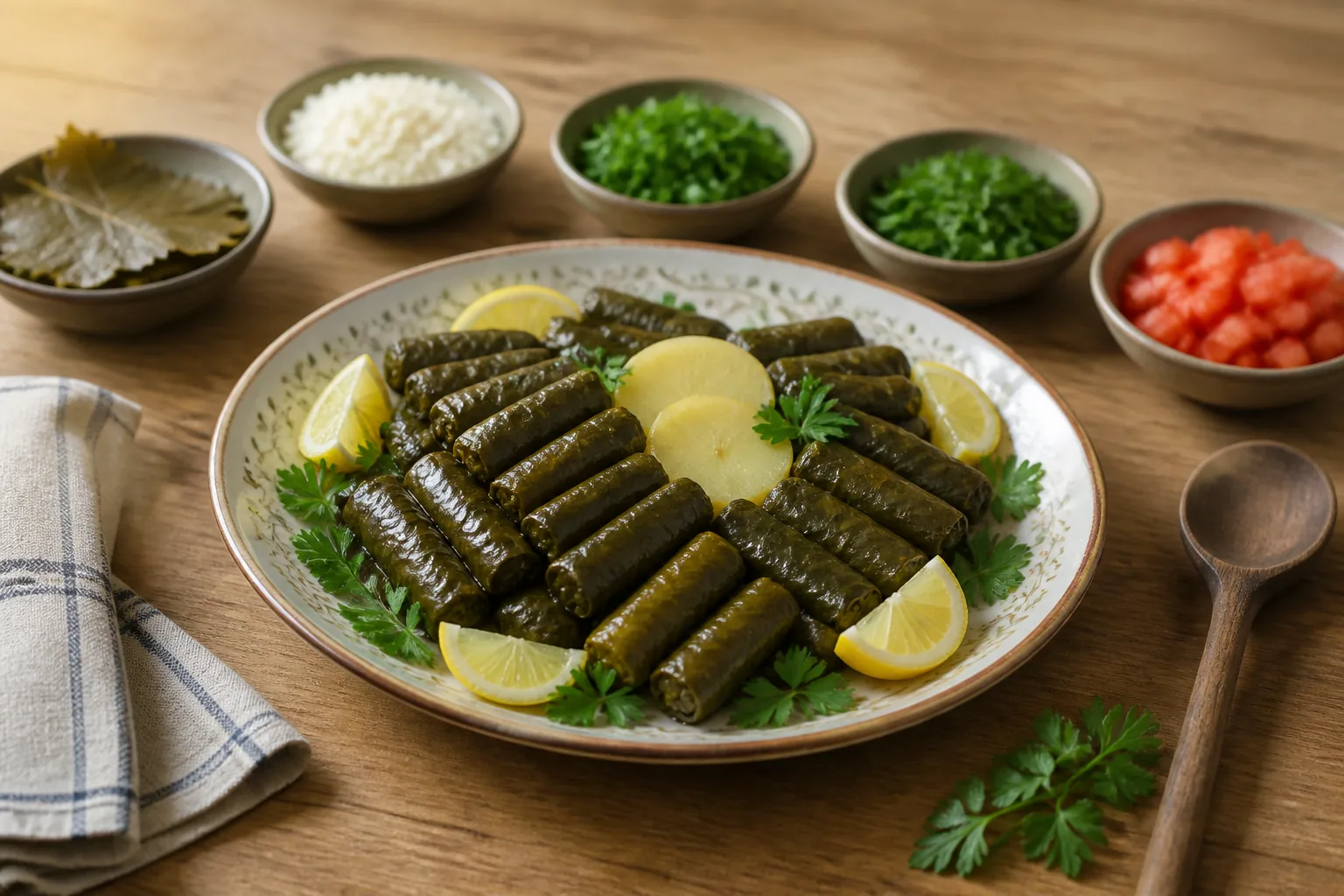
Syrian yalanji are tender grape leaves stuffed with a bright olive-oil rice filling, scented with mint, parsley, tomato, lemon, and pomegranate molasses. They are cooked slowly, then served cool so the leaves absorb the tangy juices.
 Watch it madeسفيرة الطبخ ام انوار · 11:07
Ingredients
- Grape leaves, brined24 leaves
- Short-grain rice2/3 cup
- Flat-leaf parsley, finely chopped1/2 cup
- Fresh mint, finely chopped2 tbsp
- Tomato, finely diced1 medium
- Yellow onion, finely diced1 small
- Tomato paste1 tbsp
- Pomegranate molasses1 tbsp
- Lemon juice3 tbsp
- Extra-virgin olive oil1/4 cup
- Ground allspice1/2 tsp
- Ground cinnamon1/4 tsp
- Black pepper1/4 tsp
- Salt1 tsp, divided
- Potato, sliced into rounds1 small
- Garlic cloves, lightly crushed2
- Water1 1/2 cups
Method
- Rinse the grape leaves well under cool water, then blanch them in simmering water for 2 minutes if they are tough or very salty; drain and trim any thick stems.
- Rinse the rice until the water runs mostly clear, then soak it in warm water for 15 minutes and drain thoroughly.
- In a bowl, combine the drained rice, parsley, mint, tomato, onion, tomato paste, pomegranate molasses, 1 tablespoon lemon juice, 2 tablespoons olive oil, allspice, cinnamon, black pepper, and 1/2 teaspoon salt.
- Line the bottom of a small heavy pot with the potato slices and crushed garlic to prevent scorching and to flavor the cooking juices.
- Place one grape leaf shiny side down on a board with the stem end facing you, add about 1 teaspoon of filling near the base, fold in the sides, and roll firmly but not tightly because the rice will expand.
- Repeat with the remaining grape leaves and filling, arranging the rolls seam side down in snug layers over the potatoes.
- Whisk together the water, remaining 2 tablespoons lemon juice, remaining olive oil, and remaining 1/2 teaspoon salt, then pour over the stuffed leaves until just covered.
- Set a small heatproof plate directly on top of the rolls to keep them compact while cooking.
- Bring the pot to a gentle boil over medium heat, then reduce to low, cover, and simmer for 60 to 70 minutes until the rice is tender and the leaves are soft.
- Turn off the heat and let the yalanji rest in the covered pot for at least 30 minutes so the juices settle.
- Carefully drain any excess cooking liquid, cool to room temperature, and serve the yalanji with the cooked potato slices and a spoon of the tangy olive-oil juices.
Common questions
Can I substitute fresh grape leaves for brined ones in Yalanji?
Yes. Use fresh grape leaves if available, but blanch them briefly in boiling water until pliable, 1–2 minutes. Brined leaves need a thorough rinse first to remove excess salt. Fresh leaves usually taste cleaner and less tangy.
How long does it take to make and cook Yalanji?
Plan about 45–60 minutes to prep and roll, plus 45–60 minutes for gentle simmering. If you soak the rice and blanch the leaves, the filling rolls easier and cooks more evenly. Total time is usually about 1.5–2 hours.
What are the most common mistakes when rolling Yalanji?
The biggest mistakes are overfilling, rolling too tightly, and not draining the rice well. Overfilled rolls burst, while tightly packed rolls can split as the rice expands. Also, make sure the leaves are soft and the rolls are packed snugly in the pot.
How should I store leftover Yalanji?
Cool completely, then refrigerate in a covered container with a little of the cooking liquid or extra lemon juice to keep them moist. They keep well for 4–5 days. For longer storage, freeze in portions for up to 2 months.
What should I serve with Yalanji?
Serve Yalanji at room temperature or slightly chilled with lemon wedges, yogurt, olives, and fresh bread. It also works well as part of a mezze spread with hummus, labneh, cucumber, and tomato salad.