Sri Lankan
Watalappam
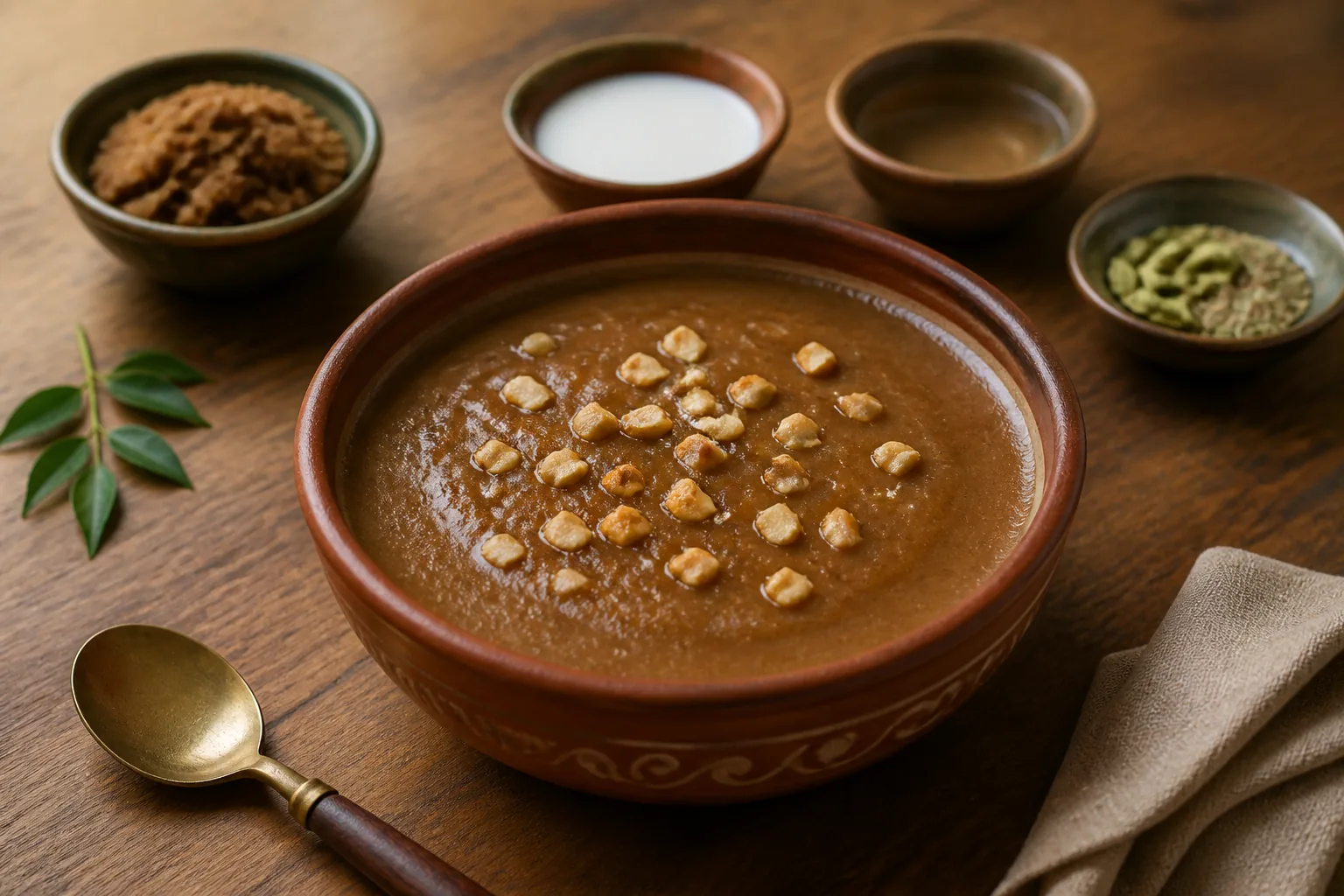
A Sri Lankan steamed custard made with kithul jaggery, thick coconut milk, eggs, and warm spices. It sets softly with a deep caramel-brown colour and is usually served chilled with cashews on top.
 Watch it madeApé Amma · 10:08
Ingredients
- Kithul jaggery, grated or chopped100g
- Water2 tbsp
- Large eggs2
- Thick coconut milk160ml
- Cardamom pods, seeds crushed2
- Freshly grated nutmeg1 pinch
- Salt1 small pinch
- Cashew nuts, roughly chopped1 tbsp
Method
- Place the kithul jaggery and water in a small pan over low heat and stir until the jaggery melts into a syrup.
- Strain the warm jaggery syrup through a fine sieve to remove grit, then let it cool until just lukewarm.
- Lightly beat the eggs in a bowl without making them frothy.
- Stir in the thick coconut milk, crushed cardamom seeds, nutmeg, and salt.
- Slowly pour in the cooled jaggery syrup while stirring gently until the custard mixture is even.
- Strain the mixture again into two small heatproof bowls or ramekins.
- Scatter the chopped cashews over the top and cover each bowl tightly with foil or a lid.
- Set the bowls in a steamer over gently boiling water and steam for 30 to 35 minutes, until the custard is just set with a slight wobble in the centre.
- Remove from the steamer, uncover carefully, and cool to room temperature.
- Chill for at least 2 hours before serving for the traditional firm, silky texture.
Common questions
Can I substitute kithul jaggery if I can’t find it?
Yes. Use dark palm sugar, jaggery, or brown sugar as the closest stand-ins. Kithul has a distinctive caramelized, slightly smoky flavor, so add a little molasses only if your substitute tastes too mild.
How long should I steam watalappam, and how do I know it’s done?
Steam gently for 30 to 35 minutes over barely simmering water. It’s ready when the edges are set but the center still has a slight wobble. Oversteaming makes it rubbery and can cause cracks.
What are the most common mistakes when making watalappam?
The biggest mistakes are using hot syrup, beating the eggs too much, and steaming too hard. Hot syrup can scramble the eggs, frothy eggs create a spongy texture, and vigorous boiling can make the custard grainy.
How should I store watalappam, and how long does it keep?
Cool completely, then refrigerate covered. It keeps well for 2 to 3 days and firms up as it chills. For best texture, avoid freezing, since coconut milk custards often separate and turn slightly watery after thawing.
How should watalappam be served for the best texture and flavor?
Chill it for at least 2 hours before serving. Unmold or serve in the ramekins, and enjoy it cold for the classic dense, silky texture. A few extra cashews on top make a simple, traditional finish.