Kenyan
Vitumbua
These Kenyan coastal rice cakes are lightly fermented, scented with cardamom, and cooked until golden in a vitumbua pan. They are soft and coconut-rich inside, with crisp rounded edges, best served warm with chai.
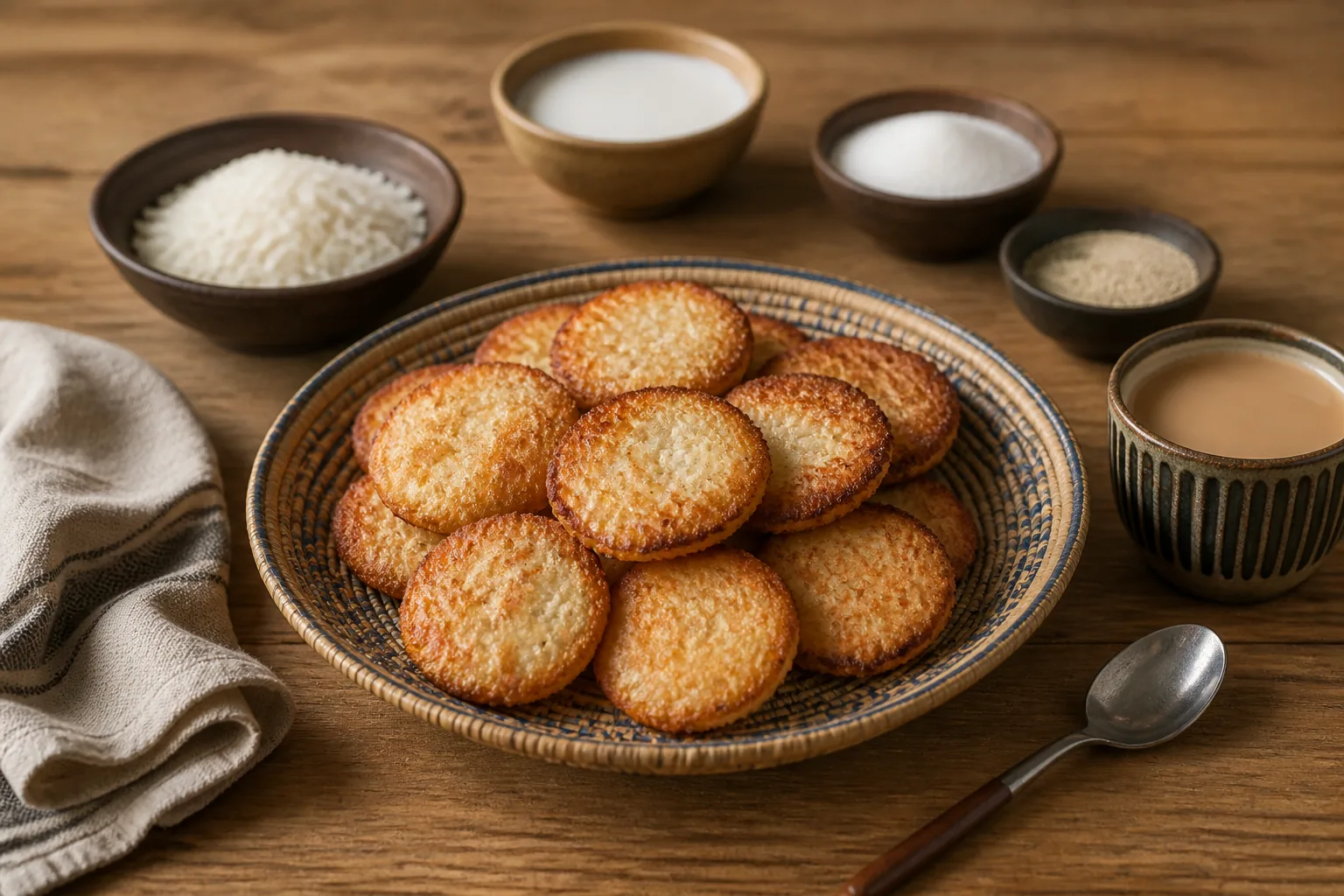
Ingredients
- White rice3/4 cup
- Thick coconut milk1/2 cup
- Granulated sugar1/4 cup
- Instant yeast1/2 tsp
- Ground cardamom1/4 tsp
- Salt1 pinch
- Fresh grated coconut2 tbsp
- Coconut oil1 to 2 tbsp
Method
- Rinse the rice well, then soak it in plenty of water for 6 to 8 hours or overnight.
- Drain the soaked rice completely and place it in a blender with the coconut milk.
- Blend to a mostly smooth, thick batter, stopping to scrape down the sides; add 1 tablespoon more coconut milk only if needed to help it blend.
- Pour the batter into a bowl and stir in the sugar, yeast, cardamom, salt, and grated coconut.
- Cover the bowl and leave it in a warm place for 1 to 2 hours, until the batter is slightly risen, bubbly, and smells gently fermented.
- Heat a vitumbua pan or small round cake pan over medium-low heat and brush each well with coconut oil.
- Stir the batter once, then spoon it into the wells, filling each about three-quarters full.
- Cover and cook for 3 to 4 minutes, until the bottoms are deep golden and the tops look set around the edges.
- Turn each kitumbua carefully with a skewer or small spoon and cook the other side for 2 to 3 minutes, until golden and cooked through.
- Remove from the pan and repeat with the remaining batter, oiling the wells lightly between batches.
- Serve the vitumbua warm, plain or with Kenyan chai.
Common questions
Can I substitute the coconut milk or fresh grated coconut in vitumbua?
Yes. If you’re short on thick coconut milk, use regular coconut milk and reduce any extra liquid. For fresh grated coconut, use unsweetened desiccated coconut, but soak it briefly in warm water first so it softens and doesn’t stay dry.
How long should the batter ferment, and how do I know it’s ready?
Let the batter rest 1 to 2 hours in a warm place. It’s ready when it looks slightly risen, has small bubbles, and smells mildly fermented. If your kitchen is cool, it may need closer to 2 hours or a little longer.
What are the most common mistakes when cooking vitumbua?
The biggest mistakes are batter that’s too thick or too thin, a pan that’s too hot, and turning too early. Cook over medium-low heat so the centers set before the outside burns, and don’t fill the wells more than three-quarters full.
How should I store leftover vitumbua, and can I reheat them?
Cool completely, then store in an airtight container in the fridge for up to 3 days. Reheat in a dry skillet or oven until warmed through. For longer storage, freeze them in a single layer, then bag for up to 2 months.
What’s the best way to serve vitumbua?
Serve them warm, plain, or with chai, coffee, or tea. They’re also good with fruit, a little honey, or jam. For the best texture, eat them soon after cooking, when the centers are soft and the edges are lightly crisp.