Brazilian
Vatapá
A creamy Bahian vatapá made with coconut milk, dried shrimp, peanuts, cashews, and dendê oil. It is thick, fragrant, and traditionally served with white rice or spooned into acarajé.

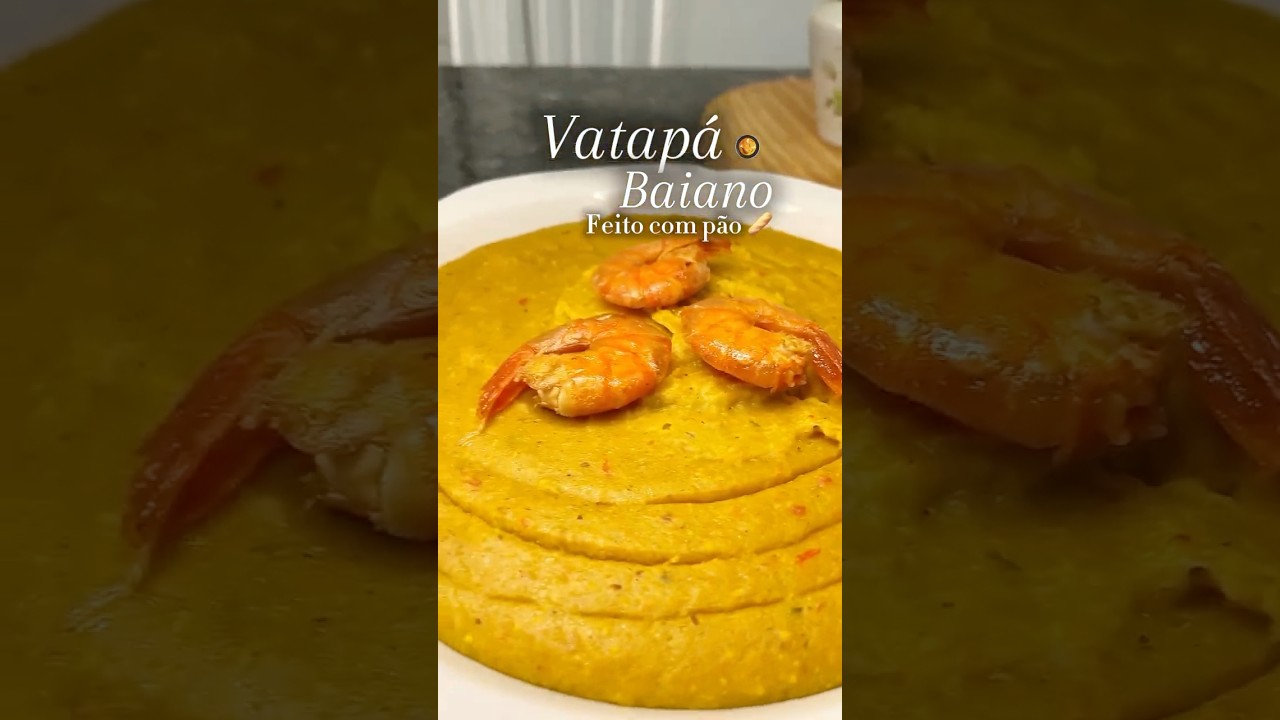 Watch it madeThais - Receitas · 1:13
Ingredients
- Stale white bread, crusts removed100g
- Unsweetened coconut milk300ml
- Dried salted shrimp, rinsed and heads removed80g
- Small onion, chopped1
- Garlic cloves, chopped2
- Fresh ginger, grated1 tsp
- Roasted unsalted peanuts2 tbsp
- Roasted unsalted cashews2 tbsp
- Malagueta chile or small red chile1
- Seafood stock or water120ml
- Dendê oil2 tbsp
- Fresh cilantro, chopped1 tbsp
- Saltto taste
- Cooked white rice, for serving2 portions
Method
- Place the bread in a bowl, pour over the coconut milk, and let it soak for 10 minutes until very soft.
- Rinse the dried shrimp well to remove excess salt, then set aside a few whole shrimp for serving if desired.
- Blend the soaked bread and coconut milk until completely smooth.
- In the same blender, add the remaining dried shrimp, onion, garlic, ginger, peanuts, cashews, chile, and seafood stock, then blend to a thick paste.
- Pour the paste into a heavy saucepan and cook over medium-low heat, stirring constantly with a wooden spoon so it does not catch on the bottom.
- When the vatapá thickens and begins to pull slowly from the sides of the pan, stir in the dendê oil.
- Cook for 5 more minutes, stirring until glossy, dense, and creamy.
- Taste carefully before adding salt, since the dried shrimp may already be salty.
- Stir in the cilantro and remove from the heat.
- Serve hot with white rice, garnished with the reserved dried shrimp if using.
Common questions
What can I substitute for dendê oil if I can’t find it?
Use the full amount of dendê for the authentic flavor if possible. If unavailable, mix neutral oil with a little annatto oil or paprika-infused oil for color. The taste won’t be the same, but it will stay rich.
How long should I soak and cook vatapá so it thickens properly?
Soak the bread for about 10 minutes until very soft. After blending, cook the paste over medium-low heat, stirring constantly, until it thickens and slowly pulls from the sides, usually 15–25 minutes total.
What are the most common mistakes when making vatapá?
The biggest mistakes are not rinsing the dried shrimp enough, cooking over too high heat, and stopping the stirring. Any of these can make it too salty, grainy, or scorched instead of smooth and creamy.
Can I make vatapá ahead of time, and how should I store it?
Yes. Cool it quickly, then refrigerate in a covered container for up to 3 days. Reheat gently over low heat with a splash of water or stock, stirring often, because it thickens a lot as it sits.
What should I serve with vatapá besides white rice?
White rice is classic, and it also pairs well with fried fish, shrimp, or acarajé. Garnish with cilantro and, if you saved them, a few whole shrimp on top for extra texture and presentation.