Russian
Syrniki
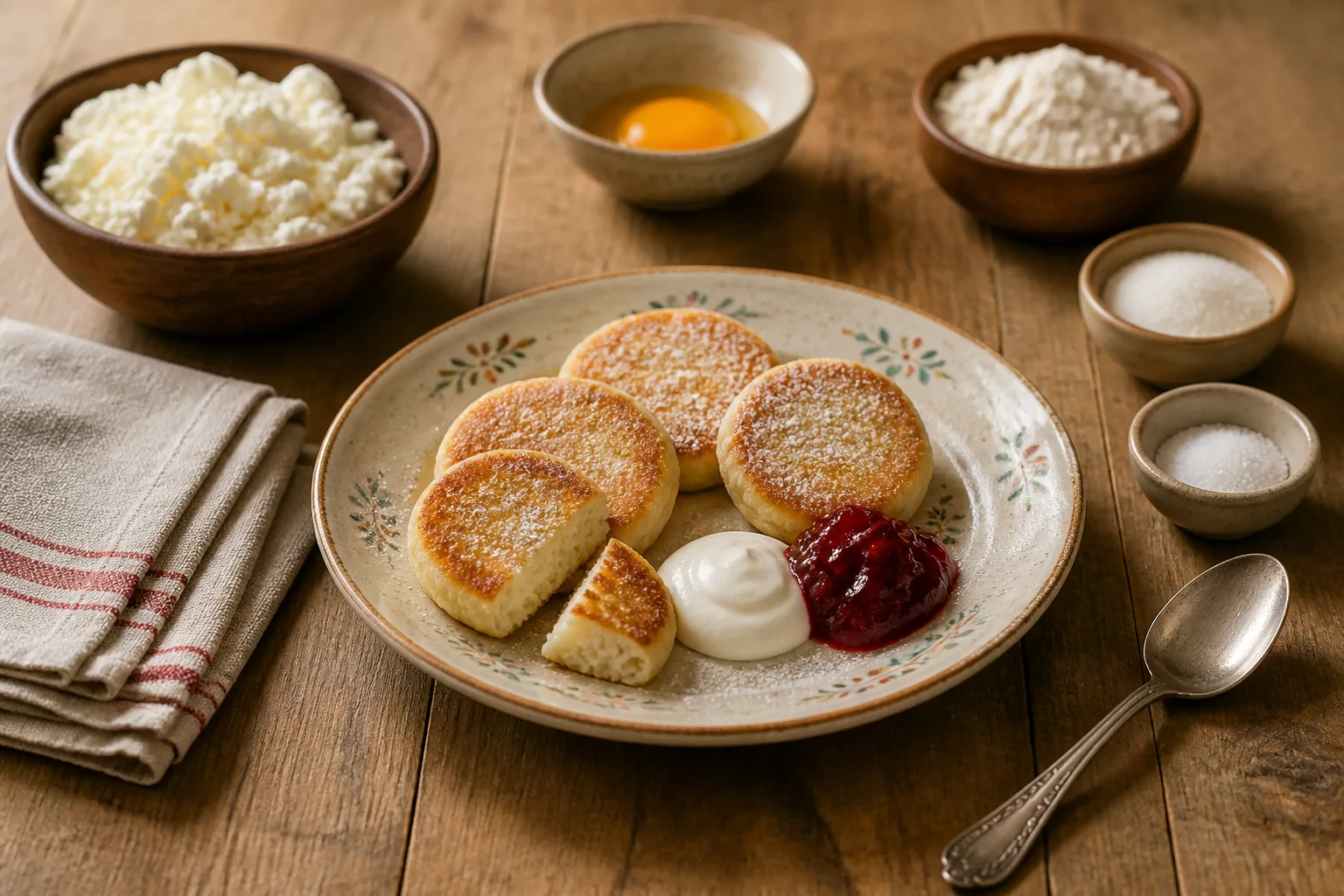
Tender Russian tvorog pancakes with golden edges and a soft, slightly tangy center. Serve them warm with smetana and berry preserves, as they would be for a cozy breakfast or afternoon tea.
 Watch it madeLife of Boris · 4:34
Ingredients
- Tvorog, 5–9% fat, well drained250 g
- Egg yolk1 large
- All-purpose flour2 tbsp, plus 3 tbsp for dusting
- Sugar1 tbsp
- Fine salt1 pinch
- Vanilla sugar1 tsp, optional
- Sunflower oil1 tbsp
- Unsalted butter1 tbsp
- Smetana, for serving3 tbsp
- Berry preserves or honey, for serving2 tbsp
Method
- If the tvorog is wet, wrap it in cheesecloth and press gently for 10 minutes; syrniki hold their shape best when the curds are dry and crumbly.
- Place the tvorog in a bowl and mash it with a fork, leaving a little texture rather than making it completely smooth.
- Add the egg yolk, sugar, salt, vanilla sugar if using, and 2 tablespoons flour; mix gently just until the dough comes together.
- Dust a board generously with flour and turn the dough onto it.
- Shape the dough into a thick log, then cut it into 6 equal pieces.
- Pat each piece into a small round cake about 2 cm thick, coating the outside lightly with flour and smoothing the sides with your hands or the flat side of a knife.
- Heat the sunflower oil and butter in a heavy skillet over medium-low heat until the butter foams but does not brown.
- Fry the syrniki for 3 to 4 minutes on the first side, until deep golden underneath.
- Turn carefully and fry for another 3 to 4 minutes, lowering the heat if they brown too quickly.
- Cover the skillet for the last 1 to 2 minutes to warm the centers through while keeping the crust crisp.
- Transfer to plates and serve warm with smetana and berry preserves or honey.
Common questions
Can I substitute quark or ricotta for tvorog in syrniki?
Yes. Quark is the closest substitute and works very well. If using ricotta, drain it thoroughly and press out excess moisture first, since it is softer and wetter. You may need a little more flour to hold the cakes together.
How do I know when the syrniki dough has the right texture?
It should be soft but not sticky enough to spread. After mixing, it should hold a rough log shape on a floured board. If it feels wet, add flour sparingly; too much makes the syrniki dense and dry.
What are the most common mistakes when frying syrniki?
Using wet curds, too much flour, or heat that is too high. Wet dough falls apart, excess flour makes them bready, and high heat browns the outside before the center cooks. Fry medium-low and handle them gently.
Can I make syrniki ahead of time and store them?
Yes. Cooked syrniki keep in the fridge for up to 3 days in a sealed container. Reheat in a skillet over low heat or in a 160°C oven until warmed through. You can also freeze them, separated by parchment.
What is the best way to serve syrniki?
Serve them warm with smetana for richness and berry preserves or honey for sweetness. They also pair well with fresh berries, jam, or a dusting of powdered sugar. Serve immediately after frying for the best texture.