Korean
Sundubu Jjigae
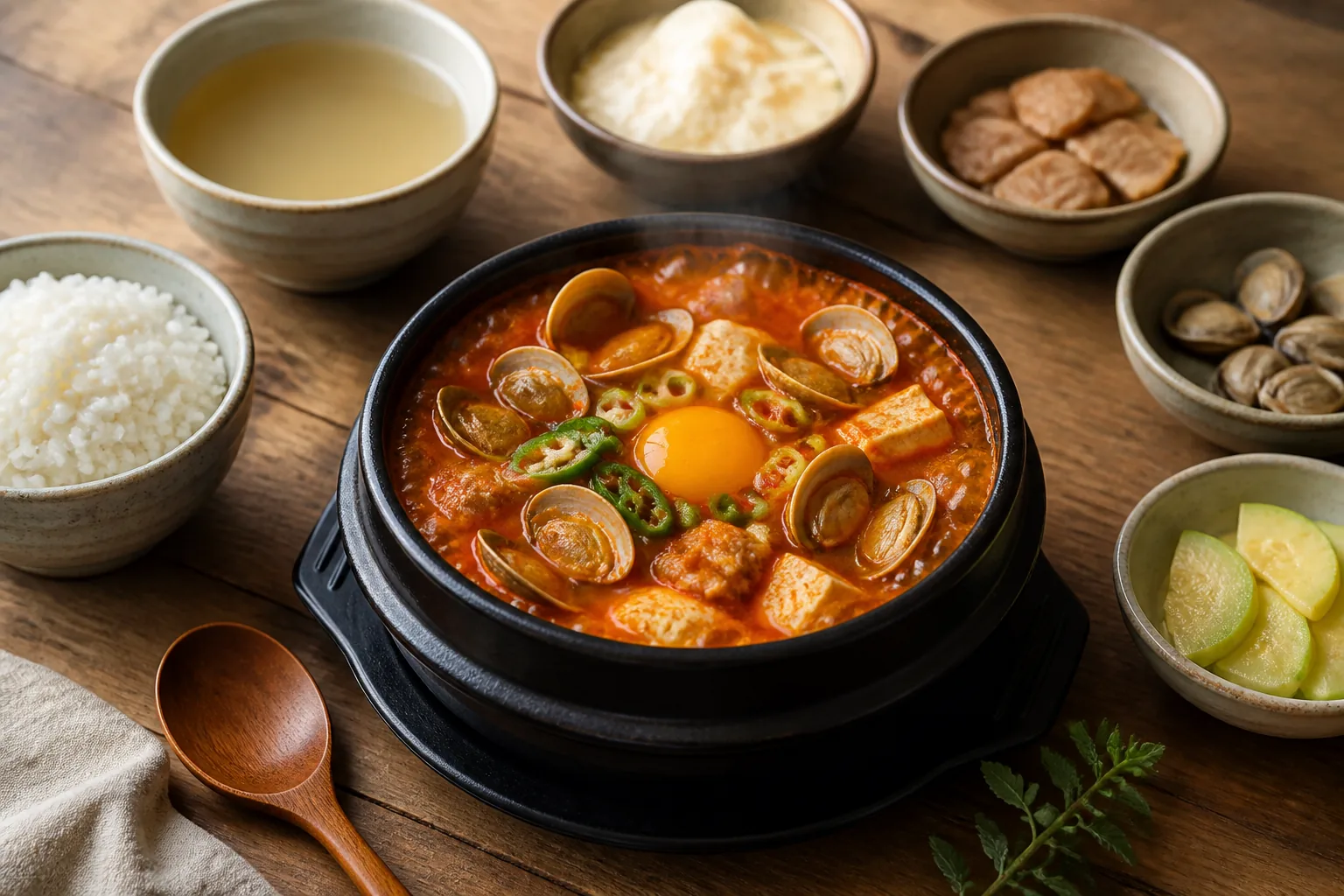
A bubbling Korean soft tofu stew with silky curds, spicy gochugaru oil, savory anchovy-kelp broth, pork, clams, and a just-set egg. Serve it straight from a hot ttukbaegi with steamed rice and kimchi alongside.
Ingredients
- Anchovy-kelp stock2 cups
- Extra-soft sundubu tofu1 tube, about 350g
- Pork belly or pork shoulder, thinly sliced80g
- Small clams, scrubbed120g
- Korean radish or zucchini, thinly sliced1/3 cup
- Onion, thinly sliced1/4 small
- Garlic, minced2 cloves
- Green onion, sliced1 stalk
- Gochugaru, Korean red pepper flakes2 tablespoons
- Toasted sesame oil1 tablespoon
- Neutral oil1 teaspoon
- Guk-ganjang, Korean soup soy sauce1 tablespoon
- Saeujeot, salted fermented shrimp, minced1 teaspoon
- Fish sauce1 teaspoon, optional
- Egg1
- Fresh green chili or cheongyang chili, sliced1, optional
- Black pepperA pinch
- Steamed short-grain riceFor serving
Method
- If making stock from scratch, simmer 6 large dried anchovies and a 5cm piece of dried kelp in 2 1/2 cups water for 10 minutes, remove the kelp, simmer 5 minutes more, then strain.
- Place a ttukbaegi or small heavy pot over medium heat and add the sesame oil and neutral oil.
- Add the pork and cook for 2 to 3 minutes, stirring, until the edges begin to render and lightly brown.
- Lower the heat, add the gochugaru, garlic, and onion, and stir for 30 to 45 seconds to bloom the chili flakes without burning them.
- Add the guk-ganjang, saeujeot, and fish sauce if using, then stir in the radish or zucchini.
- Pour in the anchovy-kelp stock and bring to a lively simmer for 5 minutes so the broth turns deep red and savory.
- Add the clams, cover, and simmer for 2 to 3 minutes until they begin to open.
- Cut or squeeze the sundubu tofu into large spoonfuls directly into the pot, keeping the curds rustic and soft.
- Simmer gently for 4 to 5 minutes, spooning broth over the tofu rather than stirring hard.
- Taste the broth and adjust with a little more saeujeot or guk-ganjang if needed.
- Crack the egg into the center, add green onion, chili if using, and black pepper, then simmer 1 minute for a soft yolk or longer if desired.
- Serve immediately while bubbling hot, with steamed short-grain rice on the side.
Common questions
Can I substitute the clams or pork in sundubu jjigae if I don’t have them?
Yes. For clams, use shrimp, mussels, or skip seafood and add more stock plus a little fish sauce. For pork, thinly sliced beef, mushrooms, or no meat all work; just add oil and extra seasoning for depth.
How long does sundubu jjigae take from start to finish?
Plan on about 20 to 25 minutes if your stock is ready. Homemade anchovy-kelp stock adds about 15 minutes more. The stew cooks quickly; the tofu goes in at the end and only needs a brief simmer.
What are the most common mistakes when making sundubu jjigae?
The biggest mistakes are burning the gochugaru, overcooking the soft tofu, and underseasoning the broth. Bloom the chili flakes briefly over low heat, simmer the tofu gently, and taste before serving because stock, fish sauce, and saeujeot vary.
How should I store and reheat leftover sundubu jjigae?
Cool it quickly and refrigerate in a covered container for up to 2 days. Reheat gently on the stove until just simmering; the tofu will be softer, so avoid boiling hard. Add a splash of stock or water if it thickens.
What should I serve with sundubu jjigae, and how do I eat it?
Serve it piping hot with steamed rice, kimchi, and maybe a raw egg if you like. Spoon the stew over rice or eat them side by side. A metal spoon helps with the silky tofu and broth.