Korean
Sundae (Korean Blood Sausage)
This traditional Korean sundae is tender and savory, with pork blood, glass noodles, glutinous rice, and aromatics gently stuffed into cleaned pork intestine. Serve it warm in thick slices with seasoned salt or saeujeot for dipping.

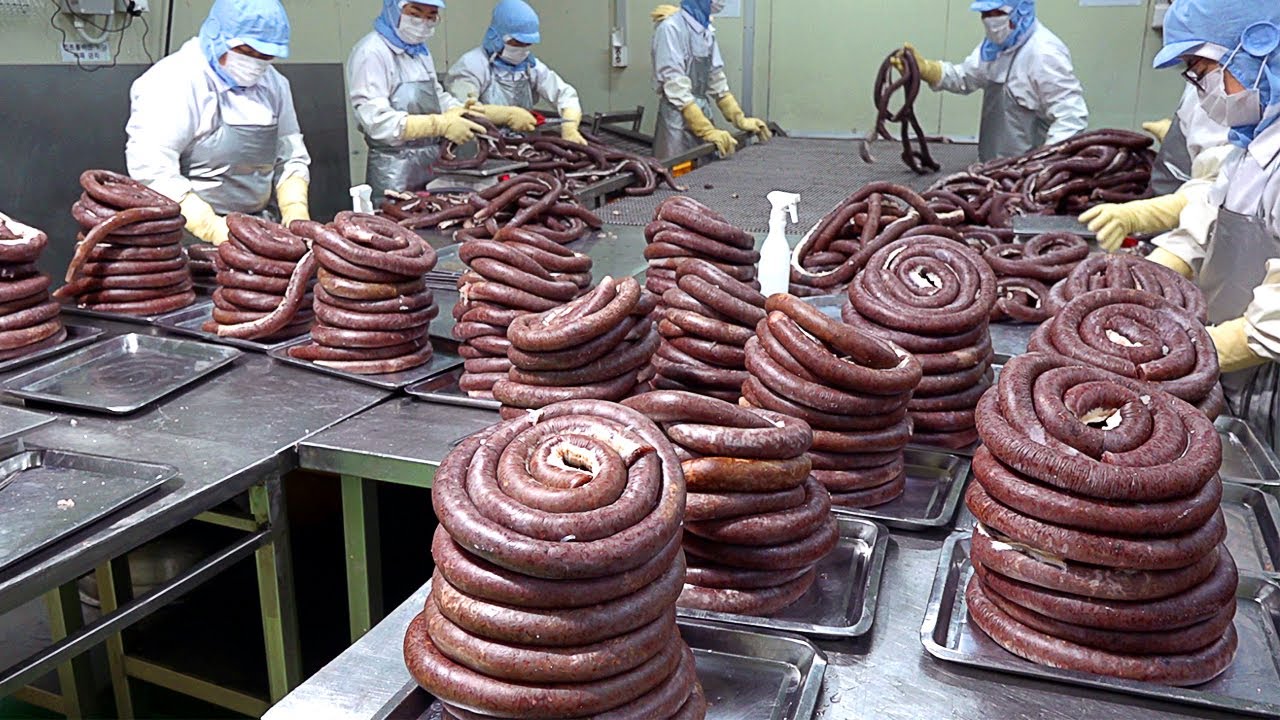 Watch it madeFoodyTrip 푸디트립 · 11:18
Ingredients
- Cleaned pork small intestine1.2 m
- Coarse salt, for cleaning3 tbsp
- All-purpose flour, for cleaning3 tbsp
- Rice vinegar, for cleaning2 tbsp
- Fresh pork blood, strained1 cup
- Dangmyeon sweet potato glass noodles50g
- Cooked glutinous rice1/2 cup
- Garlic, finely minced3 cloves
- Fresh ginger, finely grated1 tsp
- Scallions, finely chopped2
- Garlic chives, finely chopped1/2 cup
- Doenjang1 tbsp
- Soup soy sauce1 tbsp
- Toasted sesame oil1 tbsp
- Toasted sesame seeds1 tsp
- Ground black pepper1/2 tsp
- Fine sea salt1/2 tsp
- Korean coarse salt, for serving1 tsp
- Gochugaru, for serving1/4 tsp
- Saeujeot, for serving2 tbsp
Method
- Rub the pork intestine thoroughly with coarse salt and flour, rinse under cold running water, then repeat with rice vinegar until the water runs clear and the smell is clean.
- Turn the intestine inside out with a chopstick or skewer, rinse again, and keep it chilled in cold water while preparing the filling.
- Soak the dangmyeon in warm water for 20 minutes, boil for 4 minutes until pliable, rinse briefly, drain well, and chop into 2 cm pieces.
- In a bowl, combine the strained pork blood, chopped dangmyeon, cooked glutinous rice, garlic, ginger, scallions, garlic chives, doenjang, soup soy sauce, sesame oil, sesame seeds, black pepper, and fine sea salt.
- Tie one end of the intestine tightly with kitchen twine, then use a funnel to fill it loosely with the blood mixture, leaving room for the filling to expand.
- Tie the other end securely and prick a few tiny holes with a needle to release trapped air.
- Bring a wide pot of water to a bare simmer, add the stuffed sundae, and cook gently for 35 to 40 minutes without letting the water boil hard.
- Turn the sundae occasionally and prick any swollen spots with a needle so the casing does not burst.
- Transfer the cooked sundae to a steamer and steam for 10 minutes to firm the texture, then rest for 5 minutes before slicing.
- Slice the sundae into thick rounds and serve warm with Korean coarse salt mixed with gochugaru and a small dish of saeujeot.
Common questions
Can I substitute the pork small intestine with something easier to find?
You can use beef casings or large sausage casings, but the texture and flavor will differ. Do not use edible collagen casings for a traditional result; they’re too uniform and less chewy than cleaned natural intestine.
How long does Sundae take from start to finish?
Plan on about 1.5 to 2.5 hours, mostly for cleaning the intestines and prepping the filling. Stuffing and simmering are faster, usually 30 to 45 minutes, depending on batch size and your confidence.
What are the most common mistakes when making Sundae?
Overstuffing is the biggest mistake; the filling expands and can burst the casing. Also avoid poor cleaning, which leaves odor, and don’t boil too hard—gentle simmering keeps the casing intact and the filling tender.
How should I store leftover Sundae?
Cool it quickly, then refrigerate in an airtight container for up to 3 days. For longer storage, freeze portions tightly wrapped for up to 2 months. Reheat gently by steaming or pan-warming so the casing doesn’t split.
How is Sundae usually served, and what goes with it?
Slice it into thick rounds and serve with salt, pepper, and often spicy dipping salt or ssamjang. It’s great with napa cabbage, perilla leaves, or radish kimchi, and commonly paired with tteokbokki or soju.