Italian
Spaghetti cacio e pepe
A Roman pasta of spaghetti coated in a creamy emulsion of Pecorino Romano, starchy pasta water, and freshly crushed black pepper. It is simple, precise, and best served immediately while the sauce is glossy.
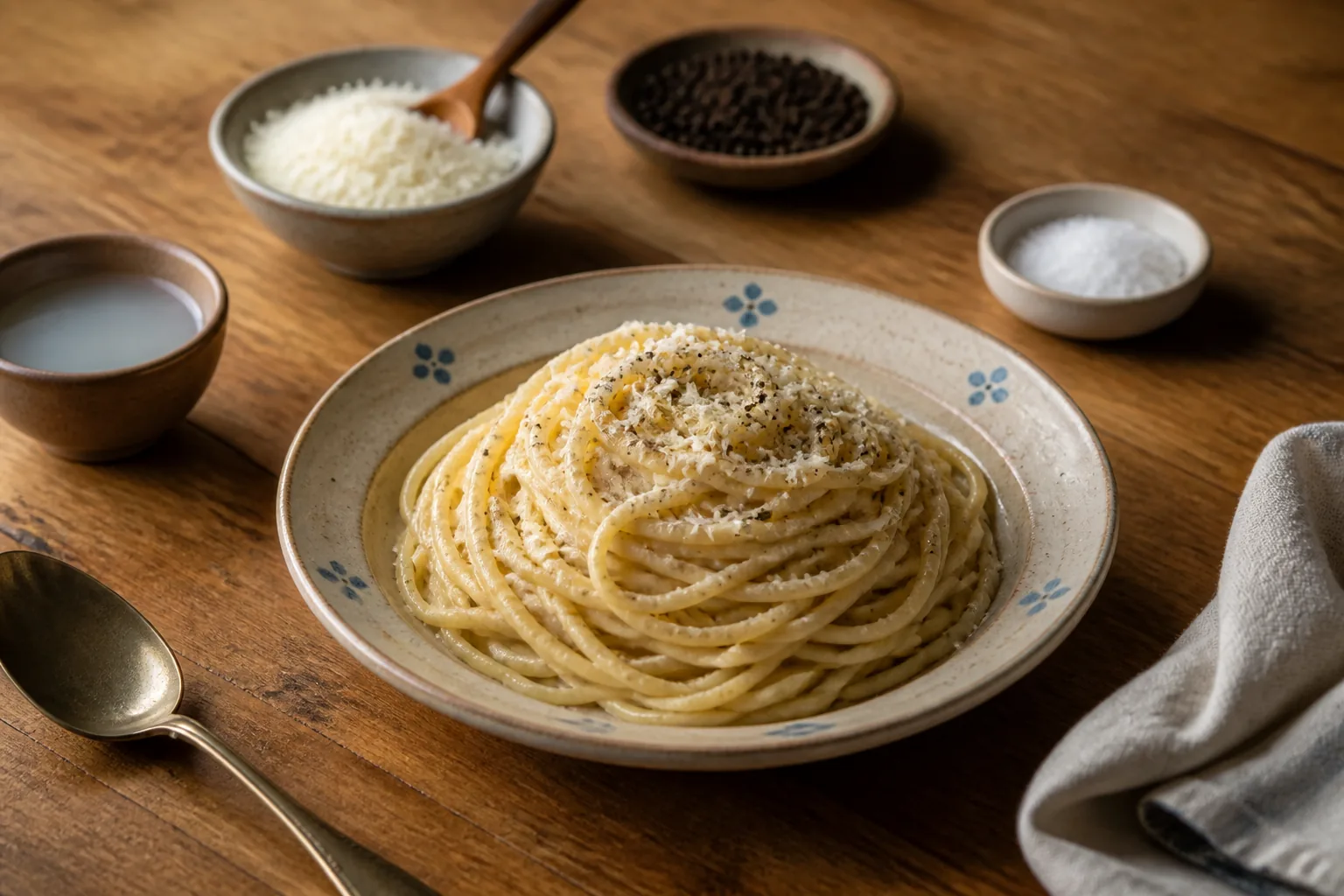
 Watch it madeAden Films · 11:35
Ingredients
- Spaghetti180g
- Pecorino Romano, very finely grated80g
- Black peppercorns2 tsp
- Coarse sea saltto taste
- Pasta cooking wateras needed
Method
- Bring a pot of water to a boil, using less water than usual so the cooking water becomes rich in starch, then salt it lightly because Pecorino Romano is already salty.
- Crush the black peppercorns coarsely with a mortar and pestle or the bottom of a pan.
- Toast the crushed pepper in a wide pan over low heat for about 1 minute, just until fragrant, then add a small ladle of hot pasta water and turn off the heat.
- Add the spaghetti to the boiling water and cook until very al dente, about 2 minutes less than the package instructions.
- Place the finely grated Pecorino Romano in a bowl and stir in a few spoonfuls of warm, not boiling, pasta water to form a thick, smooth paste.
- Transfer the spaghetti to the pan with the pepper, reserving plenty of pasta water.
- Toss the spaghetti over low heat with small splashes of pasta water until the pasta releases starch and looks glossy.
- Remove the pan from the heat and let it cool for about 30 seconds so the cheese will not seize.
- Add the Pecorino paste and toss vigorously, adding a little more pasta water as needed, until the sauce becomes creamy and coats every strand.
- Serve immediately on warm plates with a final dusting of Pecorino Romano and freshly crushed black pepper.
Common questions
Can I substitute Pecorino Romano with Parmesan in cacio e pepe?
Yes, but the flavor will be milder and less salty. For best results, use a 50/50 mix of Pecorino Romano and Parmesan, and reduce added salt even more. Finely grate the cheese so it melts smoothly.
When should I add the cheese so it doesn’t clump?
Add the cheese off the heat or over very low heat, and only after the pasta has been coated with starchy water. Mix the cheese with warm, not boiling, water first, then add it gradually while tossing.
What are the most common mistakes when making cacio e pepe?
Using too much water, overheating the cheese, and under-grating the Pecorino are the biggest mistakes. Boiling sauce after adding cheese can make it grainy. Also avoid under-seasoning the pepper or using too little pasta water to emulsify.
How should I store leftover cacio e pepe?
Store leftovers in an airtight container in the fridge for up to 2 days. Reheat gently with a splash of water over low heat, stirring often. The sauce may loosen, but it won’t be as smooth as freshly made.
What should I serve with cacio e pepe?
Serve it immediately, since it’s best fresh and hot. A simple green salad, sautéed greens, or roasted vegetables work well. Keep the rest of the meal light so the pepper and Pecorino flavor stay the focus.