Indonesian
Sayur Asem
A clear, tangy Indonesian vegetable soup with tamarind, aromatic bumbu, and a gentle sweetness from corn and palm sugar. It is light but deeply comforting, especially served warm with steamed rice and sambal.
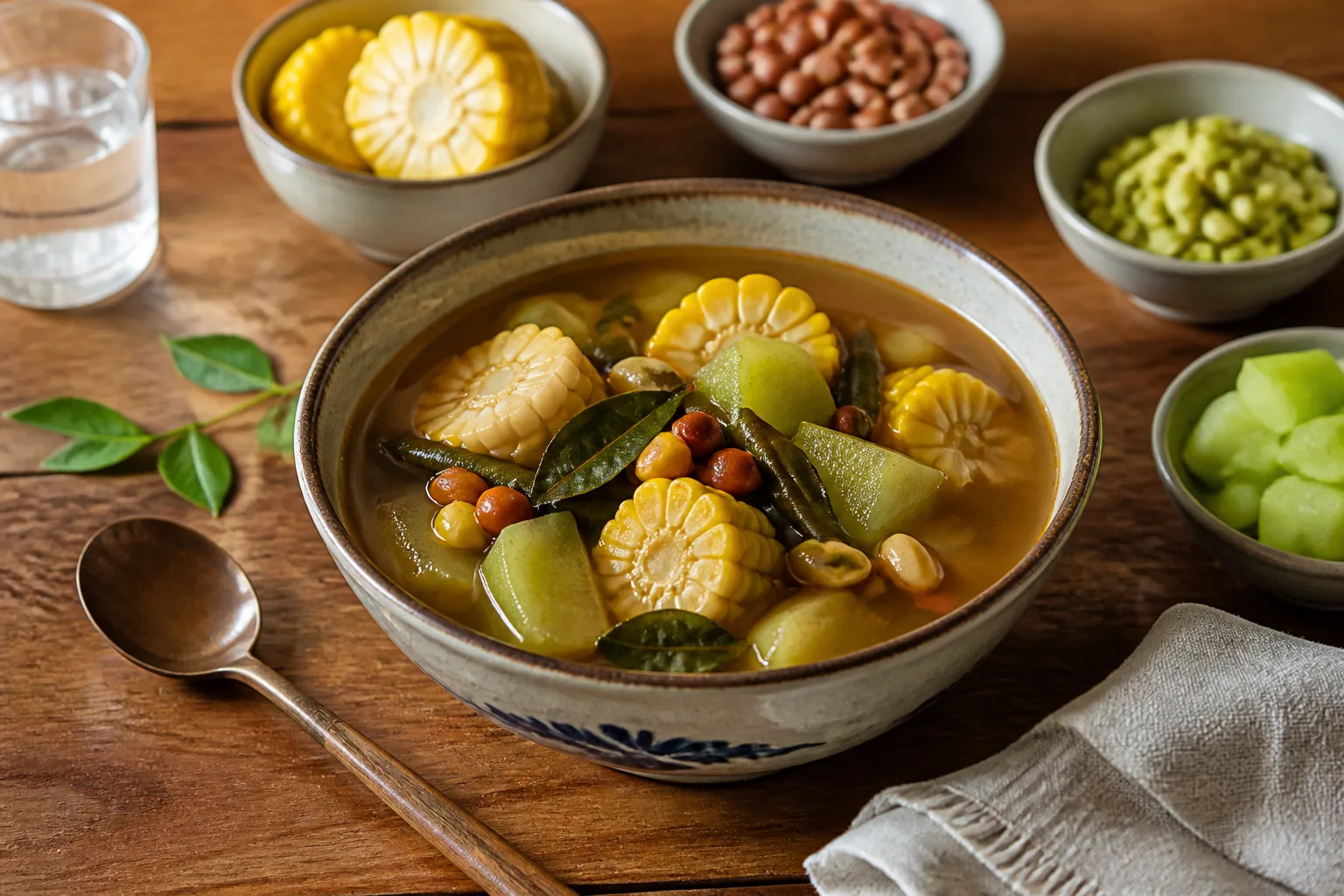
Ingredients
- Water800 ml
- Sweet corn, cut into rounds1 small ear
- Raw peanuts3 tbsp
- Melinjo seeds50g
- Chayote, peeled and diced1/2 medium
- Long beans, cut into 4 cm pieces5 stalks
- Melinjo leaves1 small handful
- Indonesian bay leaves2 leaves
- Galangal, bruised2 cm piece
- Tamarind pulp1 tbsp
- Warm water for tamarind3 tbsp
- Palm sugar, shaved1 tsp
- Salt3/4 tsp, or to taste
- Shallots4
- Garlic2 cloves
- Red curly chilies2
- Candlenut, toasted1
- Toasted shrimp paste1/2 tsp
Method
- Grind the shallots, garlic, red chilies, toasted candlenut, and toasted shrimp paste into a coarse bumbu paste using a mortar and pestle or spice grinder.
- Soak the tamarind pulp in 3 tbsp warm water, press it with your fingers, then strain and reserve the tamarind liquid.
- Bring 800 ml water to a boil in a pot, then add the corn, raw peanuts, and melinjo seeds.
- Simmer for 12 to 15 minutes, until the peanuts begin to soften and the corn is cooked.
- Add the ground bumbu, Indonesian bay leaves, and bruised galangal, then simmer for 5 minutes to let the spices bloom in the broth.
- Add the chayote and cook for 5 minutes, until slightly tender but not mushy.
- Add the long beans, tamarind liquid, palm sugar, and salt, then simmer for 3 to 4 minutes.
- Add the melinjo leaves last and cook for 1 minute, just until wilted.
- Taste the broth and adjust with a little more salt, tamarind, or palm sugar so it is sour, savory, and lightly sweet.
- Serve hot in bowls, ideally with steamed rice, sambal terasi, fried tempeh, or salted fish.
Common questions
Can I substitute ingredients in Sayur Asem if I can’t find melinjo seeds or leaves, shrimp paste, or palm sugar?
Yes. Use extra chayote or green beans if melinjo is unavailable, and swap palm sugar with brown sugar in a smaller amount. For shrimp paste, skip it if needed, but add a little more salt and a few crushed dried shrimp if available.
When should I add each vegetable so Sayur Asem doesn’t turn mushy?
Add the corn, peanuts, and melinjo seeds first, then chayote, then long beans, and melinjo leaves last. The key is to simmer each just until tender, since overcooking quickly makes the broth dull and the vegetables soft.
What are the most common mistakes when making Sayur Asem?
The biggest mistakes are overcooking the vegetables, adding tamarind too early and cooking off the sourness, and using too little salt. Also, grind the bumbu coarse, not smooth, so the broth stays rustic and aromatic.
How should I store leftover Sayur Asem, and how long does it keep?
Cool it quickly, then refrigerate in a covered container for up to 3 days. The vegetables soften over time, so it’s best reheated gently. For longer storage, freeze the broth base separately if possible, then add fresh vegetables later.
What is the best way to serve Sayur Asem?
Serve it hot as a sour vegetable soup with steamed rice and fried or grilled fish, tempeh, or tofu. It’s also good with sambal on the side. Taste before serving and adjust the broth so it’s bright, salty, and lightly sweet.