Italian
Risi e bisi
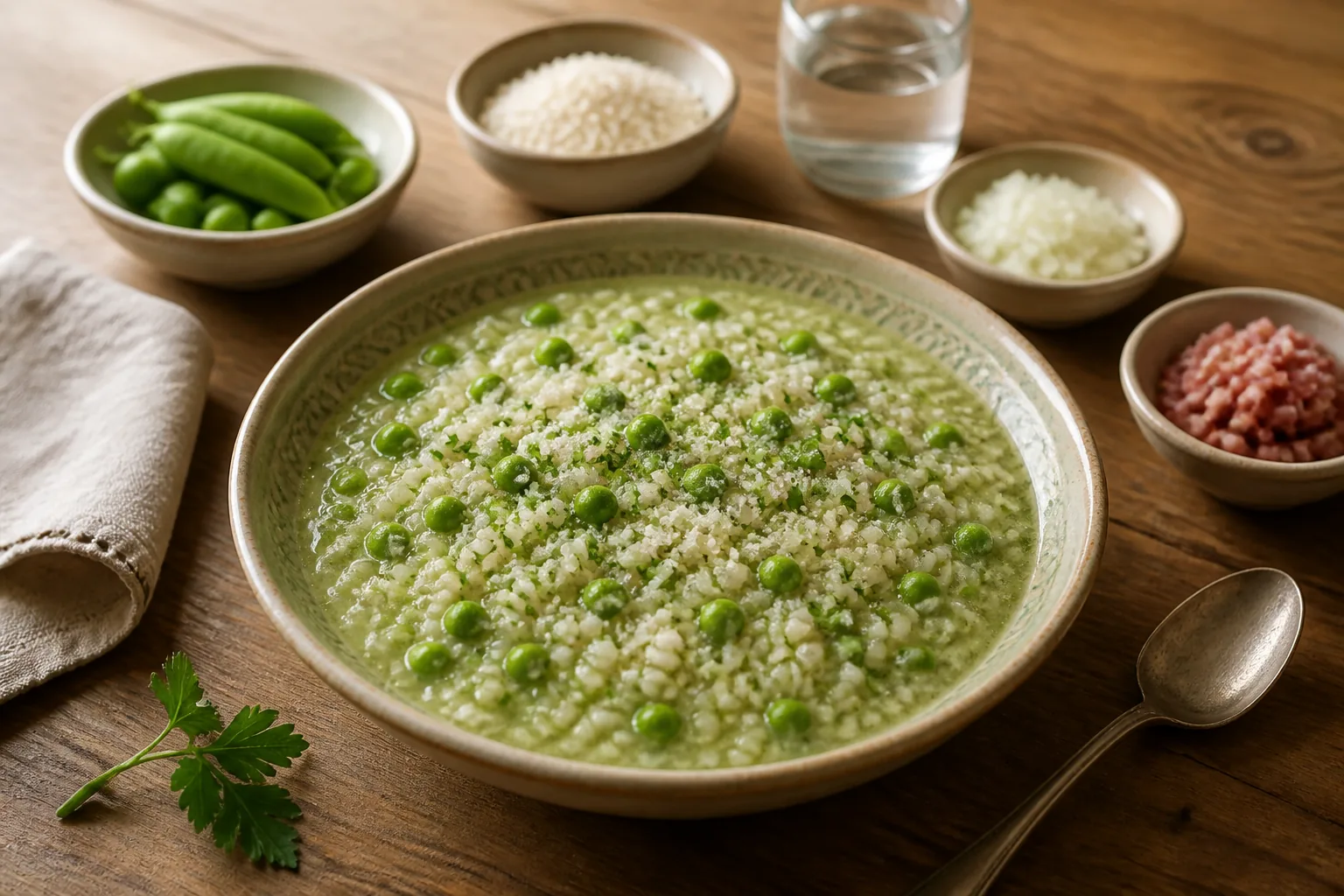
A Venetian spring dish poised between risotto and soup, with Vialone Nano rice cooked in a sweet broth made from fresh pea pods. It should be soft and flowing, finished with butter, Parmigiano Reggiano, and parsley.
 Watch it madeAdam Ragusea · 7:01
Ingredients
- Fresh peas in pods500g
- Vialone Nano rice140g
- Water800ml
- Yellow onion, finely chopped1 small
- Pancetta, finely diced30g
- Unsalted butter30g
- Extra-virgin olive oil1 tbsp
- Parmigiano Reggiano, finely grated30g
- Flat-leaf parsley, finely chopped1 tbsp
- Fine sea saltto taste
- Freshly ground black pepperto taste
Method
- Shell the peas, keeping the pods, and rinse the pods well under cold water.
- Put the pea pods in a saucepan with the water and a pinch of salt, bring to a simmer, and cook for 25 minutes.
- Strain the pod broth, pressing the pods firmly to extract their flavour, then keep the broth hot over low heat.
- In a wide saucepan, warm the olive oil with 15g butter over medium-low heat.
- Add the onion and pancetta and cook gently for 6 to 8 minutes, until the onion is soft but not browned.
- Stir in the shelled peas and cook for 2 minutes, coating them in the soffritto.
- Add the rice and stir for 1 minute, just until the grains are glossy.
- Ladle in enough hot pea-pod broth to cover the rice generously and simmer, stirring often.
- Continue adding hot broth a ladleful at a time as it is absorbed, keeping the texture looser than risotto.
- Cook for 15 to 17 minutes, until the rice is tender but still slightly firm and the dish is brothy and flowing.
- Remove from the heat and stir in the remaining butter, Parmigiano Reggiano, parsley, and black pepper.
- Taste for salt, rest for 1 minute, and serve immediately in warm shallow bowls.
Common questions
Can I substitute a different rice for Vialone Nano in risi e bisi?
Yes, but choose a short-grain rice that releases starch well, like Arborio or Carnaroli. The texture will be slightly creamier and less loose than with Vialone Nano. Avoid long-grain rice, which won’t give the same silky result.
How do I know when the rice is cooked correctly?
It should be tender but still have a slight bite in the center, and the dish should remain spoonable, not thick like risotto. Start checking at 15 minutes, and stop before all the broth is fully absorbed.
What are the most common mistakes when making risi e bisi?
The biggest mistakes are browning the onion, using broth that’s not hot, and letting the rice get too dry. Also avoid overcooking the peas; they should stay bright and sweet, not mushy or dull green.
How should I store leftovers, and can I reheat them?
Store leftovers in an airtight container in the fridge for up to 2 days. Reheat gently with a splash of water or stock, stirring often, because the rice will thicken as it sits. Don’t microwave on high or it may dry out.
What’s the best way to serve risi e bisi?
Serve it immediately in warm bowls, while still loose and creamy. Finish with extra Parmigiano Reggiano, black pepper, and a little chopped parsley. It works best as a first course or a light main with simple salad and bread.