Polish
Pierogi ruskie
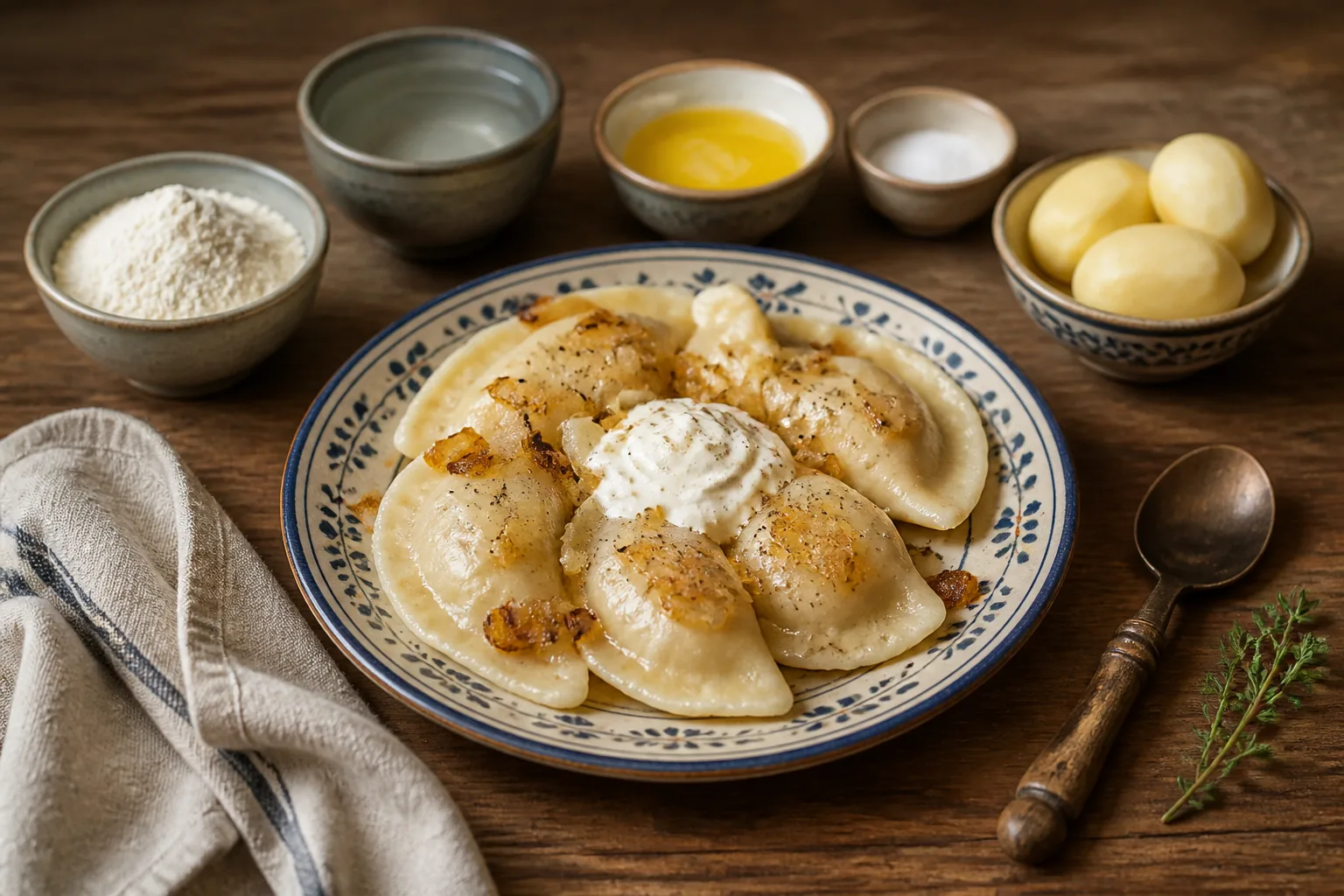
Tender Polish dumplings filled with mashed potato, tangy twaróg, and slowly fried onion. Serve them just boiled with buttered onions, or lightly pan-fried the next day for crisp golden edges.
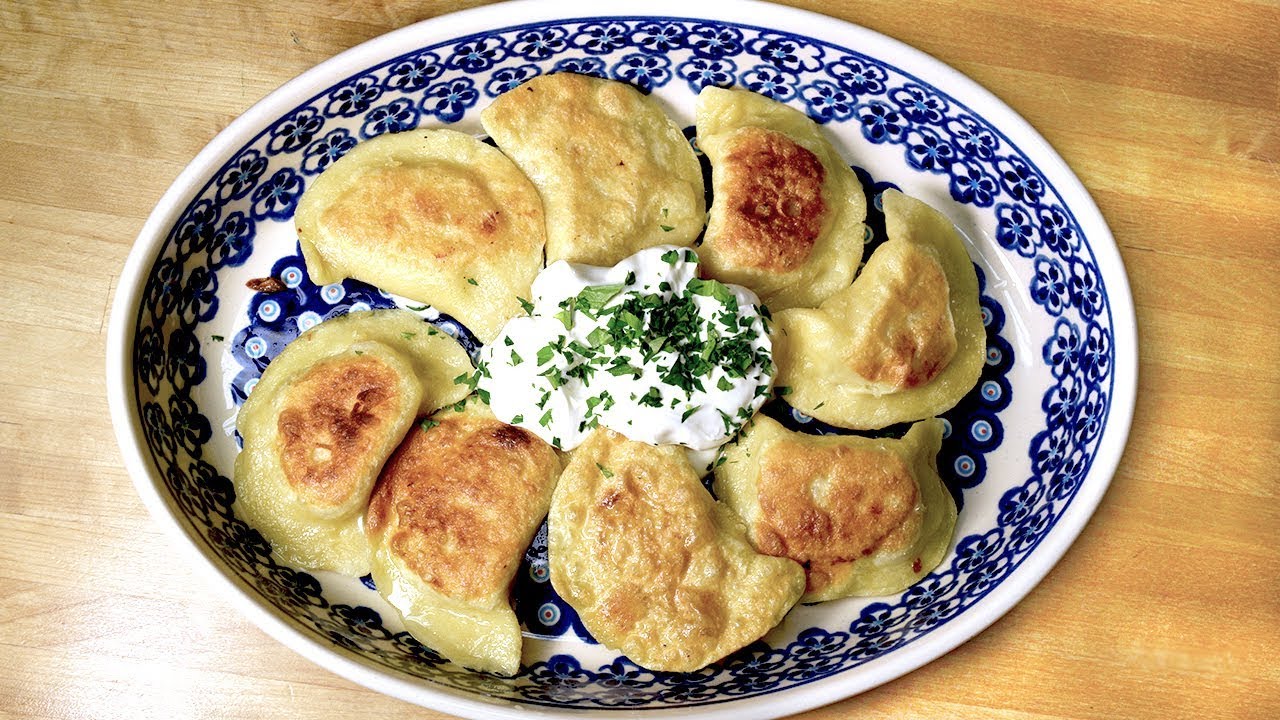 Watch it madeThe Polish Chef · 12:34
Ingredients
- All-purpose flour170g, plus extra for dusting
- Hot water120ml
- Unsalted butter, melted1 tbsp
- Fine salt1/2 tsp, plus more for boiling water
- Starchy potatoes, peeled300g
- Twaróg or firm farmer's cheese150g
- Yellow onion, finely diced1 medium
- Unsalted butter for frying onions2 tbsp
- Freshly ground black pepper3/4 tsp
- Sour cream, for serving2 tbsp
Method
- Boil the potatoes in salted water until tender, then drain very well and mash until smooth while still hot.
- Fry the diced onion in 2 tablespoons butter over medium-low heat until soft, sweet, and lightly golden, about 10 minutes.
- Set aside one-third of the fried onion for serving.
- Mix the mashed potatoes with the twaróg, the remaining fried onion, black pepper, and salt to taste, then let the filling cool completely.
- Place the flour and 1/2 teaspoon salt in a bowl, add the melted butter, and pour in the hot water gradually while mixing with a spoon.
- Knead the dough on a lightly floured surface for 6 to 8 minutes until smooth and elastic.
- Cover the dough with an inverted bowl or cloth and rest it for 20 minutes.
- Roll the dough thinly to about 2 mm and cut out circles about 8 cm wide.
- Place a heaped teaspoon of filling in the centre of each circle.
- Fold each circle into a half-moon and pinch the edges firmly, making sure no filling is trapped in the seal.
- Bring a wide pot of salted water to a gentle boil.
- Cook the pierogi in batches, stirring gently once so they do not stick to the bottom.
- After the pierogi float, simmer them for 2 to 3 minutes, then lift them out with a slotted spoon.
- Serve hot with the reserved butter-fried onion and a spoonful of sour cream.
Common questions
Can I substitute twaróg in pierogi ruskie if I can't find it?
Yes. Use firm farmer’s cheese, dry cottage cheese pressed well, or a mix of ricotta and a little crumbled feta for tang. Avoid wet cheeses, which make the filling runny and hard to seal.
How far ahead can I make the dough and filling?
The filling can be made 1 day ahead and refrigerated, covered, once fully cooled. Dough is best made the same day, but you can rest it up to 2 hours at cool room temperature, tightly covered.
What are the most common mistakes when making pierogi ruskie?
The biggest issues are watery filling, dough that’s too thick, and overfilling. Drain potatoes very well, cool the filling completely, roll the dough thin, and seal edges firmly so they don’t burst during boiling.
Can I freeze pierogi ruskie, and should I freeze them cooked or uncooked?
Freeze them uncooked for best texture. Arrange in a single layer on a tray until solid, then transfer to a bag. Cook from frozen in simmering salted water; don’t thaw first or they may stick together.
What’s the best way to serve pierogi ruskie?
Serve hot with the reserved fried onions, a spoonful of sour cream, and black pepper. For extra richness, finish with a little melted butter or crisped bacon bits, but the classic onion and sour cream is enough.