Indonesian
Pempek
Palembang-style pempek made with tenggiri fish and sago starch, boiled then lightly fried until crisp at the edges. It is served with dark, tangy cuko, cucumber, noodles, and a little ebi for its familiar savory depth.
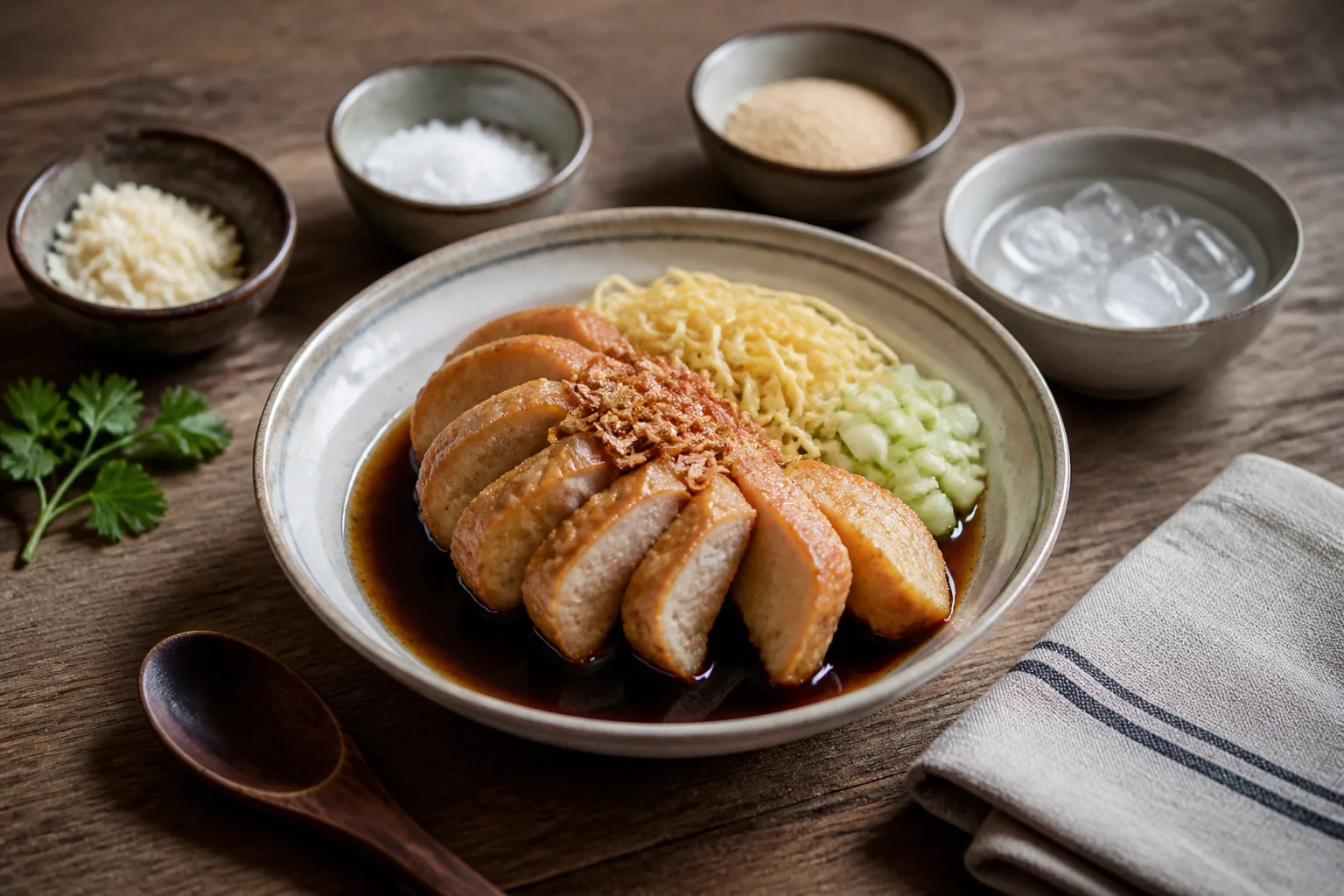
Ingredients
- skinless tenggiri or Spanish mackerel fillet, very cold and finely minced300g
- ice water120 ml
- fine sea salt1 tsp
- granulated sugar1/2 tsp
- garlic, finely grated2 cloves
- sago tani or tapioca starch, plus extra for dusting160g
- neutral oil, for deep-frying2 cups
- Indonesian dark palm sugar, shaved100g
- water, for cuko200 ml
- tamarind pulp25g
- bird's eye chilies4
- garlic, for cuko3 cloves
- salt, for cuko1/2 tsp
- toasted dried shrimp, finely ground2 tsp
- cucumber, diced1 small
- yellow wheat noodles, blanched100g
Method
- Dissolve the tamarind pulp in 3 tablespoons warm water, then strain and discard the solids.
- Pound or blend the bird's eye chilies, 3 garlic cloves, and 1/2 teaspoon salt into a coarse paste.
- Simmer the palm sugar with 200 ml water until dissolved, then add the chili paste, tamarind water, and 1 teaspoon ground dried shrimp.
- Cook the cuko for 8 to 10 minutes until slightly syrupy, then strain if desired and set aside to cool.
- Place the cold minced fish in a bowl and mix in the ice water little by little until the paste becomes smooth and sticky.
- Add 1 teaspoon salt, sugar, and grated garlic, then mix until the fish paste tightens and feels elastic.
- Fold in the sago or tapioca starch gently until just combined, avoiding heavy kneading so the pempek stays tender.
- Dust your hands and work surface with starch, then shape the dough into 6 short logs.
- Bring a pot of water to a gentle boil, add the pempek, and cook until they float plus 5 more minutes.
- Lift the boiled pempek out and let them drain and cool for 10 minutes.
- Heat the neutral oil to 170°C and fry the pempek until the outside is lightly golden and crisp.
- Slice the fried pempek into bite-size pieces and place them in bowls with blanched noodles and diced cucumber.
- Pour cuko over the pempek and finish with the remaining ground dried shrimp.
Common questions
Can I substitute the tenggiri or Spanish mackerel with another fish?
Yes. Use any very cold, firm white fish with a fairly rich flavor, such as pollock, haddock, or cod, but the texture will be less springy. Avoid oily or watery fish, which can make the dough loose and bland.
How long does pempek dough need to rest before shaping or boiling?
You don’t need a long rest. Once the starch is folded in, shape the logs right away while the mixture is still cold. If it softens too much, chill it briefly, but don’t let it sit too long.
What are the most common mistakes when making pempek?
The biggest mistakes are using fish that isn’t cold enough, overmixing after adding the starch, and kneading too aggressively. That makes the pempek dense or rubbery. Also keep the water at a gentle boil, not a hard boil.
How should I store pempek and cuko?
Store cooked pempek and cuko separately. Refrigerate both in airtight containers for up to 3 days. Reheat pempek by steaming or briefly pan-frying after boiling, and warm the cuko gently before serving. Cuko may thicken when chilled.
What is the best way to serve pempek?
Serve sliced pempek with plenty of cuko spooned over or on the side, plus cucumber for freshness if you like. It’s also common to add noodles or extra shrimp crackle on the side, but keep the cuko as the main flavor.