Chinese
Peking Duck
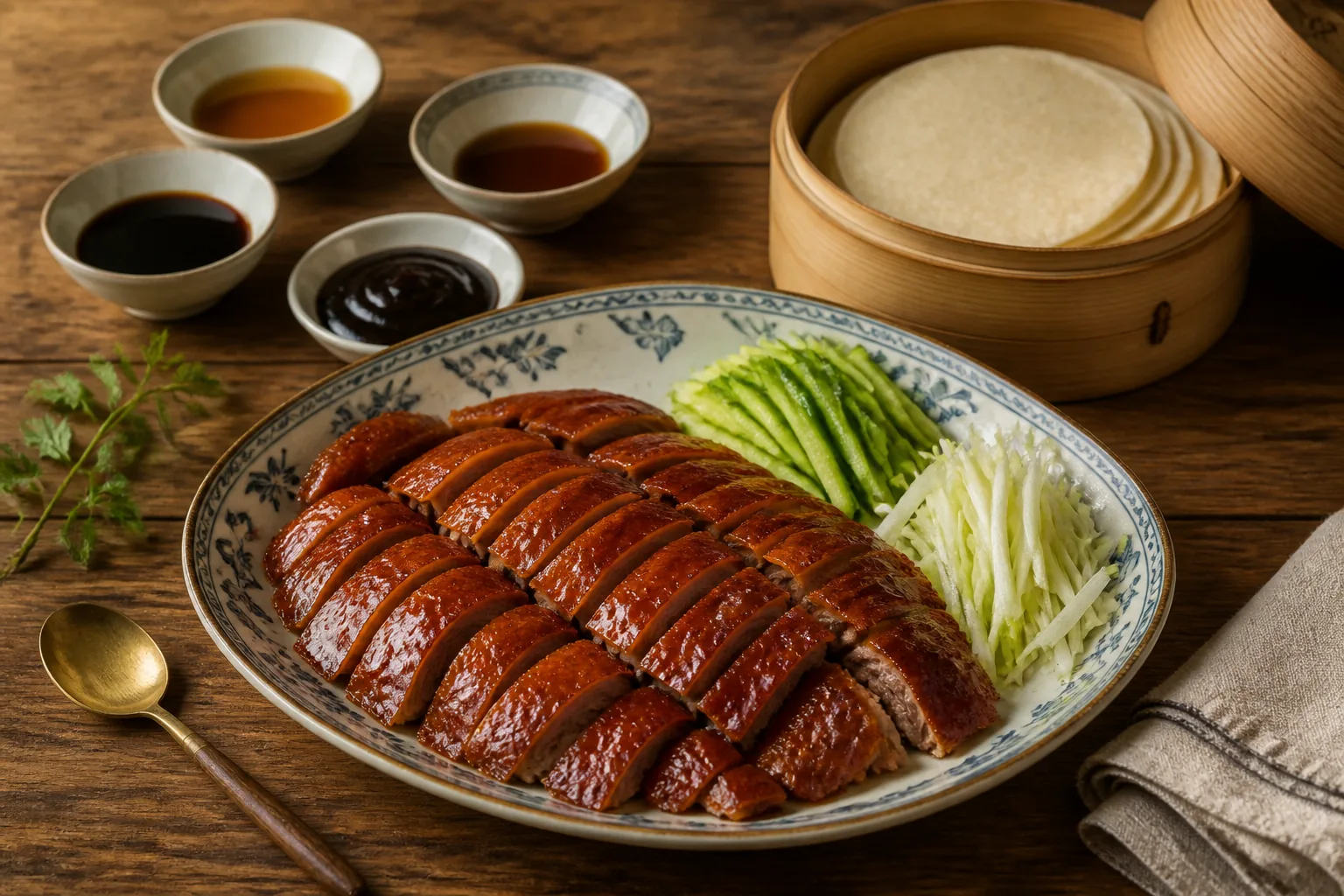
A northern Chinese banquet dish with lacquered, shatteringly crisp skin, tender duck meat, warm Mandarin pancakes, scallions, cucumber, and sweet bean sauce. The key is the traditional scalding, maltose glaze, and long air-drying step before roasting.
 Watch it madeThe Art Of Cooking · 11:06
Ingredients
- Whole duck, head and feet removed if desired1 small, 1.8-2 kg
- Maltose2 tbsp
- Chinese black vinegar or rice vinegar2 tbsp
- Shaoxing wine2 tbsp
- Boiling water2 liters
- Fine sea salt1 1/2 tsp
- Ginger, sliced4 slices
- Scallions, white parts bruised2
- Star anise1
- Chinese five-spice powder1/2 tsp
- All-purpose flour150g
- Hot water, about 80°C90ml
- Toasted sesame oil2 tsp
- Tianmianjiang, Chinese sweet bean sauce1/4 cup
- Sugar1 tsp
- Cucumber, cut into matchsticks1/2
- Scallions, green and white parts cut into fine shreds4
Method
- Remove any excess fat from the duck cavity, pat the duck very dry, and rub the cavity with salt, ginger, bruised scallions, star anise, and five-spice powder.
- Loosen the skin from the meat by carefully working your fingers between the skin and breast, thighs, and back without tearing it.
- If available, use a clean kitchen-safe air pump at the neck opening to gently inflate the duck skin away from the flesh, then tie the neck skin closed with kitchen string.
- Bring 2 liters of water to a full boil and ladle it slowly over every side of the duck until the skin tightens and looks glossy.
- Warm the maltose with the vinegar and Shaoxing wine until fluid, then brush the glaze evenly over the entire duck.
- Hang the duck by the neck in a cool, airy place or set it uncovered on a rack in the refrigerator for 18 to 24 hours until the skin feels dry and taut.
- Combine the flour and hot water in a bowl, knead into a smooth dough, cover, and rest for 30 minutes.
- Divide the dough into 12 small pieces, flatten each piece, brush half with sesame oil, stack them in pairs, and roll each pair into a thin 15 cm round.
- Cook the pancake pairs in a dry skillet over medium heat until pale golden spots appear, then peel the paired pancakes apart while warm and keep them covered with a towel.
- Heat the oven to 220°C and place the duck breast-side up on a vertical roaster or wire rack set over a tray of water.
- Roast the duck for 15 minutes, then reduce the oven to 180°C and roast for 45 to 60 minutes more, turning once, until the skin is deep mahogany and crisp and the thigh reaches 74°C.
- Rest the duck uncovered for 10 minutes so the skin stays crisp.
- Warm the tianmianjiang with the sugar and 1 tablespoon water until smooth, then spoon it into a small serving dish.
- Carve the duck by first slicing off the crisp skin in thin pieces, then slicing the breast and leg meat into bite-size pieces.
- Serve the duck skin and meat with warm Mandarin pancakes, sweet bean sauce, cucumber matchsticks, and shredded scallions.
Common questions
Can I substitute maltose if I can’t find it for Peking duck glaze?
Yes. Use honey or corn syrup for a workable glaze, though maltose gives the classic brittle sheen. Warm it with the vinegar and Shaoxing wine so it brushes smoothly, and expect slightly softer, less crisp skin.
How long does Peking duck need to dry before roasting?
Dry the glazed duck uncovered for 18 to 24 hours in a cool, airy place or refrigerator. The skin should feel taut and dry to the touch; this drying step is key to crisp, lacquered skin.
What are the most common mistakes when preparing Peking duck?
The biggest mistakes are tearing the skin, skipping the drying time, and not fully tightening the skin with boiling water and glaze. Also avoid a wet duck cavity, because trapped moisture prevents crisp skin and even roasting.
How should I store leftover Peking duck?
Store leftover duck meat and skin separately if possible. Refrigerate in airtight containers for up to 3 days. Re-crisp skin in a hot oven or skillet before serving; don’t microwave if you want to keep texture.
What’s the best way to serve Peking duck at home?
Serve the crispy duck skin and sliced meat with warm pancakes, tianmianjiang or sweet bean sauce, and thin scallion strips. Add cucumber if you like. Keep the pancakes warm so they stay soft and pliable for wrapping.