Japanese
Oden
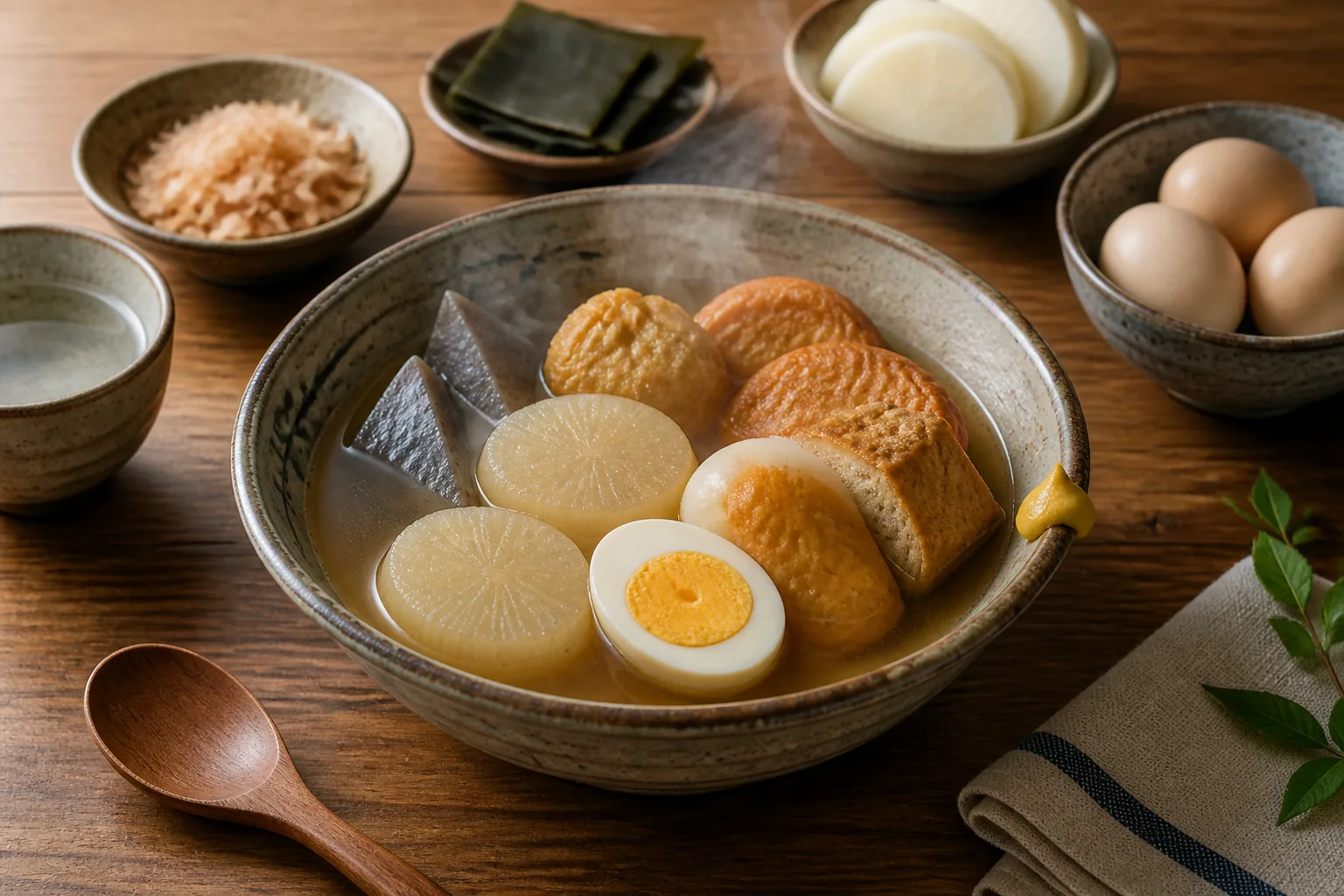
Oden is a gently simmered Japanese winter stew of daikon, eggs, konnyaku, tofu, and fish cakes in a clear, savory dashi broth. Letting it rest after simmering helps the ingredients soak up the broth deeply.
 Watch it madeRina Takagi · 1:27
Ingredients
- Water4 cups
- Kombu1 piece, about 8 g
- Katsuobushi15 g
- Daikon250 g
- Eggs2
- Konnyaku1/2 block
- Atsuage1 small piece, about 100 g
- Chikuwa2 pieces
- Satsuma-age2 pieces
- Ganmodoki2 small pieces
- Usukuchi soy sauce1 1/2 tbsp
- Mirin1 tbsp
- Sake1 tbsp
- Sugar1 tsp
- Salt1/4 tsp
- Japanese karashi mustardto serve
Method
- Wipe the kombu lightly, place it in 4 cups water, and soak for 20 minutes.
- Heat the kombu water slowly until just before boiling, remove the kombu, add the katsuobushi, turn off the heat, and steep for 5 minutes.
- Strain the dashi through a fine sieve without pressing hard on the flakes.
- Peel the daikon, cut it into 2 cm thick rounds, trim the edges, and score a shallow cross on one side of each piece.
- Simmer the daikon in plain water or rice-rinsing water for 15 to 20 minutes until slightly translucent, then drain.
- Boil the eggs for 9 minutes, cool in cold water, and peel.
- Rub the konnyaku with a little salt, rinse, cut into triangles, and boil for 2 minutes to remove its odor.
- Pour boiling water over the atsuage, chikuwa, satsuma-age, and ganmodoki to remove excess oil, then drain.
- Combine 3 cups of the strained dashi with the usukuchi soy sauce, mirin, sake, sugar, and salt in a pot.
- Add the daikon, eggs, and konnyaku, bring to a gentle simmer, and cook uncovered for 30 minutes without letting the broth boil hard.
- Add the atsuage, chikuwa, satsuma-age, and ganmodoki, then simmer very gently for another 25 minutes.
- Turn off the heat and let the oden rest for at least 20 minutes so the flavors soak into the ingredients.
- Reheat gently and serve in deep bowls with plenty of broth and a small dab of karashi mustard on the side.
Common questions
Can I substitute ingredients in oden if I can’t find konnyaku or Japanese fish cakes?
Yes. For konnyaku, use firm tofu puffs or extra daikon, though texture changes. For chikuwa, satsuma-age, or ganmodoki, use any mild fish cake, tofu fritter, or even mushrooms for a vegetarian version.
How long does each part of oden take, and can I prep anything ahead?
Dashi takes about 30 minutes total including soaking. Daikon needs 15 to 20 minutes simmering, eggs 9 minutes, and konnyaku 2 minutes. You can make the dashi, boil eggs, and pre-cook daikon a day ahead.
What are the most common mistakes when making oden?
The biggest mistakes are boiling the dashi hard, pressing the katsuobushi too much, and skipping the oil-removing step for fried items. Also, don’t overcook daikon or it will break apart and turn mushy.
How should I store leftover oden, and does it taste better the next day?
Store leftovers in the broth in the refrigerator for up to 3 days. Oden often tastes better the next day because the ingredients absorb the broth. Reheat gently over low heat and avoid a hard boil.
What is the best way to serve oden, and what should I serve with it?
Serve oden hot in a deep bowl with plenty of broth and a little mustard if you like. It’s often eaten with steamed rice, sake, or beer, and the broth should be sipped, not just discarded.