Japanese
Nikujaga (Meat and Potato Stew)
Nikujaga is a comforting Japanese home-style stew made with meat, potatoes, and vegetables simmered in a sweet and savory soy dashi broth.

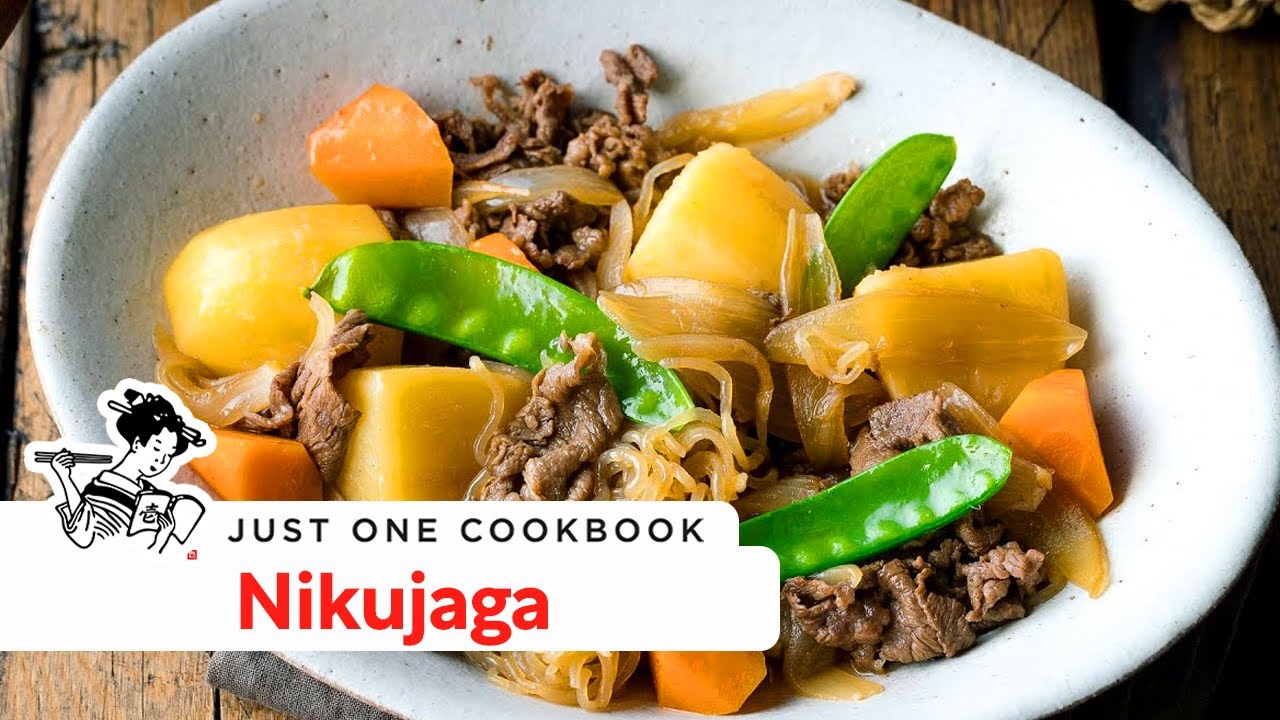 Watch it madeJust One Cookbook · 7:02
Ingredients
- Thinly sliced beef200g
- Potatoes3 medium
- Carrot1 medium
- Onion1 large
- Dashi stock400ml
- Soy sauce3 tbsp
- Sugar2 tbsp
- Mirin2 tbsp
Method
- Cut the beef into bite-sized pieces. Peel and cut potatoes and carrots into chunks. Slice the onion into wedges.
- Heat oil in a pot and sauté the onions until translucent, then add the beef and cook until browned.
- Add potatoes and carrots to the pot and stir-fry for a few minutes.
- Add dashi stock, sugar, sake, mirin, and soy sauce. Bring to a boil, skim off foam, cover with a drop lid (otoshibuta), and simmer for 15-20 minutes until vegetables are tender.
- Remove the lid and simmer for a few more minutes to reduce the liquid slightly. Serve hot.
Common questions
Can I substitute the thinly sliced beef in nikujaga with another meat or make it vegetarian?
Yes. Thinly sliced pork works very well and is common in Japan. For vegetarian nikujaga, use mushrooms, tofu, or extra vegetables, and replace dashi with kombu or vegetable stock. Keep the same simmering method.
How long should I simmer nikujaga so the potatoes stay tender but not mushy?
After bringing it to a boil and skimming, simmer covered for about 15–20 minutes, depending on potato size. Cut the potatoes into even chunks and check with a skewer near the end. Simmer uncovered briefly only to reduce liquid.
What are the most common mistakes when making nikujaga?
The biggest mistakes are cutting vegetables too large or unevenly, overcooking after the potatoes are tender, and stirring too much, which can break the potatoes. Also, don’t skip skimming foam and use enough simmering liquid to cover most ingredients.
How should I store leftover nikujaga, and can I freeze it?
Store cooled leftovers in an airtight container in the refrigerator for up to 3 days. It reheats well because the flavor deepens overnight. Freezing is possible, but potatoes can become grainy, so freeze only if texture loss is acceptable.
What is the best way to serve nikujaga, and what sides go well with it?
Serve it hot with steamed rice, ideally in bowls with some of the broth spooned over the top. A simple side of miso soup, pickles, or blanched greens works well. It also tastes better after resting 10–15 minutes.