Indian
Nihari
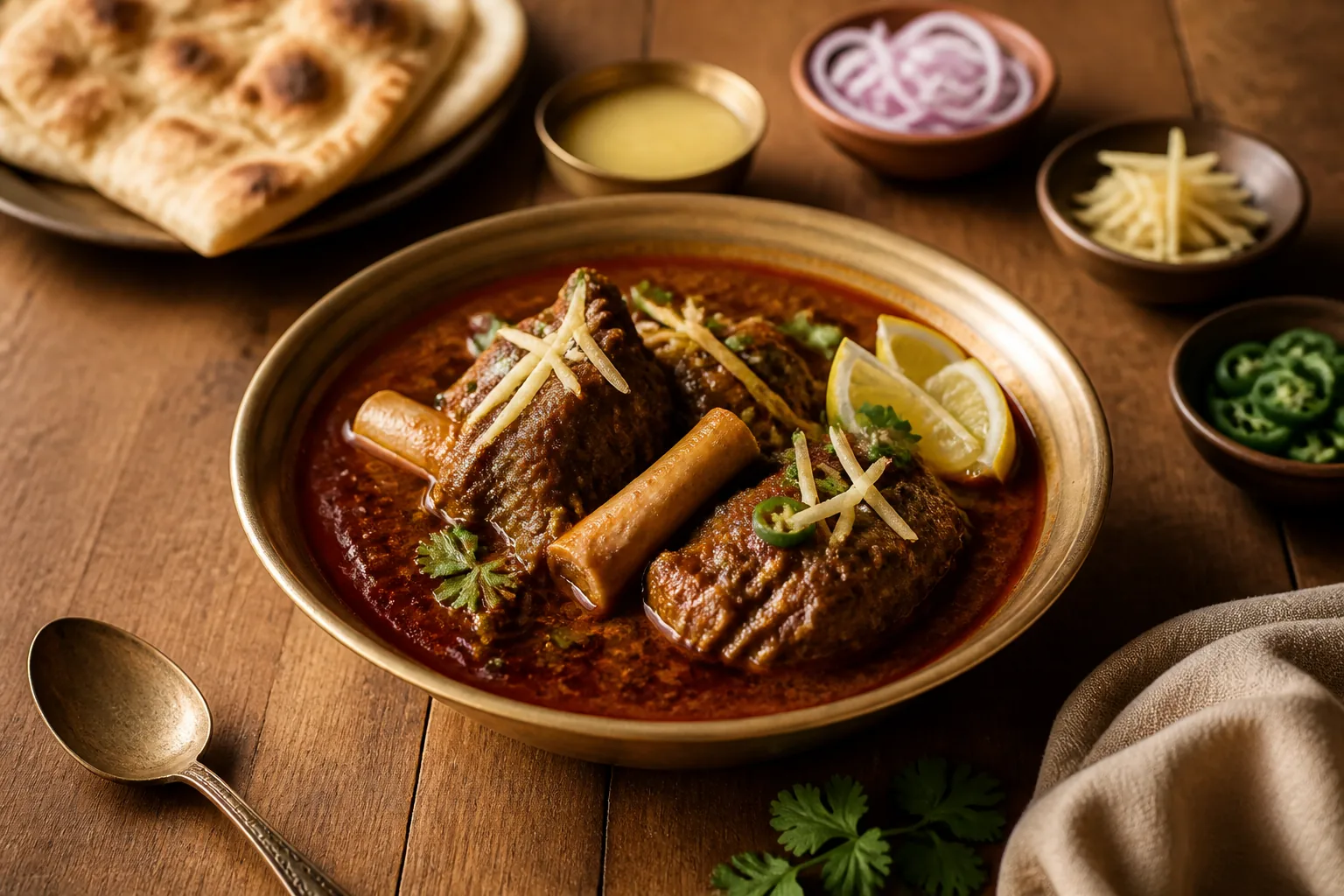
Nihari is a slow-cooked North Indian meat stew with tender shank, warm spices, and a silky atta-thickened gravy. It is served hot with ginger, green chilli, coriander, lemon, and naan.
 Watch it madeChef Ranveer Brar · 16:09
Ingredients
- Beef or mutton shank, bone-in500g
- Bone marrow pieces, optional100g
- Ghee3 tbsp
- Onion, thinly sliced1 medium
- Ginger-garlic paste1 tbsp
- Whole wheat flour atta2 tbsp
- Water4 cups
- Salt1 tsp, or to taste
- Kashmiri red chilli powder1 tsp
- Coriander seeds1 tbsp
- Fennel seeds1 tbsp
- Cumin seeds1 tsp
- Black peppercorns1 tsp
- Cloves4
- Green cardamom pods3
- Black cardamom pod1
- Cinnamon stick1 inch
- Bay leaf1
- Mace1 small blade
- Nutmeg, grated1 pinch
- Dry ginger powder1/2 tsp
- Garam masala1/2 tsp
- Ginger, julienned1 tbsp
- Fresh coriander, chopped2 tbsp
- Green chilli, sliced1
- Lemon wedges2
Method
- Dry-roast the coriander seeds, fennel seeds, cumin seeds, peppercorns, cloves, cardamoms, cinnamon, bay leaf, and mace for 1 to 2 minutes until fragrant.
- Cool the roasted spices, then grind them with nutmeg, dry ginger powder, garam masala, and Kashmiri chilli powder to make a fine nihari masala.
- Heat the ghee in a heavy pot and fry the sliced onion over medium heat until deep golden.
- Add the shank pieces and bone marrow, then sear for 5 to 6 minutes until the meat is browned on the edges.
- Stir in the ginger-garlic paste and cook for 1 minute until the raw smell fades.
- Add the prepared nihari masala and salt, then stir well so the meat is coated in the spices and ghee.
- Pour in 3 1/2 cups water, bring to a boil, then cover and simmer on very low heat for 3 to 3 1/2 hours until the meat is tender and almost falling off the bone.
- Whisk the atta with 1/2 cup water into a smooth slurry with no lumps.
- Stir the atta slurry slowly into the simmering nihari, mixing continuously to keep the gravy smooth.
- Simmer uncovered for 20 to 30 minutes until the gravy is glossy, thick, and coats the back of a spoon.
- Skim some spiced ghee from the surface and spoon it back over the nihari before serving.
- Serve hot garnished with julienned ginger, chopped coriander, sliced green chilli, and lemon wedges.
Common questions
Can I substitute beef or mutton shank with another cut for nihari?
Yes. Use bone-in beef chuck, short ribs, or lamb shoulder if shank isn’t available. You still want some connective tissue and bone for body. Avoid lean cuts like steak—they turn dry and won’t give nihari’s rich texture.
How long does nihari take to cook until the meat is truly tender?
Plan for about 3 to 3 1/2 hours on very low heat after bringing it to a boil. Larger shank pieces or older mutton may need a bit longer. The meat should be nearly falling off the bone.
What are the most common mistakes when making nihari?
The biggest mistakes are burning the spices, cooking on too high heat, and adding too much water too early. Also, don’t rush the onion browning or skimp on simmering; both build the dish’s depth and body.
How should I store nihari, and does it taste better the next day?
Yes, it often tastes better the next day because the spices meld and the fat settles into the gravy. Cool it quickly, refrigerate in a covered container for up to 3 days, or freeze for up to 2 months.
What is the best way to serve nihari?
Serve it hot with naan, kulcha, or paratha, plus sliced ginger, green chilies, lemon wedges, and fresh coriander. If the gravy thickens after resting, loosen it with a splash of hot water before reheating.