Italian
Minestrone
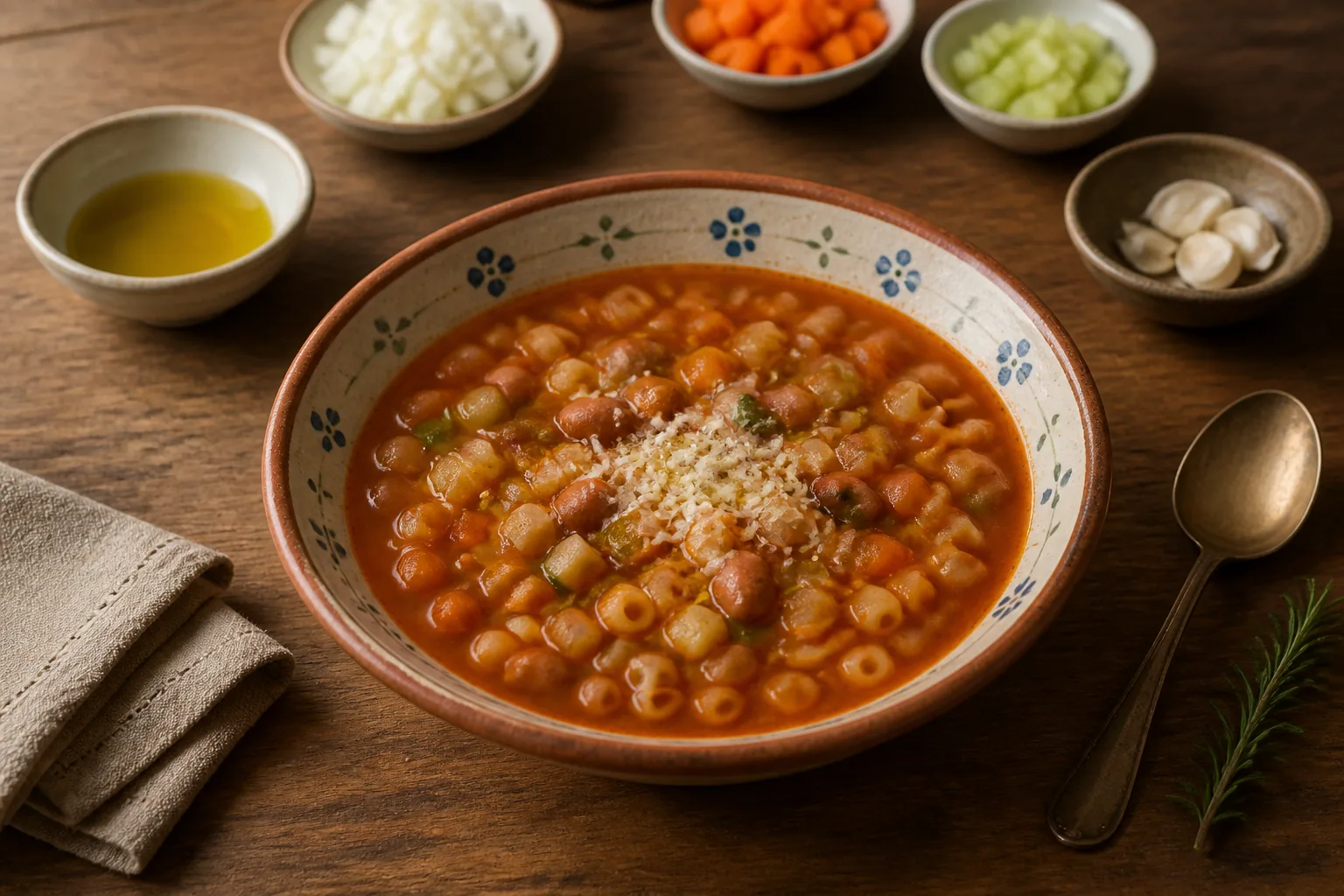
A rustic Italian vegetable soup with borlotti beans, tender pasta, and a slow soffritto base. It is served thick and comforting, finished with extra virgin olive oil and Parmigiano Reggiano.
Ingredients
- Extra virgin olive oil1 1/2 tbsp
- Yellow onion, finely chopped1/2 small
- Carrot, finely chopped1 small
- Celery stalk, finely chopped1
- Garlic clove, lightly crushed1
- Potato, peeled and diced1 small
- Zucchini, diced1/2 medium
- Green beans, trimmed and cut short75g
- Savoy cabbage or cavolo nero, shredded100g
- Cooked borlotti beans120g
- Peeled tomatoes, crushed100g
- Parmigiano Reggiano rind1 small piece
- Water or light vegetable broth650ml
- Ditalini or other small soup pasta60g
- Fine sea saltto taste
- Black pepperto taste
- Fresh basil or flat-leaf parsley, chopped1 tbsp
- Parmigiano Reggiano, grated2 tbsp
Method
- Warm the olive oil in a heavy pot over medium-low heat and add the onion, carrot, celery, and crushed garlic.
- Cook the soffritto gently for 8 to 10 minutes, stirring often, until soft and sweet but not browned.
- Remove the garlic clove if you prefer, then add the potato, zucchini, green beans, cabbage, crushed tomatoes, and Parmigiano rind.
- Mash about one third of the borlotti beans with a fork, then add both the mashed and whole beans to the pot.
- Pour in the water or light broth, season lightly with salt, and bring to a gentle simmer.
- Cook uncovered for 25 to 30 minutes, stirring occasionally, until the vegetables are tender and the soup has thickened.
- Add the ditalini directly to the soup and simmer until just al dente, stirring often so the pasta does not stick.
- Remove the Parmigiano rind, adjust the salt and pepper, and let the minestrone rest off the heat for 5 minutes.
- Serve in warm bowls with chopped basil or parsley, grated Parmigiano Reggiano, and a thin drizzle of extra virgin olive oil.
Common questions
Can I substitute the borlotti beans or Parmigiano rind in minestrone?
Yes. Cannellini, kidney, or cranberry beans work well if borlotti aren’t available. If you don’t have Parmigiano rind, skip it or add a little grated Parmesan at the end for savory depth.
How do I know when the vegetables are cooked and the soup is ready for pasta?
The soffritto should be soft and sweet, not browned, after 8 to 10 minutes. The soup base is ready for pasta when the potatoes and other vegetables are just tender, after about 25 to 30 minutes simmering.
What are the most common mistakes when making minestrone?
The biggest mistakes are browning the soffritto, boiling too hard, and adding pasta too early. Also avoid over-salting at the start, since the broth, beans, and Parmesan rind can concentrate flavor as the soup simmers.
How should I store minestrone, and can I freeze it?
Cool it quickly, then refrigerate for up to 4 days. It freezes well for about 3 months, but pasta can become soft, so many cooks freeze the soup without pasta and add fresh pasta when reheating.
What’s the best way to serve minestrone?
Serve it warm in deep bowls with a drizzle of good olive oil and extra grated Parmigiano Reggiano. A slice of crusty bread or toast is ideal for soaking up the broth, especially if the soup thickens as it rests.