Nigerian
Masa
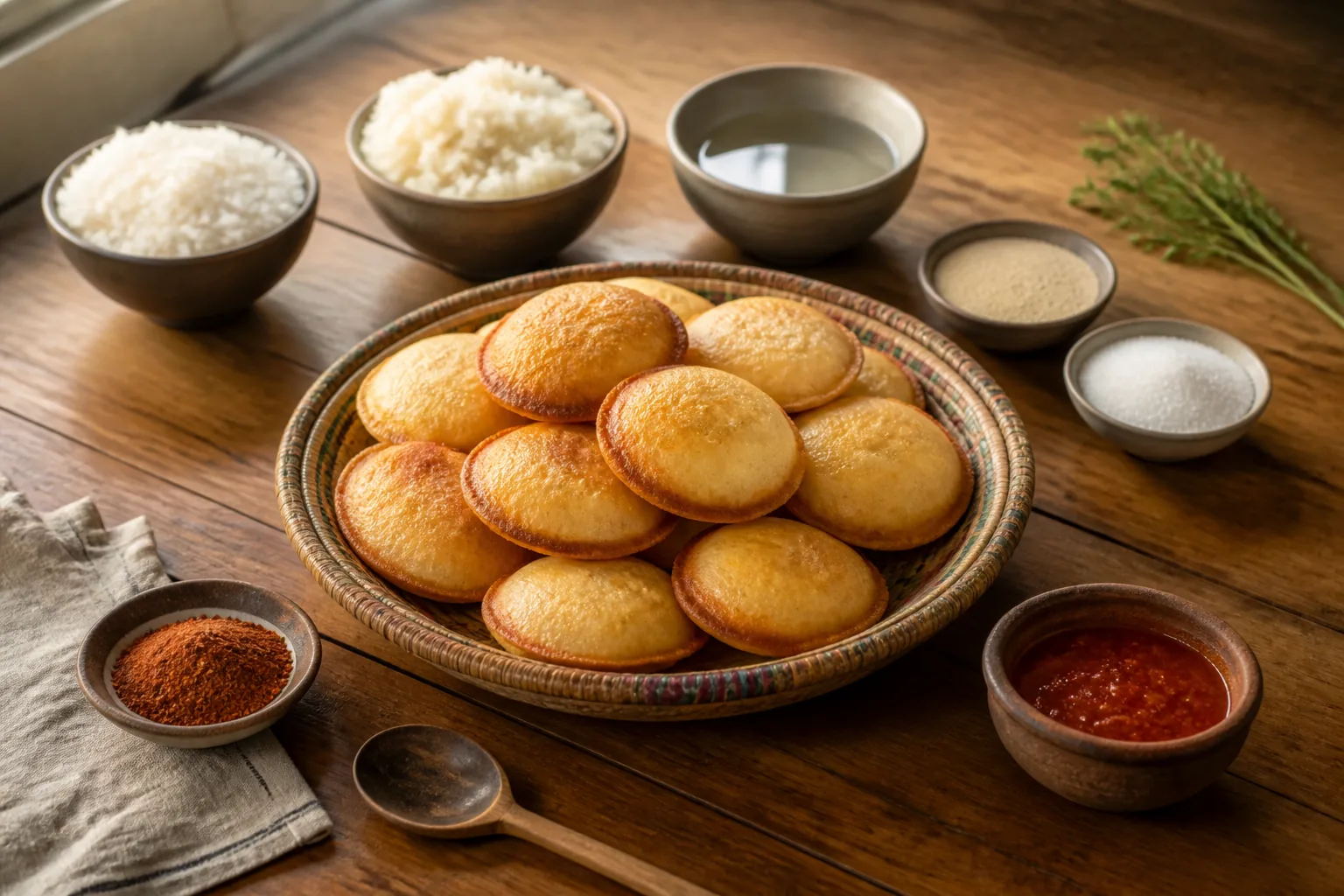
Masa are soft, slightly tangy Hausa rice cakes cooked in a special dimpled pan until golden outside and tender within. They are often eaten warm with yaji, miyan taushe, or a peppery sauce.
 Watch it madeayzah cuisine · 4:41
Ingredients
- Short-grain rice or tuwo rice1 cup
- Cooked soft rice1/3 cup
- Warm water1/2 cup, plus more as needed
- Active dry yeast1/2 tsp
- Sugar1 tbsp
- Salt1/2 tsp
- Kanwa potash water1/4 tsp, optional
- Onion2 tbsp, finely chopped
- Vegetable oil3 tbsp, for frying
Method
- Rinse the rice until the water runs mostly clear, then soak it in plenty of water for at least 6 hours or overnight.
- Drain the soaked rice and blend it with the cooked soft rice and warm water until very smooth and thick, like a pourable pancake batter.
- Pour the batter into a bowl, stir in the yeast and sugar, cover, and leave in a warm place for 1 to 2 hours until lightly bubbly and slightly sour.
- Stir in the salt, optional kanwa potash water, and chopped onion, adding a splash of water only if the batter is too thick to spoon easily.
- Heat a masa pan or appam pan over medium heat and add a little oil into each hollow.
- Spoon the batter into the hot hollows, filling each about three-quarters full.
- Cook for 2 to 3 minutes until the edges set and the bottoms are deep golden.
- Turn each masa with a skewer or spoon and cook the other side for 2 to 3 minutes until puffed, cooked through, and lightly crisp at the edges.
- Repeat with the remaining batter, adding a little oil to the pan as needed.
- Serve the masa warm with yaji, pepper sauce, or miyan taushe.
Common questions
Can I substitute the rice or leave out the cooked soft rice in masa?
Short-grain rice or tuwo rice works best because it blends into a smooth, sticky batter. If needed, use any starchy white rice, but avoid parboiled rice. The cooked soft rice helps fermentation and softness, so don’t skip it unless necessary.
How long should I soak and ferment the batter for the best texture?
Soak the rice for at least 6 hours, or overnight for easier blending and a smoother batter. After adding yeast and sugar, ferment 1 to 2 hours in a warm spot until slightly bubbly and lightly sour. Overfermenting can make it too sharp.
What are the most common mistakes when making masa?
The biggest mistakes are under-soaking the rice, blending the batter too thin, and cooking on heat that’s too high. A thin batter won’t puff well, and high heat can brown the outside before the center cooks through. Stir well before spooning.
How do I store leftover masa and reheat it without drying it out?
Cool completely, then store in an airtight container in the refrigerator for up to 3 days. Reheat in a covered pan over low heat, in a microwave with a damp paper towel, or briefly in an oven. Freeze for longer storage.
What should I serve with masa, and can I make it ahead for guests?
Serve masa warm with tea, spicy sauce, stew, or a light onion-and-pepper dip. For guests, blend and ferment the batter ahead, then cook just before serving. You can also cook them early and rewarm briefly, but fresh is best.