Korean
Mandu
Korean dumplings filled with pork, tofu, garlic chives, cabbage, and chewy sweet potato noodles. They are steamed until tender, then served hot with a soy-vinegar dipping sauce.
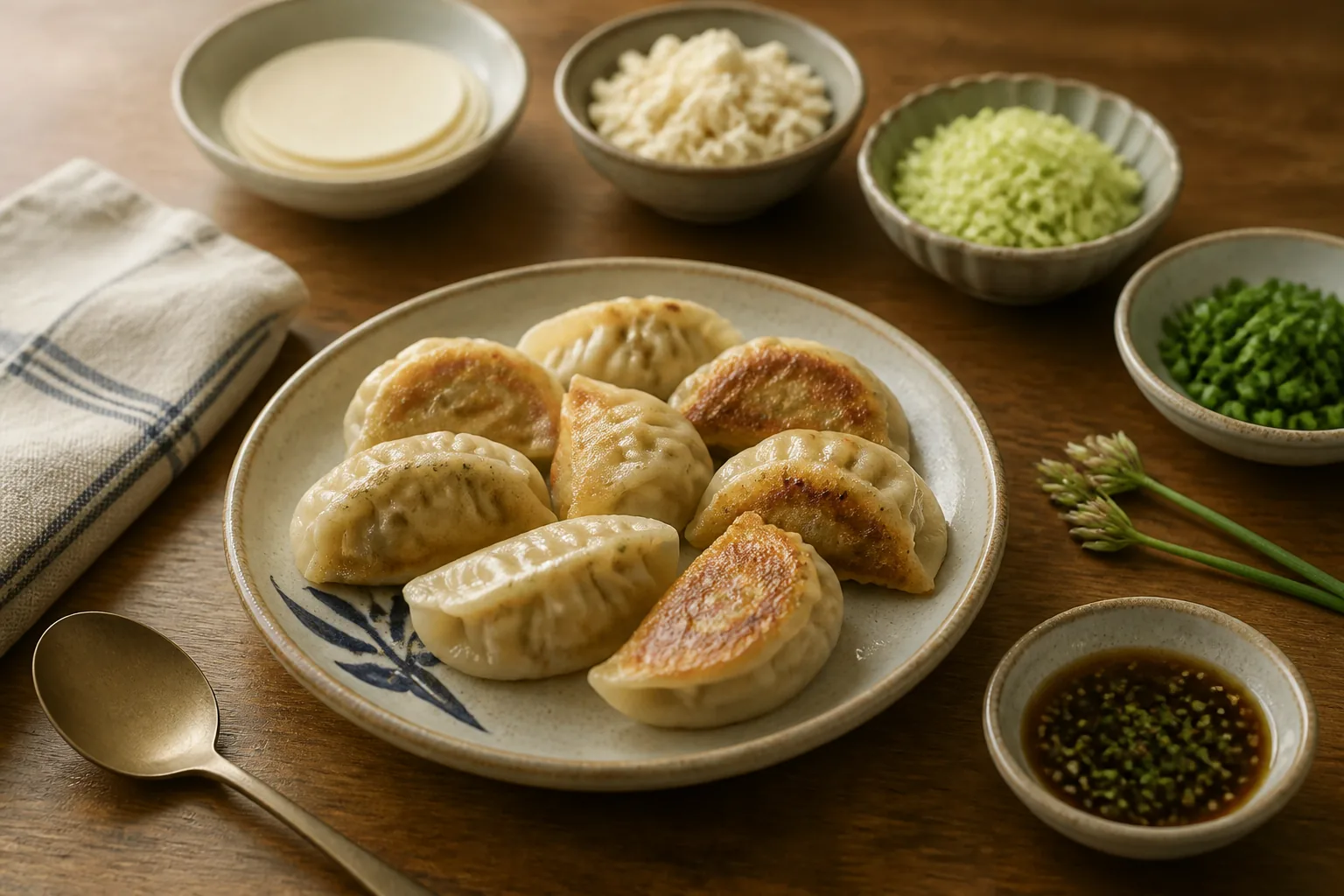
Ingredients
- Mandu wrappers16 round wrappers
- Ground pork180g
- Firm tofu100g
- Napa cabbage, finely chopped1 cup
- Garlic chives or buchu, finely chopped1/2 cup
- Dangmyeon sweet potato noodles40g
- Scallion, finely chopped1
- Garlic, minced2 cloves
- Ginger, minced1 tsp
- Soy sauce1 tbsp
- Toasted sesame oil1 tbsp
- Fine sea salt3/4 tsp, divided
- Ground black pepper1/4 tsp
- Egg1/2 beaten egg
- Vegetable oil1 tbsp
- Water1/4 cup, for pan-steaming
- Soy sauce, for dipping2 tbsp
- Rice vinegar, for dipping1 tbsp
- Gochugaru, for dipping1/2 tsp
- Toasted sesame seeds, for dipping1/2 tsp
Method
- Soak the dangmyeon in hot water for 15 minutes, then drain well, chop into 1 cm pieces, and set aside.
- Toss the chopped napa cabbage with 1/2 tsp salt and let it stand for 10 minutes to draw out moisture.
- Wrap the tofu in a clean cloth or paper towel and squeeze firmly until as dry as possible.
- Squeeze the salted cabbage very firmly to remove excess liquid, then place it in a mixing bowl.
- Add the ground pork, squeezed tofu, garlic chives, chopped dangmyeon, scallion, garlic, ginger, soy sauce, sesame oil, remaining 1/4 tsp salt, black pepper, and beaten egg to the bowl.
- Mix the filling by hand in one direction for 2 to 3 minutes until sticky and well combined.
- Place 1 heaping tablespoon of filling in the center of each wrapper, lightly wet the edge with water, fold, and press tightly to seal into half-moons or pleated mandu.
- Heat the vegetable oil in a skillet over medium heat and arrange the mandu flat-side down in a single layer.
- Cook for 2 to 3 minutes until the bottoms are golden, then add 1/4 cup water, cover immediately, and steam for 6 to 7 minutes.
- Uncover and cook for 1 to 2 minutes more until the water evaporates and the bottoms crisp again.
- Stir together the dipping soy sauce, rice vinegar, gochugaru, and sesame seeds in a small bowl.
- Serve the mandu hot with the dipping sauce on the side.
Common questions
Can I substitute the ground pork or tofu in mandu filling?
Yes. Use ground chicken, turkey, or beef instead of pork, but keep the filling well-seasoned and not too lean. For tofu, use extra-drained firm tofu; if omitting it, add a little more cabbage or noodles for volume.
How long does it take to make mandu from start to finish?
Plan for about 45 to 60 minutes, plus resting time for the cabbage and soaking the dangmyeon. Wrapping usually takes the longest, especially the first time, so work in batches and keep wrappers covered.
What are the most common mistakes when making mandu?
The biggest mistakes are filling that’s too wet, overstuffing the wrappers, and not sealing the edges tightly. Also avoid under-squeezing the cabbage and tofu, or the dumplings can burst during cooking.
Can I store mandu before or after cooking?
Yes. Freeze uncooked mandu on a tray until firm, then transfer to a bag for up to 2 months. Cooked mandu keep in the fridge for 2 to 3 days, but the wrappers soften after reheating.
What should I serve with mandu?
Serve mandu with a soy-vinegar dipping sauce, kimchi, and rice or noodle soup. They’re also great pan-fried until crisp on one side, or added to a light broth for a fuller meal.