Tunisian
Makroudh
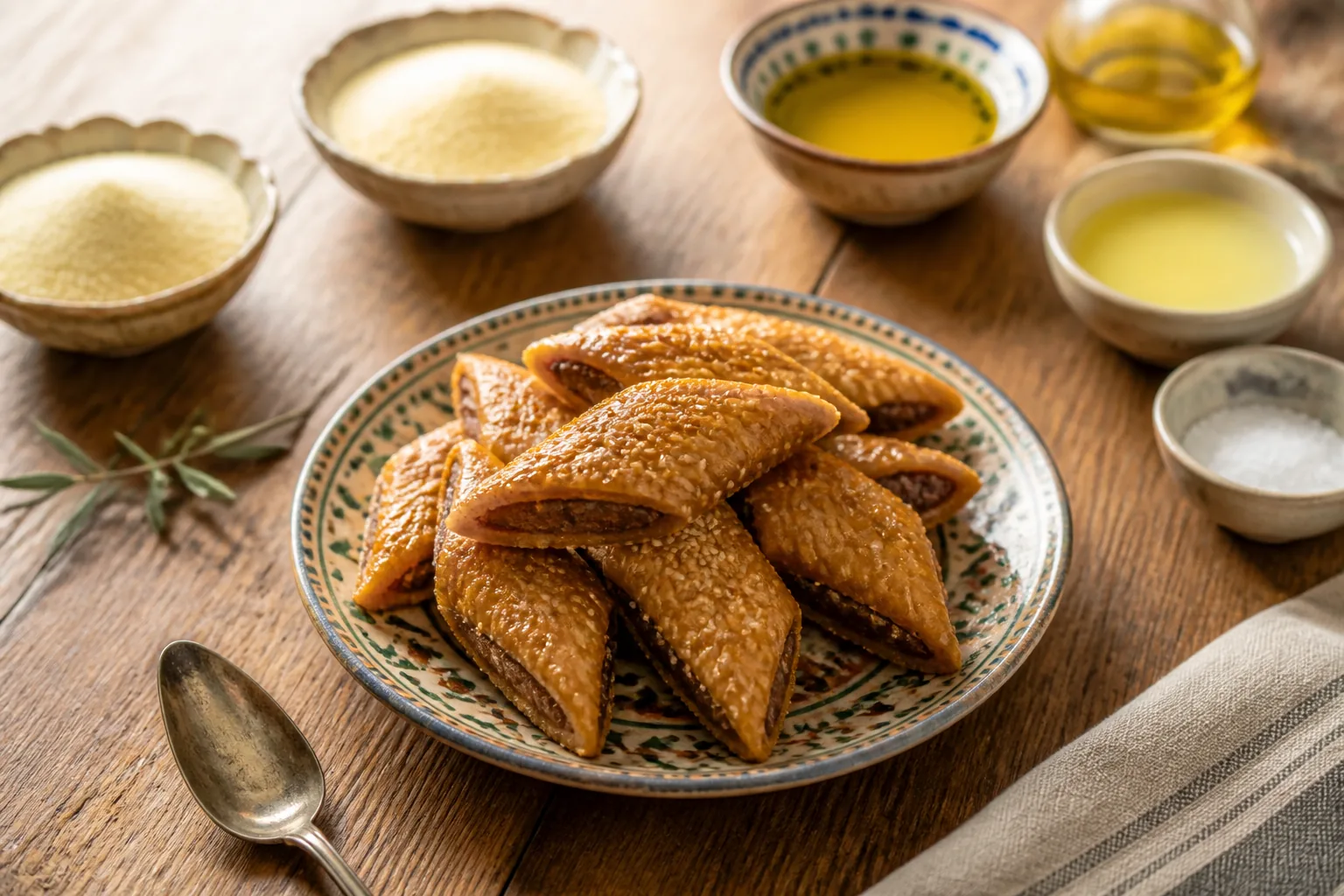
Tunisian makroudh are crisp semolina diamonds filled with spiced date paste, fried until golden, then soaked in fragrant honey syrup. This small batch follows the traditional Kairouan-style method with orange blossom water and a tender, sandy dough.
 Watch it madeSahar MZ · 17:50
Ingredients
- Medium semolina1 cup
- Fine semolina2 tbsp
- Extra-virgin olive oil2 tbsp
- Melted smen or unsalted butter1 tbsp
- Fine salt1 pinch
- Warm water3 to 4 tbsp
- Orange blossom water1 tbsp
- Date paste150g
- Ground cinnamon1/2 tsp
- Ground cloves1 pinch
- Sesame seeds1 tbsp
- Honey1/2 cup
- Lemon juice1 tsp
- Vegetable oilfor frying
Method
- Combine the medium semolina, fine semolina, and salt in a bowl.
- Rub in the olive oil and melted smen or butter with your fingertips until every grain of semolina is coated and the mixture feels like damp sand.
- Cover the bowl and let the semolina rest for 20 minutes so it absorbs the fat.
- Mix the date paste with cinnamon, cloves, sesame seeds, and 1 teaspoon of the orange blossom water until smooth and pliable.
- Roll the date paste into a rope about 1 cm thick and set it aside.
- Sprinkle the remaining orange blossom water over the semolina mixture, then add warm water a little at a time and gently press the dough together without kneading.
- Shape the dough into a thick rope, open a channel along the center, and place the date rope inside.
- Close the semolina dough around the dates and roll gently to seal, keeping the filled rope even.
- Flatten the rope slightly, mark the top with a makroudh mold or the back of a knife, and cut it diagonally into diamonds.
- Warm the honey with the lemon juice and 1 tablespoon water in a small saucepan, then keep it hot but not boiling.
- Heat 4 cm of vegetable oil to 170°C in a small pan.
- Fry the makroudh in batches until deep golden on all sides, about 3 to 4 minutes per batch.
- Lift the fried makroudh directly into the warm honey and let them soak for 5 minutes.
- Drain on a rack, sprinkle with extra sesame seeds if desired, and serve warm or at room temperature.
Common questions
Can I substitute the smen or butter in makroudh, and does it change the texture?
Yes. Unsalted butter works well, and ghee is a close substitute for smen. Olive oil alone is less traditional and gives a slightly less rich, more crumbly result. Keep the fat fully rubbed into the semolina for the right sandy texture.
How long should I rest the semolina dough, and can I skip that step?
Rest the semolina at least 20 minutes, and up to 30 minutes, so it absorbs the fat evenly. Skipping it makes the dough harder to shape and can cause cracking when you fill and cut the logs.
What are the most common mistakes when shaping and frying makroudh?
The biggest mistakes are adding too much water, overworking the dough, and sealing the date filling poorly. Frying in oil that’s too hot browns the outside before the center cooks; aim for moderate heat and steady color.
How should I store makroudh, and how long does it keep?
Store cooled makroudh in an airtight container at room temperature for 3 to 4 days. For longer storage, refrigerate up to a week or freeze before or after frying. If soaked in honey, separate layers with parchment to prevent sticking.
How should I serve makroudh, and when do I add the honey syrup?
Serve makroudh warm or at room temperature, usually after a brief soak or glaze in warmed honey mixed with a little lemon juice. Let excess honey drip off before plating, then finish with sesame seeds if desired.