Argentinian
Locro
A thick Argentinian stew of white corn, beans, squash, beef, pork, panceta and chorizo colorado, finished with the traditional spicy red oil called quiquirimichi. It is slow-cooked until the squash melts into the broth and the grains turn creamy.
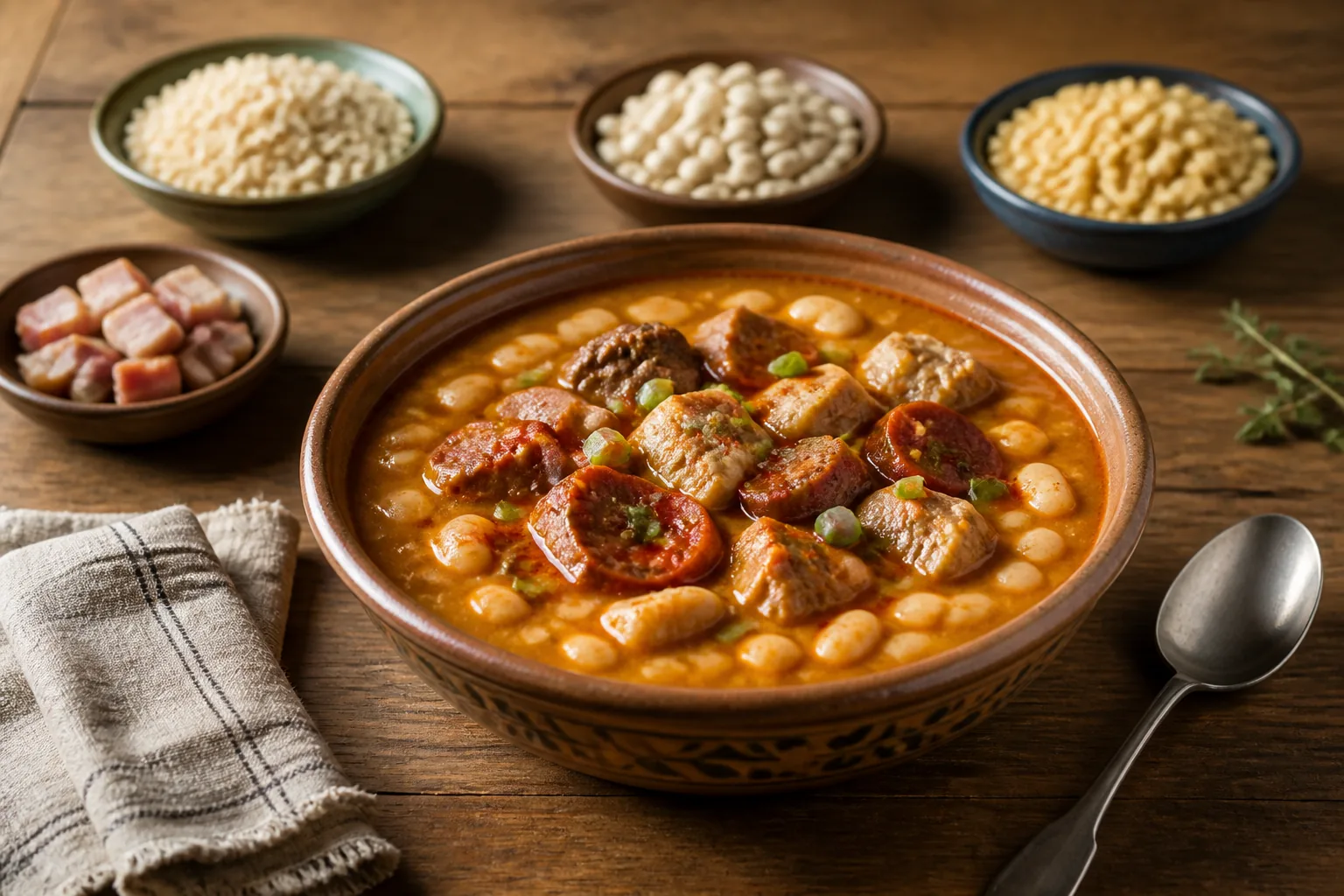
Ingredients
- Dried white hominy corn, maíz blanco partido or pisado1/2 cup
- Dried white beans, preferably pallares or alubias1/4 cup
- Beef shank or osobuco200g
- Pork shoulder or pork ribs120g
- Panceta salada or thick-cut bacon50g
- Chorizo colorado1 small, about 80g
- Zapallo criollo, kabocha or butternut squash, peeled and diced300g
- Yellow onion, finely chopped1 small
- Garlic cloves, minced2
- Bay leaf1
- Ground cumin1/2 tsp
- Saltto taste
- Black pepperto taste
- Water4 cups, plus more as needed
- Lard or neutral oil1 tbsp
- Green onions, thinly sliced2
- Sweet paprika1 tsp
- Ají molido1 tsp
- Hot paprika or ground chili1 pinch
Method
- The night before, soak the white hominy and white beans separately in plenty of cold water.
- Drain the hominy and beans, rinse them well, and place them in a heavy pot with the beef shank, pork, panceta, bay leaf and 4 cups of fresh water.
- Bring to a gentle boil, skim any foam from the surface, then lower the heat and simmer uncovered for 1 hour and 30 minutes, stirring occasionally.
- Prick the chorizo colorado, simmer it in a small separate pan of water for 10 minutes to remove excess fat, then slice it thickly.
- Add the sliced chorizo, diced squash, onion, garlic, cumin, black pepper and a small pinch of salt to the pot.
- Continue simmering gently for 1 hour to 1 hour and 15 minutes, stirring often so the corn does not catch on the bottom, until the beans and corn are tender and the squash has mostly dissolved into the broth.
- Add splashes of hot water as needed during cooking to keep the stew thick but spoonable.
- Remove the beef bone if using osobuco, shred any meat attached to it, and return the meat to the pot.
- Taste and adjust the salt only at the end, because the panceta and chorizo are already salty.
- For the quiquirimichi, warm the lard or oil in a small pan over low heat, add the green onions, and cook for 1 minute without browning.
- Stir in the sweet paprika, ají molido, hot paprika and a pinch of salt, then remove from the heat immediately so the spices do not burn.
- Let the locro rest off the heat for 10 minutes, then serve it in deep bowls with the red green-onion oil spooned over the top.
Common questions
Can I substitute the traditional beans, hominy, or meats in locro if I can’t find them?
Yes. Use canned hominy only as a last resort, and rinse well; reduce cooking time a lot. Great northern or cannellini beans can replace pallares/alubias. For meats, beef shank plus pork shoulder is a solid substitute, and thick bacon can stand in for panceta.
How long does locro really take, and when should I start soaking the beans and corn?
Start the soak the night before, ideally 8 to 12 hours. Plan on about 2.5 to 3 hours of cooking after draining. If your hominy is very large or old, it may need a little longer to soften.
What are the most common mistakes when making locro?
The biggest mistakes are boiling too hard, which breaks the beans and scorches the bottom, and under-stirring once the squash goes in. Also avoid oversalting early, since chorizo and panceta add salt and the broth reduces as it cooks.
How should I store leftover locro, and does it freeze well?
Cool it quickly, then refrigerate in sealed containers for up to 4 days. It freezes well for about 2 to 3 months. Reheat gently with a splash of water, because it thickens a lot as the hominy and beans absorb liquid.
What should I serve with locro, and how is it usually finished?
Serve it hot in deep bowls, with extra broth spooned over the top. Common finishes are a little chopped scallion, smoked paprika, or a spicy chili oil/roasted pepper sauce. Crusty bread and a simple salad balance the richness well.